 English
 Español

Eco-Friendly Composite Laminated Busbars for Sustainable Power Distribution
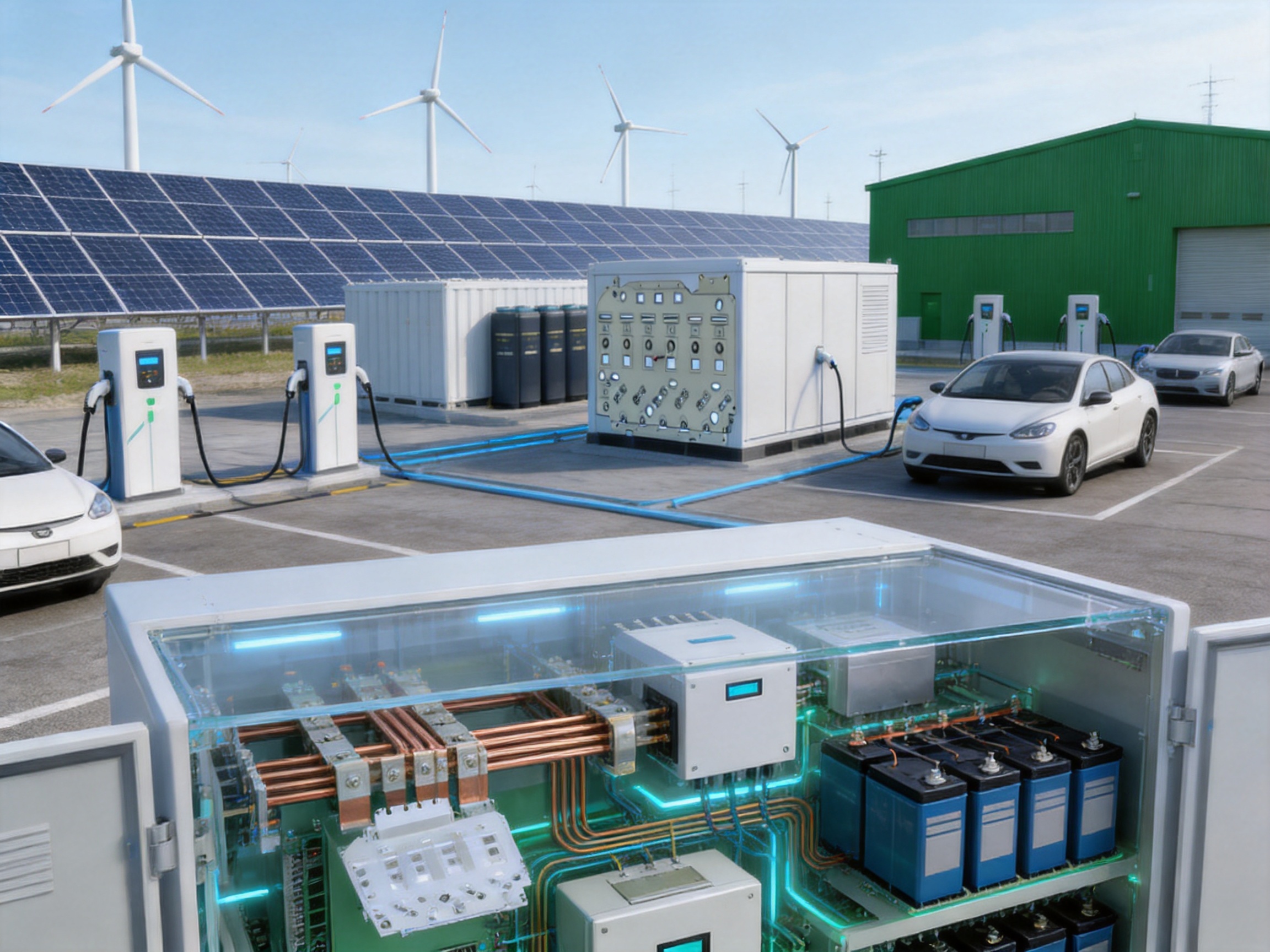
As electrical systems become more compact, powerful, and environmentally responsible, busbar technology is evolving beyond conventional solid copper or aluminum conductors. Modern power conversion equipment, renewable energy installations, electric vehicle infrastructure, battery storage systems, and intelligent distribution networks require connection components that combine electrical performance, mechanical reliability, thermal stability, installation efficiency, and long service life. The Eco-Friendly Composite Laminated Busbar is designed to meet these requirements through a carefully engineered combination of conductive metal layers, electrical insulation, precision fabrication, and environmentally conscious production.
This product provides a practical solution for applications in which conventional cable assemblies or separately mounted conductors may create excessive inductance, consume valuable installation space, increase wiring complexity, or make long-term maintenance more difficult. By integrating multiple conductive and insulating layers into a compact laminated structure, the busbar supports controlled power distribution with predictable electrical characteristics and efficient use of available space.
Manufactured by Zhejiang Zhongyan New Energy Co., Ltd., the Eco-Friendly Composite Laminated Busbar reflects the company’s experience in precision conductive components, battery soft connections, copper foil flexible connections, and new energy electrical systems. Its design is especially suited to green industries and sustainable infrastructure, where reliable power transmission must be combined with lower material waste, efficient manufacturing, and support for long-term carbon reduction objectives.
The featured product has dimensions of 350 mm × 300 mm, a copper plate thickness of 2.0 mm, a tin-plated surface, a rated voltage of 540 VDC, a rated current of 200 A, and an insulation withstand voltage of 3.5 kVDC for 60 seconds with leakage below 2 mA. These characteristics make it suitable for a wide range of power distribution, conversion, energy storage, and renewable energy applications.
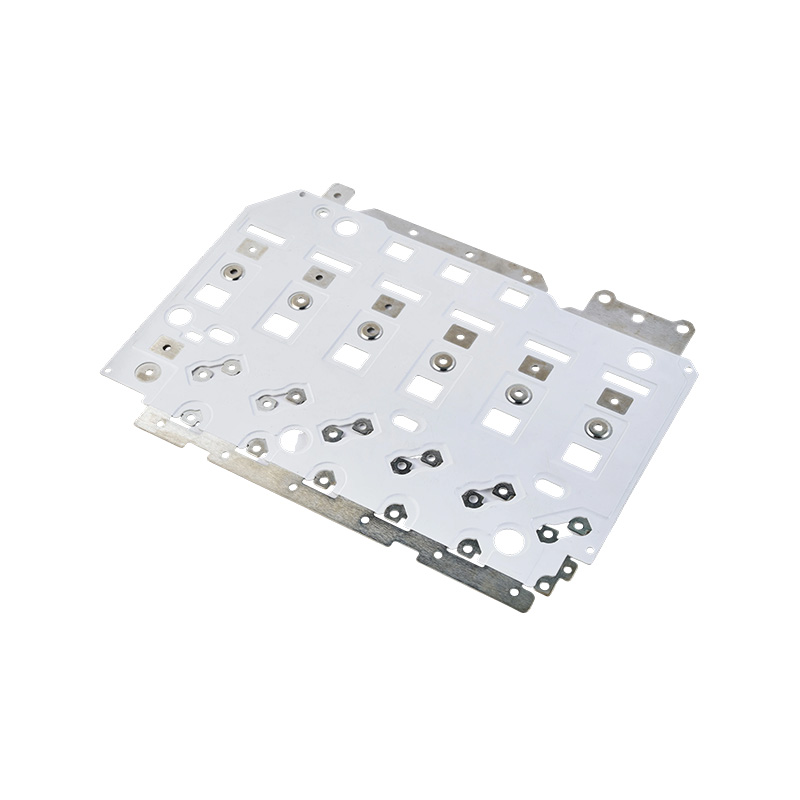
Eco-Friendly Composite Laminated Busbar
Content
- 1. The Role of Laminated Busbars in Modern Electrical Systems
- 2. Product Overview
- 3. Main Advantages Over Conventional Connection Methods
- 4. Eco-Friendly Design and Sustainability Value
- 5. Advanced Manufacturing Capabilities
- 6. Application Areas
- 7. Comparison with Conventional Busbars and Cable Assemblies
- 8. Customization and OEM Support
- 9. Company Manufacturing Strengths
- 10. Reliability, Safety, and Service Life
- 11. Recommended Design and Installation Practices
- 12. Why Choose This Composite Laminated Busbar?
- 13. Questions and Answers
- Q1: What is an eco-friendly composite laminated busbar?
- Q2: What are the reference specifications of the featured product?
- Q3: Can the busbar be customized?
- Q4: How does a laminated busbar reduce inductance?
- Q5: Is the product suitable for battery energy storage systems?
- Q6: Why is the copper surface tin-plated?
- Q7: How does the product support sustainability?
- Q8: What industries can use this product?
- Q9: What manufacturing capabilities support the product?
- Q10: What information should a customer provide for a quotation?
- Q11: Can the busbar replace every cable assembly?
- Q12: How should the product be evaluated before mass production?
- 14. Conclusion
- References
- Product: Eco-Friendly Composite Laminated Busbar
1. The Role of Laminated Busbars in Modern Electrical Systems
A busbar is a conductive component used to distribute electrical power between multiple circuits, modules, converters, batteries, or equipment terminals. Traditional busbars are often produced as individual copper or aluminum bars. While these products remain useful, modern systems increasingly require more integrated solutions. The conductor may need to connect several power paths within a limited enclosure, while maintaining insulation, reducing electromagnetic interference, and controlling electrical and thermal stresses.
A laminated busbar addresses these needs by combining conductive layers with insulation in a predetermined arrangement. Instead of relying on multiple loose conductors and separate insulating parts, the assembly is manufactured as a coordinated component. The resulting structure can reduce the number of individual connection points, simplify installation, improve circuit organization, and help designers create smaller electrical cabinets and power modules.
Composite laminated busbars extend this concept by using a combination of conductive and insulating materials selected for electrical, thermal, mechanical, and environmental requirements. The word “composite” reflects the coordinated structure rather than a single raw material. Each layer contributes to the overall function of the finished component. Copper provides efficient current conduction, insulation separates electrical potentials, surface treatment improves contact performance, and the laminated geometry helps control the relationship between adjacent circuits.
This design is particularly valuable in applications involving high switching frequencies, direct-current power conversion, battery modules, renewable energy inverters, charging systems, and energy storage power conversion systems. In these environments, electrical layout has a significant influence on system efficiency, electromagnetic compatibility, reliability, and service life.
2. Product Overview
The Eco-Friendly Composite Laminated Busbar is engineered as a compact, insulated power connection component for sustainable energy and industrial systems. Its basic configuration uses copper plates with a tin-plated surface and an integrated insulation structure. The product is designed to conduct current reliably while protecting adjacent conductive paths from unintended contact and electrical breakdown.
Its 350 mm × 300 mm format provides a substantial connection area while remaining suitable for integration into cabinets, converters, battery systems, and other equipment with defined installation boundaries. A 2.0 mm copper plate thickness supports a balance between current-carrying capability, mechanical strength, manufacturability, and weight. The stated 540 VDC voltage and 200 A current ratings provide a reference configuration for design evaluation, although the final specification should always be confirmed according to the system’s operating conditions, temperature, insulation arrangement, creepage and clearance requirements, and applicable standards.
The tin-plated copper surface is intended to support stable electrical contact and improve resistance to surface oxidation compared with untreated copper in suitable operating environments. Surface treatment also helps provide a consistent interface for terminal connections, especially when the busbar is assembled with compatible hardware and controlled tightening procedures.
The insulation withstand rating of 3.5 kVDC for 60 seconds, with leakage below 2 mA, demonstrates the product’s suitability for applications where dielectric separation is essential. This characteristic is important in battery storage, power conversion, electric vehicle charging, and renewable energy equipment, where the busbar may operate between circuits with different electrical potentials.
Key Product Parameters
| Parameter | Reference Specification | Engineering Significance |
|---|---|---|
| Product type | Eco-friendly composite laminated busbar | Integrated conductive and insulating power connection |
| Overall dimensions | 350 mm × 300 mm | Suitable for structured installation in power equipment |
| Conductor material | Copper plate | High electrical conductivity and reliable current transfer |
| Copper plate thickness | 2.0 mm | Supports current capacity and mechanical rigidity |
| Surface finish | Tin-plated | Supports stable contact and surface protection |
| Voltage rating | 540 VDC | Reference operating voltage for direct-current systems |
| Current rating | 200 A | Reference continuous current capability under defined conditions |
| Insulation withstand voltage | 3.5 kVDC for 60 seconds | Dielectric strength verification |
| Insulation leakage | Less than 2 mA | Indicates controlled insulation performance during testing |
These parameters describe the featured configuration rather than limiting the company’s customization capability. In practical projects, busbar dimensions, conductor thickness, hole patterns, terminal positions, insulation materials, surface finishes, and circuit arrangements may be developed according to the customer’s equipment and performance requirements.
3. Main Advantages Over Conventional Connection Methods
3.1 Lower Inductance and More Predictable Electrical Behavior
One of the most important advantages of a laminated busbar is its ability to reduce the loop area between closely arranged forward and return current paths. Lower loop area can contribute to lower parasitic inductance. This is particularly valuable in switching power electronics, where rapid changes in current can generate voltage overshoot, ringing, electromagnetic interference, and additional stress on semiconductor devices.
A conventional cable arrangement may require separate positive and negative cables routed through different paths. Even when the cables are properly installed, the distance between conductors can create a larger current loop. A laminated structure places related conductors in a controlled geometry, helping engineers achieve more consistent electrical performance from one assembly to another.
Reduced inductance can support cleaner switching behavior and may help system designers reduce the need for additional corrective components. It can also contribute to improved efficiency and lower electrical stress when used in converters, inverters, charging equipment, and energy storage power conversion systems. The actual benefit depends on the complete circuit design, switching frequency, current waveform, conductor arrangement, and grounding strategy, but the laminated architecture creates a strong foundation for optimized power electronics.
3.2 Effective Partial Discharge Control
High-voltage and high-power equipment can be affected by partial discharge when local electric fields become concentrated in air gaps, voids, sharp edges, or weak insulation interfaces. Over time, repeated partial discharge activity may deteriorate insulation and reduce equipment reliability.
The composite laminated structure supports controlled spacing between conductive layers and can be designed with consistent insulation interfaces. When combined with careful edge treatment, appropriate dielectric materials, controlled lamination, and suitable creepage and clearance design, the busbar can help reduce the risk of localized electrical stress. Effective partial discharge control is especially relevant to energy storage equipment, high-voltage converters, charging systems, and other assemblies where insulation integrity directly affects operational safety.
Partial discharge performance is influenced by more than the busbar alone. System voltage, environmental pressure, humidity, contamination, material selection, void control, and assembly conditions all play a role. For this reason, the busbar should be evaluated as part of the complete equipment insulation system. Nevertheless, the controlled laminated construction is a substantial advantage over loosely arranged conductors with inconsistent insulation spacing.
3.3 Improved Heat Resistance and Thermal Management
Every current-carrying conductor generates heat. If that heat cannot be dissipated effectively, conductor temperature rises, insulation ages more quickly, contact resistance may increase, and the service life of the system may be reduced. A busbar design must therefore consider conductor cross-section, current density, surface area, ambient temperature, airflow, enclosure conditions, and the thermal properties of adjacent materials.
The Eco-Friendly Composite Laminated Busbar is designed with optimized heat resistance for demanding electrical applications. Its engineered structure helps maintain the relationship between conductive layers and insulation during normal operating temperature changes. The copper plate provides an efficient current path, while the selected composite insulation system is intended to maintain electrical separation and mechanical integrity under defined thermal conditions.
Compared with a collection of individual cables, a laminated busbar can also provide a more predictable physical arrangement for thermal analysis. The fixed geometry makes it easier for equipment designers to model heat flow, define mounting positions, and coordinate the busbar with cooling components. In high-current applications, the final thermal design should still include temperature-rise testing and consideration of local hot spots around terminals, bends, fasteners, and enclosure interfaces.
3.4 Enhanced Electromagnetic Interference Shielding
Electromagnetic interference can affect control signals, sensors, communication systems, and nearby electronic equipment. In high-speed switching systems, poorly arranged current paths may radiate noise or couple interference into sensitive circuits. A laminated busbar helps manage this risk by maintaining a compact, organized current path and reducing unnecessary conductor separation.
The integrated structure can support electromagnetic compatibility strategies by controlling the physical relationship between current paths and by reducing large exposed loops. In some designs, conductive layers and shielding features may be arranged to support additional EMI control. The final performance depends on the system grounding method, switching devices, enclosure, cable routing, filtering, and installation practices, but a compact laminated power connection gives designers more control than loose wiring.
This benefit is valuable in smart grids, microgrids, industrial automation systems, battery management equipment, charging stations, and renewable energy converters. These applications often combine high-power switching with low-voltage monitoring and communication circuits, making electromagnetic compatibility a significant design consideration.
3.5 Compact Construction and Space Savings
Space is a major engineering constraint in modern electrical equipment. Power cabinets are expected to deliver more output from smaller enclosures, while battery systems and charging equipment must accommodate thermal management, protection, monitoring, and service access. Cable assemblies can occupy considerable volume because they require bending radii, terminals, supports, insulation, and separation between adjacent circuits.
A laminated busbar is manufactured according to a defined layout and can be shaped to fit the intended equipment. Its compact profile can reduce unused space and simplify the arrangement of nearby components. The result may be a smaller cabinet, shorter internal connection paths, and improved accessibility during assembly and inspection.
Space saving also supports system-level design improvements. By reducing wiring congestion, engineers can create clearer separation between power and control sections. Maintenance personnel can more easily identify connection points, and equipment manufacturers can standardize mounting features across product families.
3.6 Error-Free Connections and Installation Efficiency
Loose cable assemblies may require numerous cutting, stripping, crimping, routing, fastening, and inspection steps. Each additional manual operation creates an opportunity for incorrect polarity, improper terminal crimping, insufficient tightening, damaged insulation, or routing errors. A pre-engineered laminated busbar reduces the number of separate parts and can make the intended connection pattern easier to verify.
When the busbar includes accurately positioned holes, terminals, or connection interfaces, assembly personnel can install it according to a defined structure. This supports repeatability in production and reduces variation between units. Fewer connection points can also shorten assembly time and reduce the number of components requiring inventory control.
Installation efficiency is especially important for original equipment manufacturers producing converters, charging stations, battery cabinets, and renewable energy systems in volume. A reliable connection component can support shorter production cycles, improved first-pass yield, and more consistent quality documentation.
4. Eco-Friendly Design and Sustainability Value
The environmental value of the product is based on both material selection and system performance. The Eco-Friendly Composite Laminated Busbar is developed using recyclable materials and low-loss design principles. Its purpose is not only to carry current but also to support a more sustainable approach to power distribution equipment.
Recyclable conductive materials can help reduce the environmental burden associated with end-of-life disposal. Copper is widely valued for its electrical conductivity and recoverability, allowing it to remain useful through established recycling systems when appropriately separated and processed. The selection of insulation and surface-treatment materials should be assessed according to the specific configuration and applicable environmental regulations.
A low-loss connection can support energy efficiency throughout the operating life of the equipment. Lower resistance and optimized current paths may reduce unnecessary heat generation and energy dissipation. Even small improvements can become significant when a busbar operates continuously in a large fleet of charging stations, inverters, battery systems, or industrial machines.
The laminated structure may also reduce material use at the system level by replacing multiple cables, supports, covers, and independent insulating components with an integrated assembly. Lower component count can simplify logistics, packaging, assembly, and maintenance. It can also reduce the chance that a poorly installed connection will cause premature failure and require replacement.
Environmentally conscious manufacturing is another part of the product concept. Zhejiang Zhongyan New Energy emphasizes modern production and quality management systems, precision processing, and new energy applications. Such systems support controlled production, repeatable quality, and more efficient use of raw materials. Sustainable manufacturing does not mean compromising electrical performance; instead, it seeks to combine reliable engineering with responsible resource use.
5. Advanced Manufacturing Capabilities
5.1 Engineering and Design Development
The performance of a composite laminated busbar begins with engineering design. Before production, the manufacturer evaluates current capacity, voltage levels, insulation requirements, mechanical interfaces, thermal conditions, installation restrictions, and customer-specific connection patterns. This process ensures that the finished busbar is not merely a generic metal plate but a component designed for a defined electrical and mechanical environment.
Design work may include conductor layout, layer sequencing, bend geometry, terminal configuration, mounting holes, insulation boundaries, edge clearances, and interface tolerances. For battery and energy storage applications, the design may also consider cell arrangement, module dimensions, service disconnects, voltage sensing, and integration with battery management systems.
The company’s experience in battery soft connections, copper foil flexible connections, special-shaped soft connections, and precision conductive components provides a strong foundation for this development work. These product areas require close attention to material behavior, welding quality, electrical resistance, mechanical flexibility, and repeatable manufacturing. The same engineering discipline supports the production of laminated busbars for high-performance energy systems.
5.2 Precision Conductive Material Processing
Copper plates must be processed with controlled dimensions and accurate interfaces. Small deviations in width, thickness, hole location, or terminal position can affect assembly alignment and contact pressure. Precision cutting, forming, punching, and machining are therefore important elements of the manufacturing process.
Accurate processing helps ensure that each busbar fits its intended enclosure and connects properly to mating components. Consistent edges also support insulation quality by reducing sharp points that could concentrate electric fields or damage insulating layers. Depending on the design, the manufacturer may use customized tooling and dedicated fixtures to improve repeatability during high-volume production.
Copper selection and surface preparation are also important. The conductor must provide the required electrical performance while maintaining suitable mechanical characteristics for forming and assembly. Before lamination or surface finishing, the material may undergo cleaning and preparation steps to support adhesion, contact stability, and overall product consistency.
5.3 Tin-Plating and Surface Treatment
The featured busbar uses a tin-plated copper surface. Surface treatment requires controlled preparation, coating conditions, thickness management, and inspection. A uniform finish helps provide consistent electrical contact and supports protection against surface oxidation in appropriate service environments.
Tin plating can be particularly useful at connection interfaces where the busbar is joined to compatible terminals, bolts, connectors, or other plated components. The final contact performance depends on plating quality, contact pressure, hardware selection, environmental exposure, and installation procedure. For this reason, surface treatment must be integrated into the overall quality system rather than treated as a separate cosmetic step.
5.4 Composite Insulation and Lamination
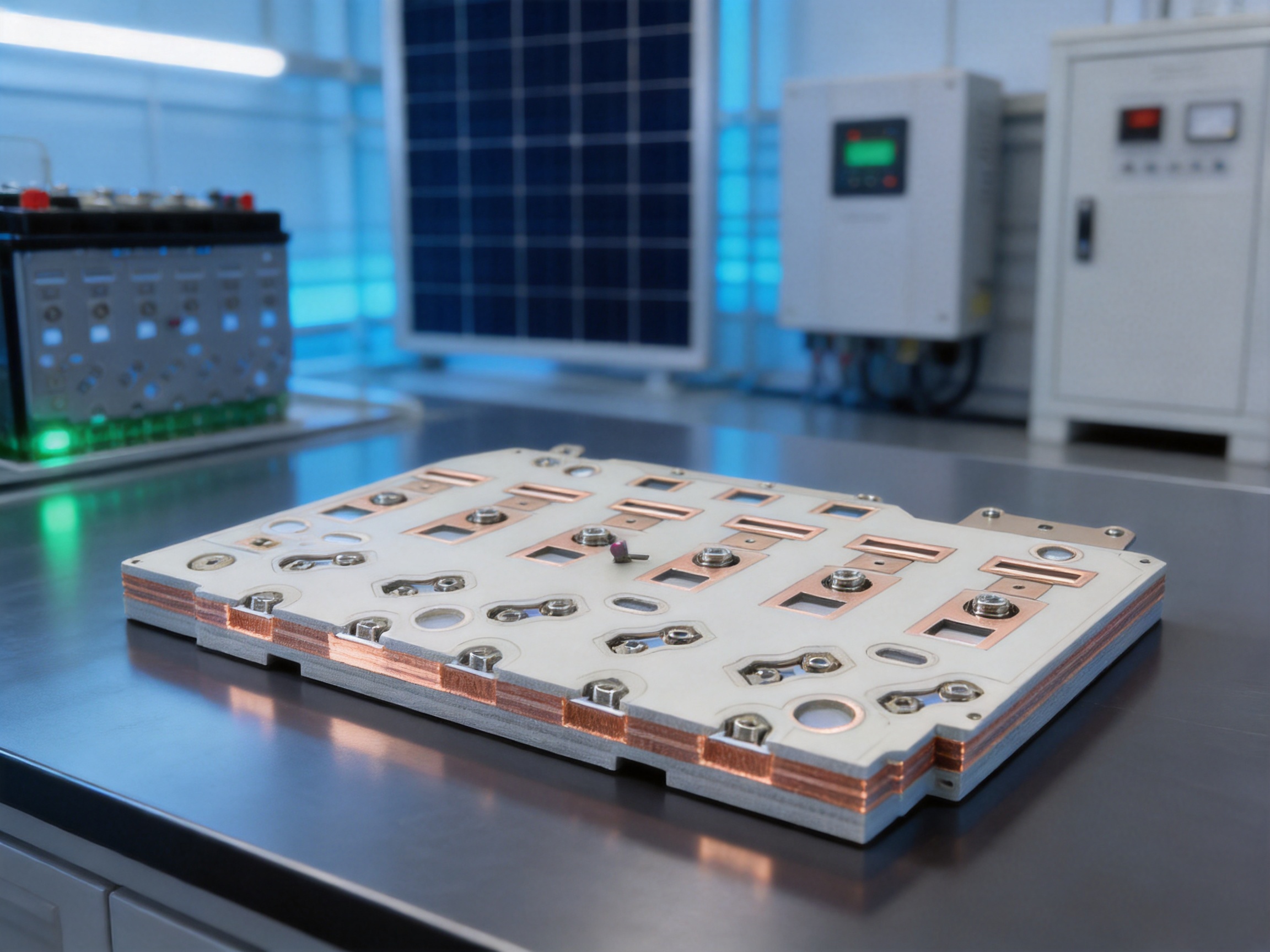
The central manufacturing challenge in a laminated busbar is the controlled integration of conductive and insulating layers. The insulation must remain continuous, appropriately positioned, and free from defects that could reduce dielectric strength or create long-term reliability concerns.
During lamination, the manufacturer controls material alignment, temperature, pressure, time, and bonding conditions. Proper control helps minimize air pockets, delamination, dimensional distortion, and uneven stress. The result is a stable composite structure in which each conductive layer remains separated according to the intended electrical design.
Insulation selection may consider dielectric strength, thermal resistance, flame behavior, mechanical durability, moisture resistance, flexibility, and compatibility with the selected bonding process. The correct material depends on the voltage, temperature, enclosure, installation environment, and customer requirements. A professional manufacturer can help identify an appropriate insulation system rather than applying the same material to every application.
5.5 Welding and Specialized Joining Technologies
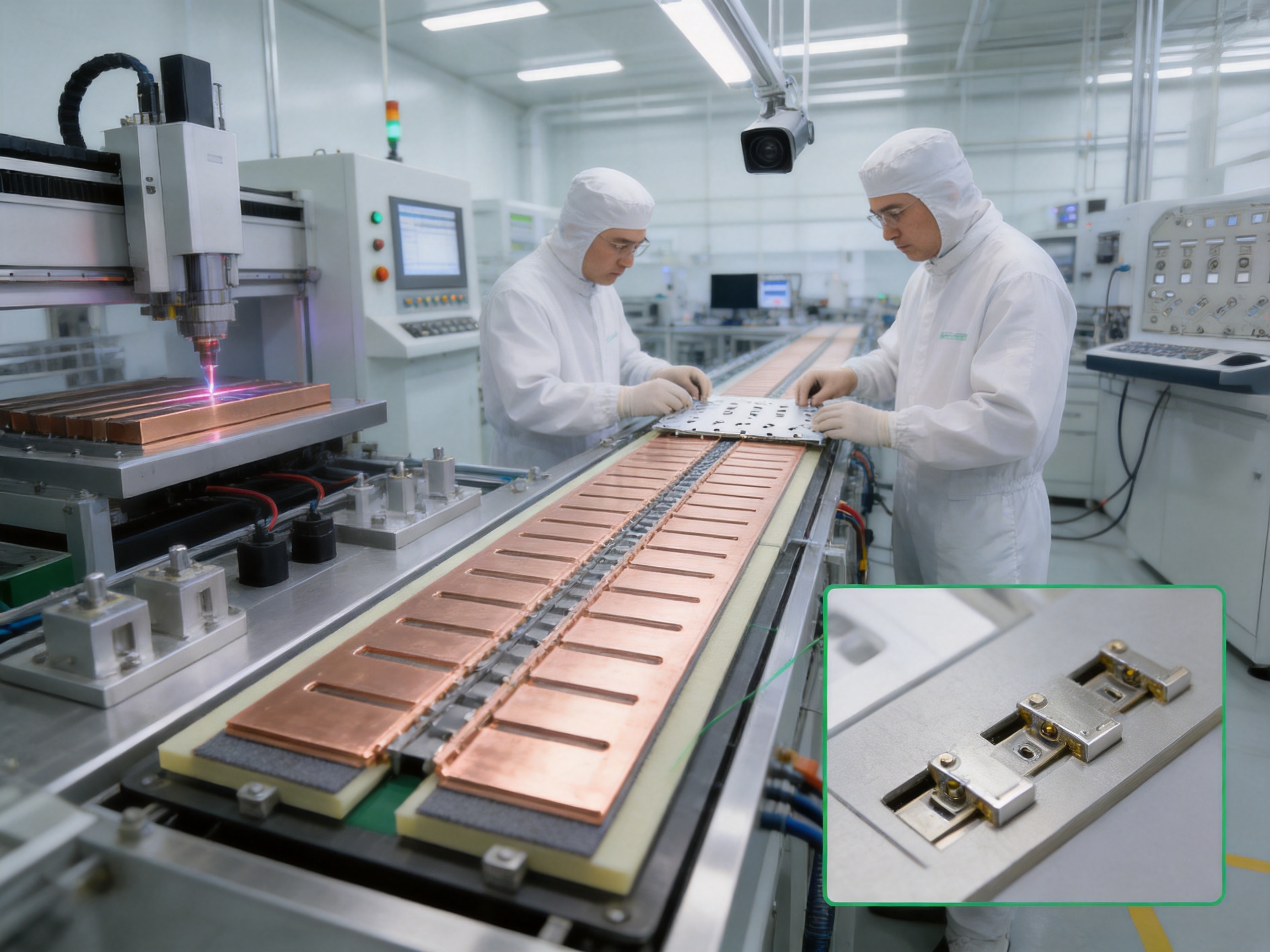
Zhejiang Zhongyan New Energy has developed capabilities in polymer diffusion welding and laser technology for new energy precision components. These technologies are relevant to the company’s broader manufacturing strengths because they support low-resistance, high-reliability electrical connections in demanding applications.
Laser processing can provide precise, localized energy input with limited thermal influence on surrounding areas. This is useful when joining thin conductive materials, creating detailed geometries, or producing repeatable connections in compact assemblies. Polymer diffusion welding can support specialized bonding and connection structures in battery-related components. The suitability of a particular process depends on material combinations, thickness, geometry, and required mechanical and electrical performance.
Advanced joining technologies can help reduce internal resistance and improve consistency compared with less controlled manual joining methods. They also support automation, traceability, and repeatable production. When combined with inspection and testing, these processes provide a strong foundation for reliable busbar and battery connection manufacturing.
5.6 Quality Management and Inspection
Electrical connection products require more than visual inspection. A busbar may appear acceptable while containing hidden defects such as inadequate bonding, insulation voids, dimensional errors, plating inconsistencies, or elevated contact resistance. For this reason, quality control should extend from incoming materials to final testing.
Typical quality activities may include dimensional inspection, material verification, surface inspection, insulation resistance testing, dielectric withstand testing, contact resistance measurement, thermal evaluation, mechanical checks, and visual examination of insulation edges and interfaces. The specific test plan depends on the product design and customer requirements.
The stated insulation withstand performance of 3.5 kVDC for 60 seconds with leakage below 2 mA demonstrates the importance of dielectric testing. Such testing helps verify that the insulation system can withstand a defined electrical stress for a specified period. Production records can also support traceability and continuous improvement.
A modern quality management system brings these activities together through documented procedures, calibrated equipment, controlled process parameters, training, corrective actions, and batch records. This approach helps ensure that product quality is not dependent on a single operator or a final inspection alone.
6. Application Areas
6.1 Renewable Energy Systems
Solar photovoltaic and wind power systems rely on inverters, converters, combiner equipment, energy storage, and distribution panels. These systems may experience variable power generation, frequent switching, outdoor environmental exposure, and demanding requirements for efficiency and reliability.
The Eco-Friendly Composite Laminated Busbar can be used in central and series inverter assemblies, DC link connections, power distribution modules, and energy storage power conversion systems. Its low-inductance structure supports switching performance, while its compact design helps equipment manufacturers create efficient and organized enclosures.
In renewable energy systems, every reduction in connection loss can contribute to improved energy utilization. The busbar’s sustainable material concept also aligns with the environmental purpose of solar and wind installations, where the balance between clean energy production and responsible equipment manufacturing is increasingly important.
6.2 Electric Vehicle Charging Stations
Charging stations combine high-current power paths, switching devices, control circuits, communication systems, thermal management, and user safety features. Internal connections must handle repeated load cycles while maintaining stable contact and insulation performance.
A laminated busbar can simplify the power distribution and converter connections inside charging equipment. Its defined geometry reduces wiring complexity and can make it easier to coordinate the conductor with cooling structures and protective barriers. The compact format is useful where charging equipment must fit within a limited cabinet or modular housing.
For high-power charging applications, engineers should confirm the current rating, temperature rise, short-circuit withstand capability, insulation coordination, and environmental protection level according to the complete charging station design. The product can then be customized to match the equipment’s electrical and mechanical requirements.
6.3 Green Industrial Plants
Low-carbon manufacturing facilities increasingly use variable-speed drives, high-efficiency motors, power quality equipment, energy storage, and intelligent distribution systems. These installations require dependable power connections that can operate continuously and withstand industrial conditions.
The composite laminated busbar can support low-loss power distribution and converter connections in industrial machinery. Its compact construction may improve cabinet organization, while its controlled insulation structure can help separate power circuits in crowded equipment. Reduced installation complexity is also valuable in plants where production downtime is costly.
Industrial applications may require customized materials, protective coatings, special mounting methods, or enhanced thermal performance. A manufacturer with experience in precision components can develop the busbar according to the equipment’s operating environment rather than relying solely on standard dimensions.
6.4 Smart Grids and Microgrids
Smart grids and microgrids integrate renewable generation, energy storage, controllable loads, and advanced monitoring. Their power electronics must respond quickly to changes in supply and demand, making efficient and well-controlled current paths essential.
Laminated busbars can be used in grid-connected converters, energy management equipment, distribution modules, and power conditioning systems. The combination of low inductance, compact installation, and EMI-conscious geometry supports the integration of power and control functions within modern grid equipment.
Because microgrid systems may operate in both grid-connected and islanded modes, their connection components must support reliable switching and protection coordination. The busbar should be selected as part of a complete system design that includes fault current analysis, isolation requirements, surge protection, and thermal evaluation.
6.5 Commercial Green Buildings
Commercial buildings are adopting energy management systems, rooftop solar, battery storage, high-efficiency HVAC equipment, and electric vehicle charging infrastructure. These systems often require compact power distribution inside mechanical and electrical rooms.
The Eco-Friendly Composite Laminated Busbar can support low-loss distribution and conversion connections within building energy systems. Its organized structure can simplify installation in equipment panels and help reduce internal cable congestion. By supporting efficient power transfer and long service life, the product contributes to the durability of green building infrastructure.
6.6 Environmental Protection Equipment
Waste disposal, waste-to-energy, water treatment, emissions control, and energy recovery systems depend on motors, converters, pumps, fans, sensors, and control equipment. Reliable electrical connections are essential because many of these facilities operate continuously and may be exposed to humidity, dust, chemical contaminants, or temperature changes.
Composite laminated busbars can be designed for controlled power distribution within environmental protection equipment. The final product selection should consider enclosure protection, contamination level, corrosion risk, temperature, maintenance requirements, and applicable safety standards. Surface treatment and insulation design can be customized to support the intended operating environment.
7. Comparison with Conventional Busbars and Cable Assemblies
Conventional rigid busbars are strong, conductive, and often cost-effective for simple single-path applications. However, they may require separate insulation, supports, spacers, and protective covers when multiple circuits are installed close together. Cable assemblies provide flexibility and are convenient for irregular routes, but they can occupy more space and introduce additional terminals and manual assembly steps.
The Eco-Friendly Composite Laminated Busbar is most advantageous when the equipment requires multiple organized power paths, controlled insulation, compact dimensions, and repeatable assembly. It is not intended to replace every cable or rigid busbar application. Instead, it provides a specialized solution for systems where electrical layout, installation efficiency, and electromagnetic performance are important design priorities.
| Design Consideration | Conventional Cable Assembly | Conventional Separate Busbars | Composite Laminated Busbar |
|---|---|---|---|
| Current path organization | Depends strongly on manual routing | Requires separate supports and spacing | Defined during product design |
| Inductance control | Can vary with cable arrangement | Depends on conductor layout | Supported by compact laminated geometry |
| Installation steps | Cutting, crimping, routing, and fastening | Multiple bars, insulators, and hardware | Integrated component with fewer separate parts |
| Space utilization | May require bending radius and cable clearance | Requires spacing and support structures | Compact and application-specific |
| Insulation arrangement | Individual cable insulation | Often external or separate insulation | Integrated insulation between conductive layers |
| Assembly repeatability | Highly dependent on operator technique | Moderate, with multiple alignment steps | High when produced with controlled tooling |
| Customization | Flexible routing but many manual operations | Good for simple shapes | Suitable for detailed multi-layer layouts |
The comparison should be interpreted as a design guide rather than a universal ranking. A cable may be preferable where movement or long-distance routing is required. A solid busbar may be ideal for high-current, low-complexity distribution. A laminated busbar becomes particularly compelling when the electrical and mechanical requirements call for an integrated, compact, and precisely controlled assembly.
8. Customization and OEM Support
Many power equipment manufacturers require busbars that match proprietary enclosure dimensions, connection locations, circuit arrangements, and assembly processes. A standard product may not provide the required hole pattern, conductor thickness, insulation boundary, terminal position, or clearance distance. Custom manufacturing allows the busbar to be developed around the customer’s actual equipment.
Customization may include overall length and width, copper thickness, number of conductive layers, layer arrangement, terminal locations, mounting holes, bends, cutouts, edge profiles, insulation thickness, insulation material, surface treatment, labeling, and packaging. The manufacturer can also work with engineering drawings, three-dimensional models, samples, or functional prototypes during the development stage.
OEM support should begin with a technical review. The customer can provide operating voltage, continuous and peak current, ambient temperature, duty cycle, enclosure dimensions, mounting method, mating components, required standards, and expected service life. The manufacturer can then evaluate the design and recommend suitable material and process options.
Prototype production is valuable for verifying fit, assembly sequence, electrical performance, temperature rise, and insulation behavior before mass production. Once the design is approved, dedicated fixtures and process controls can improve repeatability and reduce variation between production batches.
9. Company Manufacturing Strengths
Zhejiang Zhongyan New Energy Co., Ltd. is a high-tech enterprise focused on new energy conductive components and precision electrical connection solutions. Its product scope includes high-voltage electrical copper foil soft connections, special-shaped soft connections, battery soft connections, and other components used in power transmission, electric vehicles, rail transit, communication, and energy storage.
The company was established in 2022 and has built its capabilities around experienced engineers, technical teams, specialized equipment, and modern quality management systems. Its work covers product design, research and development, manufacturing, testing, verification, and customized solution support. This integrated capability is important for laminated busbar customers because a successful product must satisfy electrical, mechanical, thermal, manufacturing, and installation requirements at the same time.
The company’s independently developed polymer diffusion welding and laser technology patents support the production of low-resistance and high-reliability components. These technologies are particularly relevant to new energy systems, where high current, repeated cycling, limited space, and strict reliability requirements are common.
Its reported customer base includes leading enterprises such as BYD, CATL, and Jaguar. Experience serving demanding customers can contribute to stronger process discipline, tighter quality expectations, and a deeper understanding of battery and vehicle electrical systems. Each customer project remains subject to its own technical approval and quality requirements, but this background demonstrates the company’s focus on advanced energy applications.
The company is also developing a research and development innovation system covering materials science, precision machining, testing, and verification. This broad approach supports continuous improvement in conductive materials, connection design, insulation performance, manufacturing efficiency, and system integration.
10. Reliability, Safety, and Service Life
Electrical connection reliability depends on the interaction of materials, geometry, processing, assembly, and environment. A high-quality laminated busbar must maintain low-resistance connections, stable insulation, mechanical integrity, and acceptable temperature rise throughout its intended service life.
The Eco-Friendly Composite Laminated Busbar is designed to support long-term durability through a controlled composite structure, optimized heat resistance, tin-plated copper interfaces, and precision manufacturing. Its integrated form reduces the number of independent connections that may loosen or become misrouted during installation.
Safety benefits include electrical separation between conductive paths, insulation withstand capability, reduced wiring congestion, and controlled installation geometry. These characteristics can support safer equipment design, although the complete system must still include suitable overcurrent protection, grounding, isolation, enclosure design, creepage and clearance, thermal protection, and maintenance procedures.
Before release into a production system, customers should evaluate the busbar under representative conditions. Testing may include temperature rise at rated current, overload behavior, dielectric withstand, insulation resistance, vibration, mechanical retention, humidity, thermal cycling, and short-circuit effects where applicable. The manufacturer can support the definition of a verification plan based on the intended application.
11. Recommended Design and Installation Practices
To obtain the best performance from a laminated busbar, installation should follow the approved drawing and technical instructions. Mating surfaces should be clean and compatible with the tin-plated finish. Fasteners should be tightened to the specified torque, and contact pressure should be distributed evenly without deforming the busbar or damaging insulation.
Designers should avoid forcing the busbar into position or applying unapproved bending after lamination. Mechanical stress can affect layer alignment, insulation integrity, or terminal contact. Mounting supports should be positioned according to the product design, especially where the busbar experiences vibration, thermal expansion, or short-circuit forces.
Clearance and creepage distances must be evaluated within the complete assembly. Adjacent metal parts, fasteners, enclosure walls, contamination, humidity, and service access can affect insulation coordination. If the operating environment includes dust, moisture, chemical exposure, or elevated temperature, the insulation and surface treatment should be reviewed during the design stage.
Thermal performance should be confirmed under the actual equipment conditions rather than inferred only from nominal current. Airflow, enclosure temperature, neighboring components, mounting orientation, duty cycle, and terminal resistance can all affect temperature rise. Testing should include the most demanding expected operating condition.
12. Why Choose This Composite Laminated Busbar?
The Eco-Friendly Composite Laminated Busbar offers a combination of electrical, mechanical, manufacturing, and environmental advantages. Its compact laminated structure supports lower inductance, controlled insulation, electromagnetic compatibility, and efficient use of installation space. Its copper conductor and tin-plated surface provide a reliable foundation for current transfer and equipment integration.
Compared with loosely arranged cables, the product can simplify assembly and make power layouts more repeatable. Compared with separate rigid busbars, it can integrate insulation and complex conductor arrangements into a single engineered component. Compared with generic laminated products, a customized solution can be developed around the customer’s precise equipment and operating requirements.
The company’s background in battery connections, copper foil soft connections, laser processing, polymer diffusion welding, precision manufacturing, and new energy applications strengthens its ability to support demanding projects. Customers can work with an engineering team that understands the importance of internal resistance, connection reliability, insulation performance, compact packaging, and production consistency.
Most importantly, the product supports the broader transition toward sustainable energy. It is designed for renewable energy systems, battery storage, electric vehicle infrastructure, green industrial plants, smart grids, commercial energy management, and environmental protection equipment. These sectors require reliable components that help reduce losses, simplify equipment construction, and support a lower-carbon future.
13. Questions and Answers
Q1: What is an eco-friendly composite laminated busbar?
An eco-friendly composite laminated busbar is an integrated electrical connection component that combines copper conductive layers with insulating materials in a controlled laminated structure. The product is designed using recyclable materials and low-loss principles to support reliable power distribution while reducing unnecessary material use and energy loss.
Q2: What are the reference specifications of the featured product?
The featured configuration measures 350 mm × 300 mm and uses a 2.0 mm copper plate with a tin-plated surface. Its reference voltage is 540 VDC, its reference current is 200 A, and its insulation withstand voltage is 3.5 kVDC for 60 seconds with leakage below 2 mA.
Q3: Can the busbar be customized?
Yes. Customization may include dimensions, copper thickness, conductive layer arrangement, insulation structure, terminal positions, mounting holes, bends, cutouts, surface treatment, and packaging. Customers should provide drawings or application information so the manufacturer can evaluate the electrical, thermal, mechanical, and insulation requirements.
Q4: How does a laminated busbar reduce inductance?
It places related conductive paths close together in a controlled geometry, reducing the current loop area compared with many separated cable arrangements. Lower loop area can reduce parasitic inductance and support improved switching behavior. The final inductance depends on the complete circuit layout and must be verified within the application.
Q5: Is the product suitable for battery energy storage systems?
Yes. The busbar is suitable for applications such as energy storage power conversion systems, battery cabinets, DC distribution, and converter connections. The final design must be checked for voltage, current, temperature rise, insulation coordination, short-circuit conditions, and mechanical integration.
Q6: Why is the copper surface tin-plated?
Tin plating supports stable electrical contact and provides surface protection in suitable environments. It can also improve compatibility with appropriately selected mating terminals and hardware. Contact performance depends on the complete interface design, including cleanliness, contact pressure, fastener torque, and environmental conditions.
Q7: How does the product support sustainability?
It uses recyclable materials, supports low-loss power transfer, and can replace multiple separate conductors, supports, and insulating components with an integrated assembly. Its application in renewable energy, energy storage, electric vehicle charging, and efficient industrial systems also supports the development of lower-carbon infrastructure.
Q8: What industries can use this product?
Applications include solar photovoltaic systems, wind power equipment, central and series inverters, energy storage PCS units, electric vehicle charging stations, green industrial plants, smart grids, microgrids, commercial green buildings, energy management systems, waste treatment equipment, and energy recovery systems.
Q9: What manufacturing capabilities support the product?
The manufacturer provides precision conductive component processing, composite lamination, surface treatment, laser technology, polymer diffusion welding, product design, testing, verification, and quality management. These capabilities support low-resistance connections, dimensional consistency, insulation performance, and customized OEM production.
Q10: What information should a customer provide for a quotation?
Useful information includes operating voltage, continuous and peak current, dimensions, copper thickness, circuit arrangement, terminal locations, mounting method, insulation requirements, temperature range, duty cycle, environmental conditions, required testing, annual quantity, and applicable standards. Drawings, three-dimensional models, photographs, or sample parts are also helpful.
Q11: Can the busbar replace every cable assembly?
No. Cables remain preferable when flexibility, movement, long-distance routing, or irregular installation paths are required. A laminated busbar is most suitable when the equipment needs compact, repeatable, low-inductance, and integrated power connections.
Q12: How should the product be evaluated before mass production?
Evaluation may include dimensional fit, assembly verification, contact resistance, temperature rise, insulation resistance, dielectric withstand, mechanical retention, vibration, thermal cycling, humidity exposure, and application-specific electrical testing. The test plan should reflect the equipment’s actual operating conditions.
14. Conclusion
The Eco-Friendly Composite Laminated Busbar is a purpose-built solution for modern power distribution and conversion systems. It combines copper conductivity, tin-plated interfaces, integrated insulation, compact geometry, and controlled manufacturing to address the challenges of renewable energy, battery storage, electric vehicle charging, industrial electrification, and intelligent power networks.
Its key advantages include lower inductance, effective partial discharge control, optimized heat resistance, enhanced EMI management, reduced installation complexity, space savings, and long service life. Its eco-conscious design supports the use of recyclable materials, low-loss power transfer, and more efficient system construction.
Behind the product is a manufacturing organization with experience in new energy conductive components, copper foil flexible connections, battery soft connections, laser processing, polymer diffusion welding, precision machining, testing, and quality management. This combination of engineering and production capability enables Zhejiang Zhongyan New Energy Co., Ltd. to provide more than a standard busbar. It provides a customized connection solution developed around the customer’s electrical equipment and sustainability objectives.
As electrical infrastructure moves toward higher efficiency, greater integration, and lower environmental impact, composite laminated busbars will continue to play an important role. For equipment manufacturers seeking dependable, compact, and environmentally responsible power connections, this product offers a strong foundation for the next generation of energy systems.
References
1. IEC 60664-1, Insulation Coordination for Equipment Within Low-Voltage Systems.
2. IEC 60947 Series, Low-Voltage Switchgear and Controlgear.
3. IEC 62477-1, Safety Requirements for Power Electronic Converter Systems and Equipment.
4. IEC 62933 Series, Electrical Energy Storage Systems.
5. IEEE electromagnetic compatibility and power electronics design guidance.
6. General engineering principles for copper conductivity, busbar temperature rise, insulation coordination, and electrical contact resistance.
7. Manufacturer-provided product specifications and company technical information for the Eco-Friendly Composite Laminated Busbar.
Product: Eco-Friendly Composite Laminated Busbar

Driven by the development of new energy and aiming for "zero carbon".
Copyright © Zhejiang Zhongyan New Energy Co., Ltd. All Rights Reserved.
