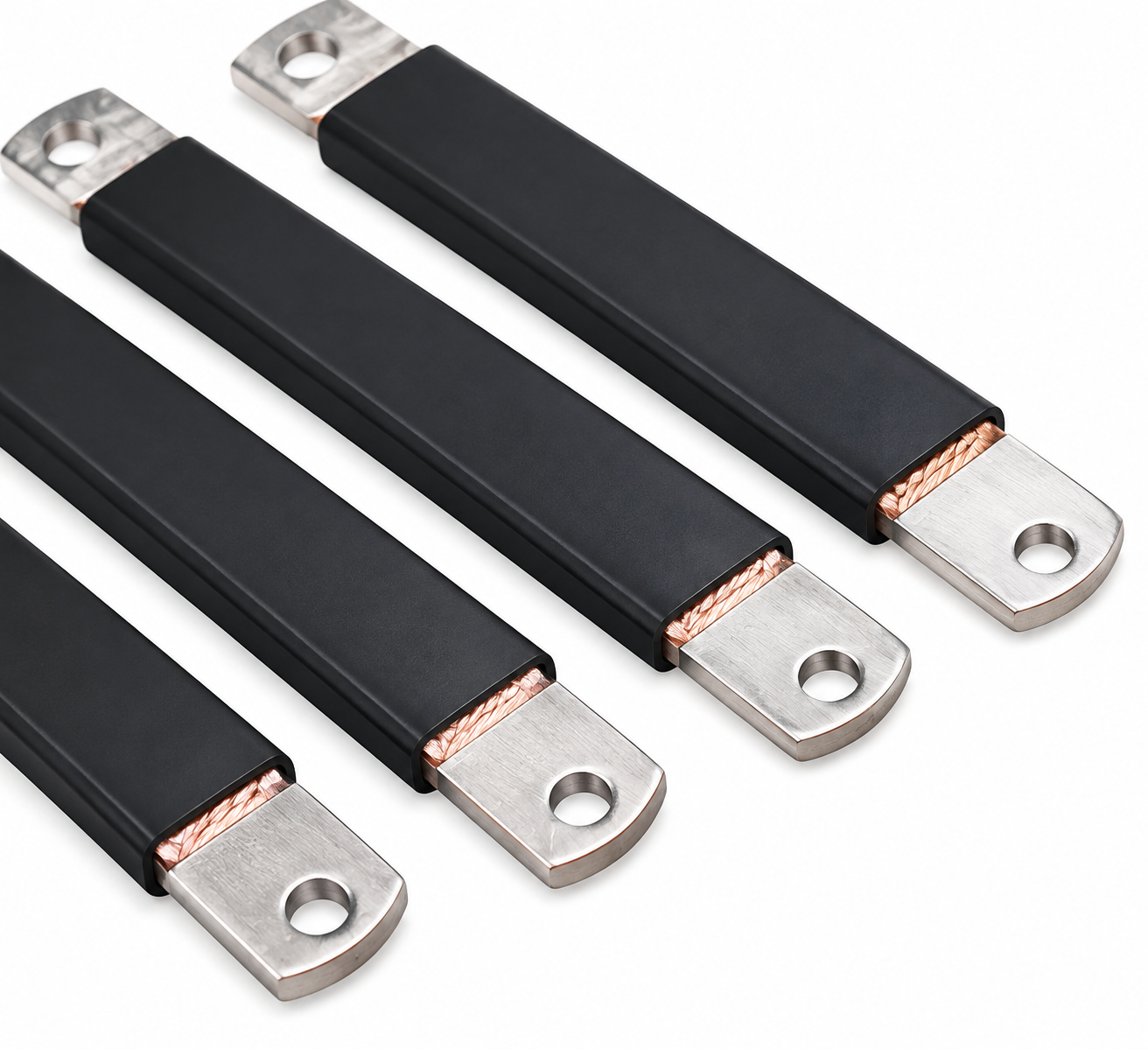
The Copper Connector Standard: Structural Types, Insulation Selection, and Application Scenarios
How Do You Correctly Select the Structural Type of a Copper Busbar Connector?
The selection of copper busbar connector structural types
Copper busbar connectors are available in several structural types, each suited to specific applications. How you correctly select the structural type of a copper busbar connector depends on the mechanical, electrical, and installation requirements of the system.
The rigid connector
The rigid connector is a solid copper bar that provides a fixed, non-flexible connection. It is used in applications where the connection points are fixed and there is no relative movement. The rigid connector offers the lowest electrical resistance and is the most compact option. It is suitable for connections within switchgear, panelboards, and fixed busbar systems.
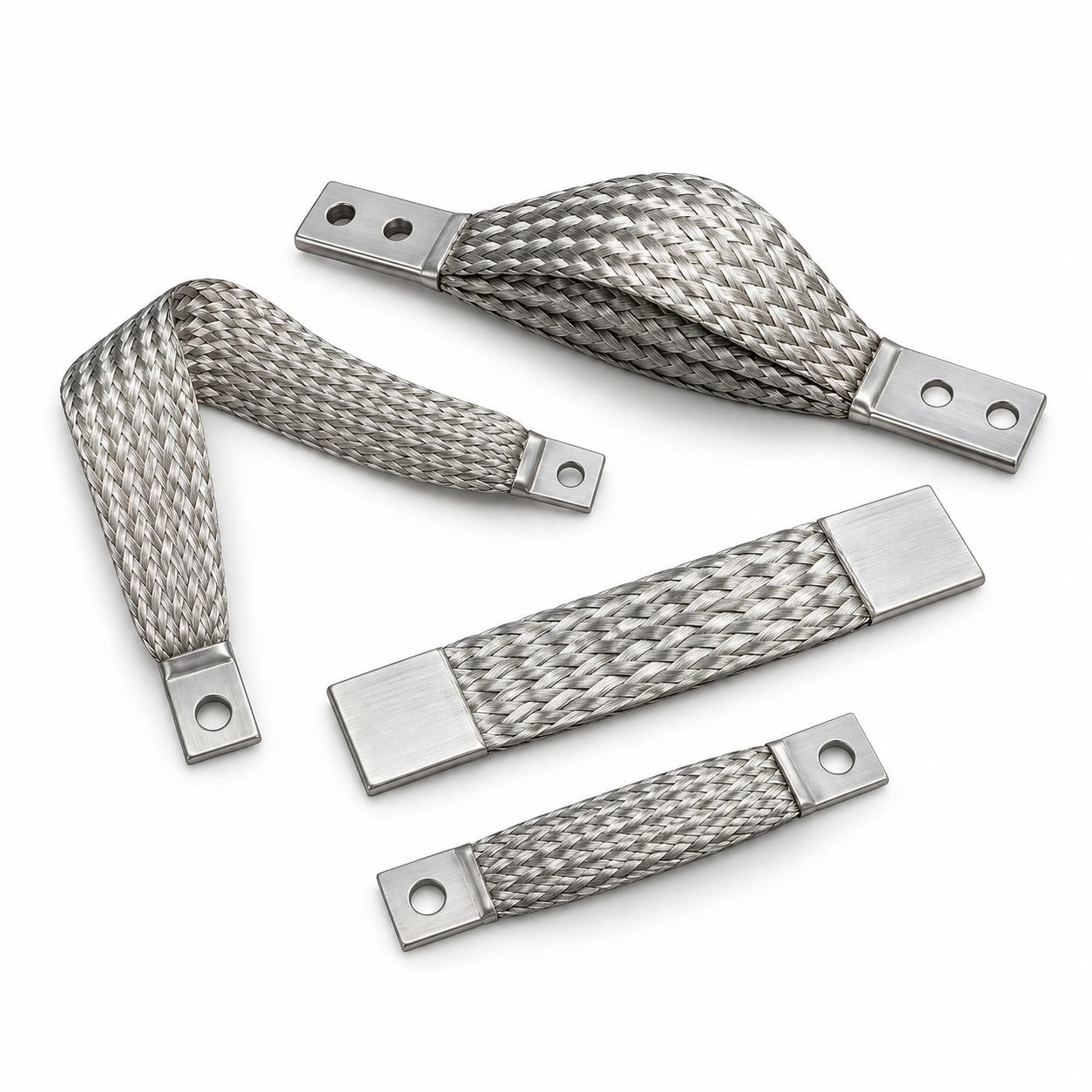
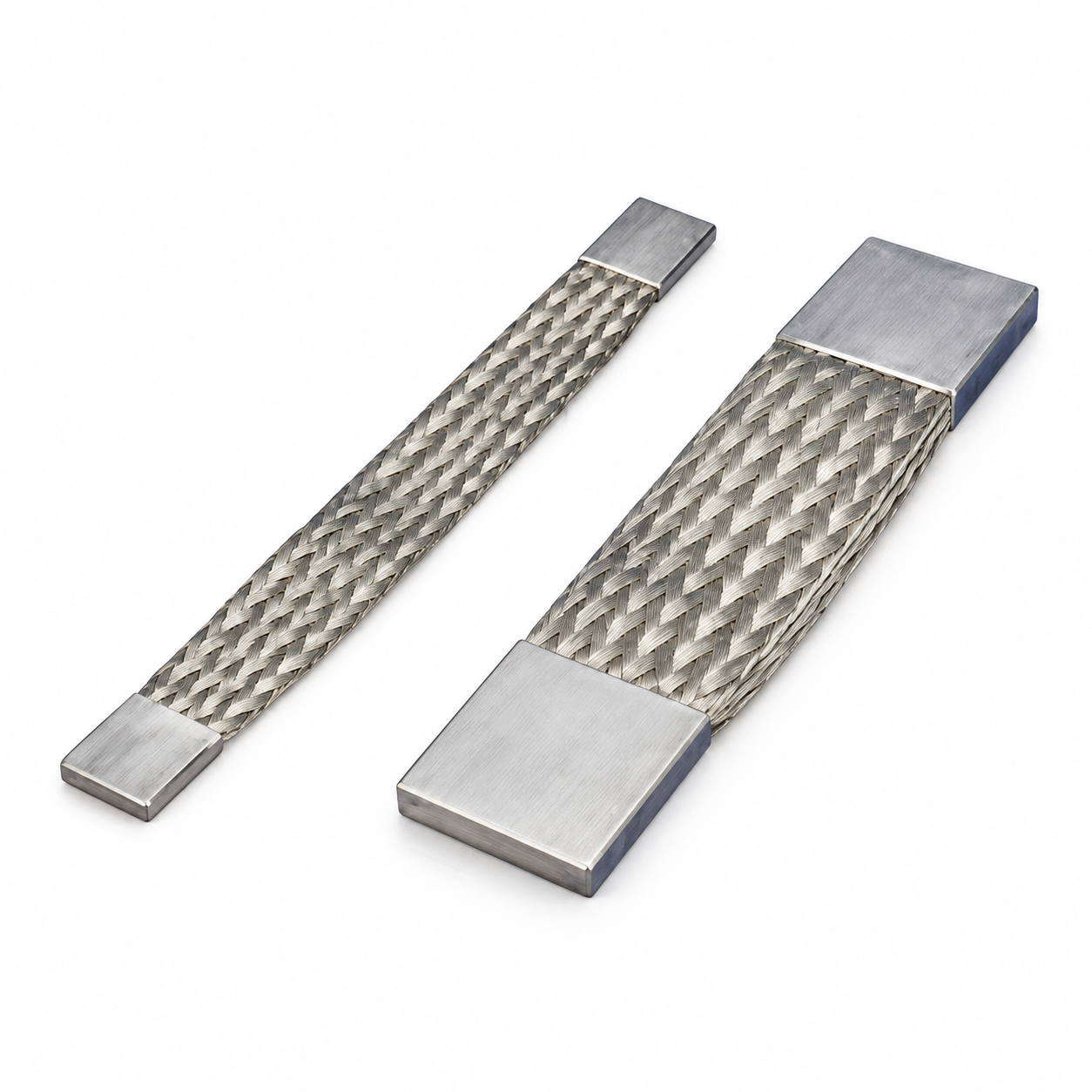
The flexible braided connector
The flexible braided connector is made from woven copper strands that provide multi-directional flexibility. It is used in applications where vibration, thermal expansion, or movement must be accommodated. The braided connector provides high flexibility and is suitable for connections between equipment with relative movement.
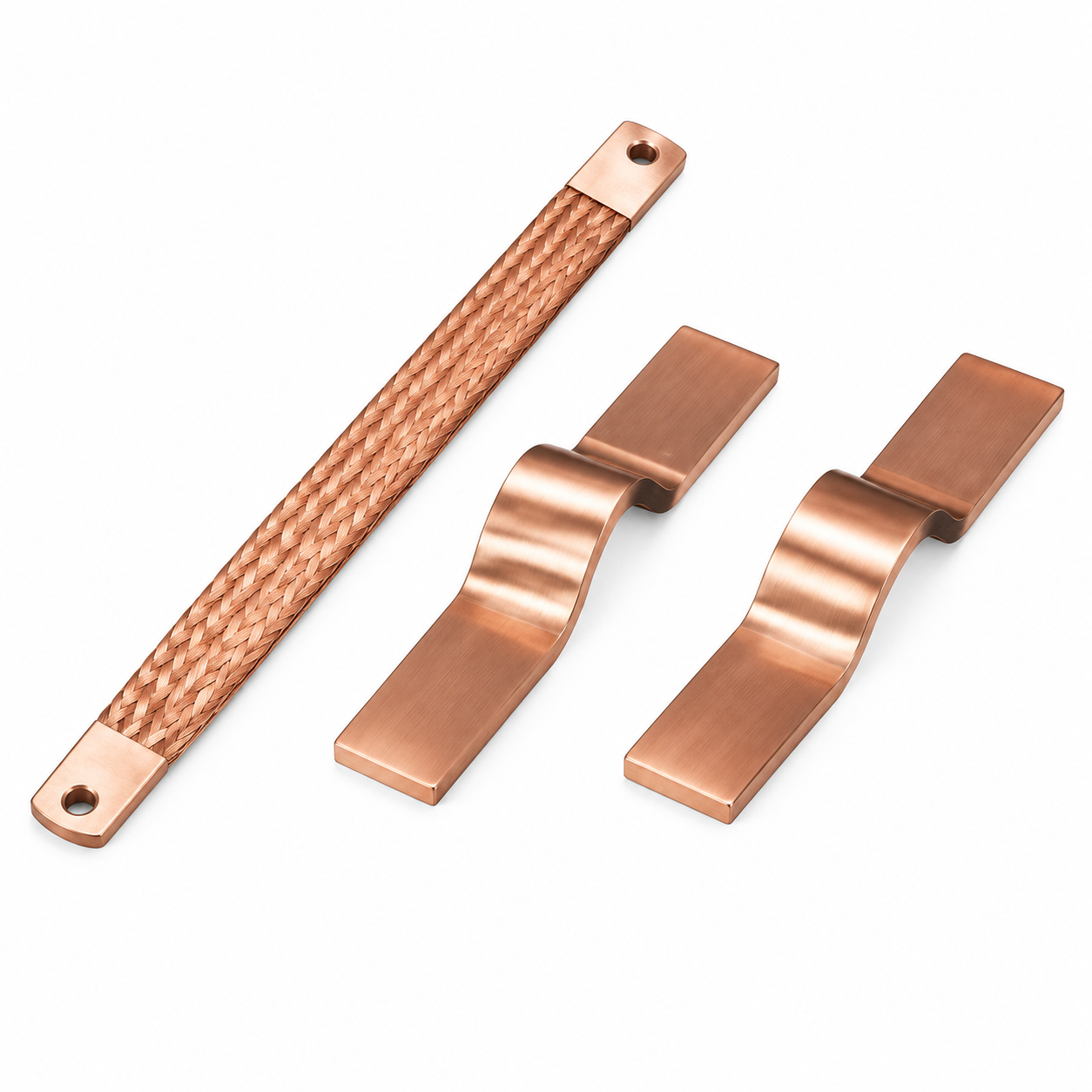
The laminated flexible connector
The laminated flexible connector is made from multiple thin layers of copper foil that provide flexibility in a single plane. It is used in applications where controlled, single-plane flexibility is required. The laminated connector offers lower resistance than the braided connector and is more compact.
The expansion connector
The expansion connector is a specialized connector designed to accommodate thermal expansion in long busbar runs. It is used in applications where the busbar length changes significantly with temperature. The expansion connector is typically a flexible connector with a specific shape or design to accommodate the expansion.
The key factors in selecting the structural type of a copper busbar connector
- Rigid connector: fixed connection, no movement, lowest resistance, most compact, suitable for switchgear and panelboards
- Flexible braided connector: multi-directional flexibility, vibration resistance, thermal expansion accommodation, suitable for equipment with relative movement
- Laminated flexible connector: single-plane flexibility, lower resistance, more compact than braided, suitable for controlled movement
- Expansion connector: thermal expansion accommodation, long busbar runs, specific design for expansion
The selection of insulation material for flexible copper connectors
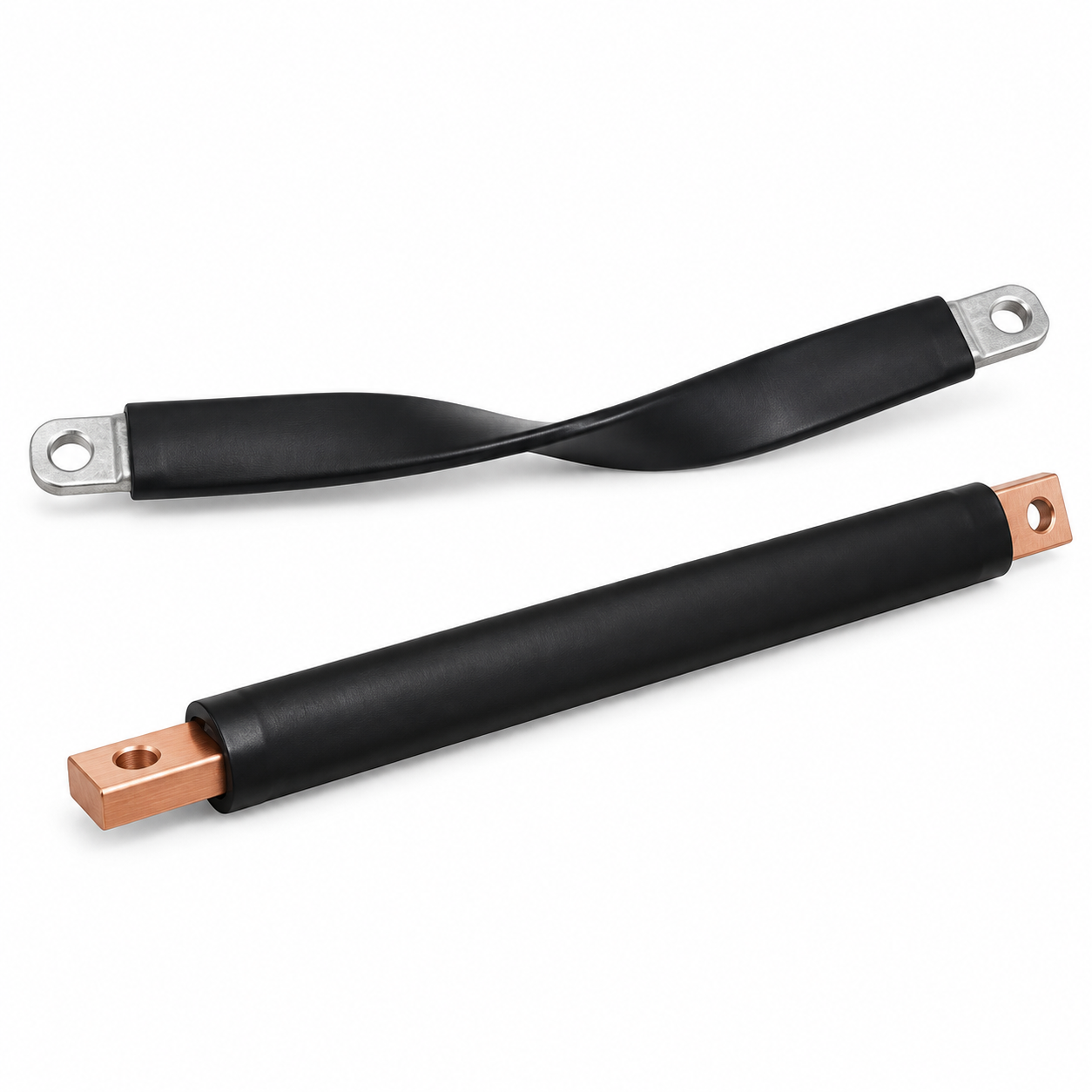
Flexible copper connectors require insulation that accommodates the flexible structure while providing electrical and mechanical protection. How you choose the insulation material for an insulated flexible copper connector depends on the operating temperature, flexibility requirements, and environmental conditions.
The PVC insulation
PVC (polyvinyl chloride) is a cost-effective, general-purpose insulation material. It provides good electrical insulation and moderate mechanical strength. PVC is suitable for most indoor applications with moderate temperature requirements. The flexibility of PVC is adequate for most applications but is less flexible than silicone or other elastomers.
The silicone insulation
Silicone insulation provides excellent high-temperature resistance and superior flexibility. It is suitable for applications where the connector is exposed to high temperatures or where maximum flexibility is required. Silicone also provides good resistance to UV radiation and weathering, making it suitable for outdoor applications.
The heat-shrink tubing
Heat-shrink tubing is applied over the connector and shrunk to form a tight, conformal insulation layer. It provides good mechanical protection and electrical insulation. Heat-shrink tubing is available in various materials, including PVC, polyolefin, and PTFE.
The PTFE insulation
PTFE (polytetrafluoroethylene) provides excellent high-temperature resistance, low friction, and outstanding chemical resistance. It is used in demanding applications where other insulation materials would fail. PTFE is flexible and can be applied as a tape or as a heat-shrink tubing.
Table: insulation material selection for flexible copper connectors
|
Insulation Material
|
Temperature Range
|
Flexibility
|
UV Resistance
|
Chemical Resistance
|
Best Application
|
|
PVC
|
-15°C to 70°C
|
Moderate
|
Poor
|
Moderate
|
Indoor, general applications, cost-effective
|
|
Silicone
|
-50°C to 200°C
|
Excellent
|
Good
|
Good
|
High-temperature, high-flexibility, outdoor
|
|
Heat-shrink (polyolefin)
|
-55°C to 125°C
|
Moderate
|
Good
|
Moderate
|
General applications, conformal insulation
|
|
PTFE
|
-60°C to 260°C
|
Good
|
Excellent
|
Excellent
|
High-temperature, chemical resistance, demanding applications
|
The application scenarios for flexible copper connectors
Flexible copper connectors are used in applications where rigid connections would fail due to movement, vibration, or thermal expansion. The scenarios where flexible copper connectors are widely used include electric vehicles, power electronics, switchgear, and industrial equipment.
Electric vehicle battery connections
Flexible copper connectors are extensively used in EV battery packs to connect individual battery cells and modules. The connectors accommodate vibration, thermal expansion, and movement while maintaining low electrical resistance. They are also used in EV charging infrastructure, where they connect charging equipment to the power distribution system.
Power electronics applications
In power electronics, flexible copper connectors are used to connect power semiconductor devices, capacitors, and inductors. The flexibility accommodates thermal expansion and vibration while providing the low-inductance connections required for high-speed switching.
Switchgear and power distribution
Flexible copper connectors are used in switchgear to connect circuit breakers, switches, and other components. They accommodate the movement of the equipment during operation and installation. The flexibility also simplifies the assembly of the switchgear.
Industrial equipment and machinery
Flexible copper connectors are used in industrial equipment to connect motors, drives, and control systems. The connectors accommodate vibration and movement while maintaining the required electrical connections. They are also used in robotics and automation equipment.
The application scenarios and their requirements
- EV battery connections: high current, vibration resistance, thermal expansion, low resistance, high flexibility
- Power electronics: high current, high frequency, low inductance, thermal expansion, compact size
- Switchgear: high current, movement accommodation, simplified assembly, high reliability
- Industrial equipment: vibration resistance, movement accommodation, high current, durability
- Renewable energy systems: outdoor exposure, UV resistance, temperature cycling, corrosion resistance
FAQ
Q1: What is the difference between a rigid and a flexible copper connector?
A rigid connector is a solid copper bar providing a fixed connection, used where there is no relative movement. A flexible connector is made from braided wire or laminated foil, providing flexibility to accommodate movement, vibration, or thermal expansion.
Q2: What is the best insulation material for high-temperature flexible connectors?
Silicone and PTFE are the best insulation materials for high-temperature applications. Silicone provides excellent flexibility and is suitable up to 200°C. PTFE provides superior temperature resistance up to 260°C and excellent chemical resistance.
Q3: Why are flexible connectors used in EV battery packs?
Flexible connectors are used in EV battery packs to accommodate vibration, thermal expansion, and movement while maintaining low electrical resistance. They also simplify the assembly of the battery pack and provide a reliable connection.
Q4: How do I choose the correct flexible connector for my application?
Choose the connector based on the current rating, flexibility requirements (multi-directional or single-plane), temperature range, and environmental conditions. The connector must provide the required current-carrying capacity and flexibility while withstanding the operating environment.
Q5: Can flexible connectors be used in high-current applications?
Yes, flexible connectors can be used in high-current applications. The connector must be sized for the current rating, with sufficient cross-sectional area to carry the current without exceeding the allowable temperature rise. Laminated flexible connectors are preferred for high-current applications due to their lower resistance compared to braided connectors.

 English
 Español