The Aluminum Busbar Revolution: Material Advantages, Corrosion Prevention, and Custom Processing
Why Are Aluminum Busbars Replacing Copper Busbars?
The aluminum busbar replacement trend
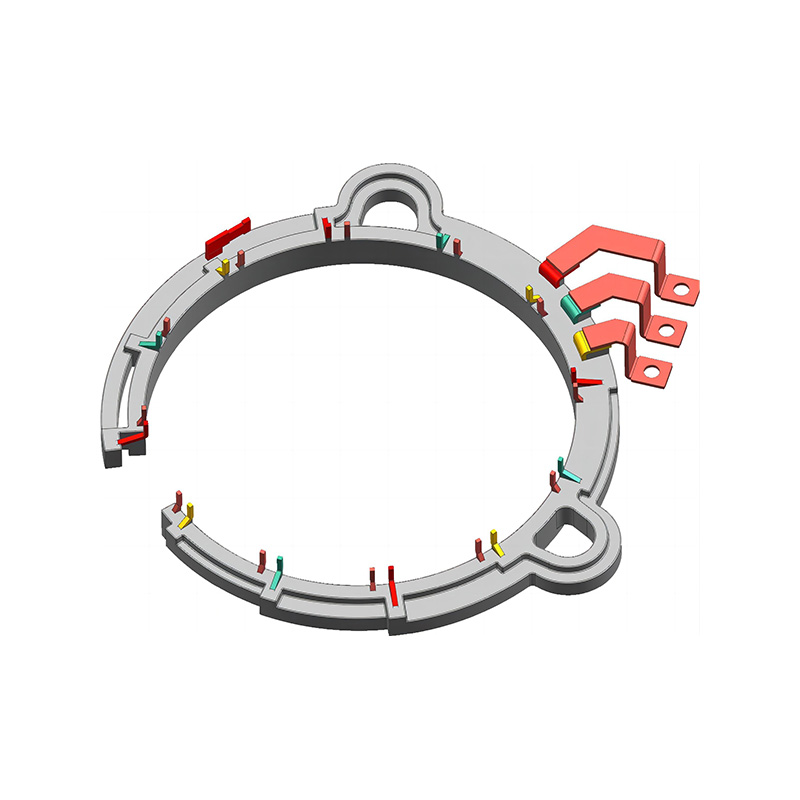
Aluminum busbars are increasingly replacing copper busbars in electrical distribution systems. Why aluminum busbars are replacing copper busbars is a trend driven by weight, cost, and the growing demand for efficient energy management.
The weight and cost advantages
Aluminum's primary advantage over copper is its lower density. An aluminum busbar with the same current-carrying capacity as a copper busbar weighs about 50% less. This weight reduction is critical in electric vehicles and aerospace applications. Aluminum is also more cost-effective. The material price of aluminum is typically much lower than copper, making it an attractive choice for large busbar systems.
The conductivity and size trade-off
The trade-off is aluminum's lower conductivity, which requires larger cross-sections for the same current rating. This limits its use in compact applications but is often acceptable where space permits.
The growing adoption in new energy applications
In new energy applications—electric vehicles, solar power systems, and battery storage—aluminum busbars are widely used due to their weight and cost advantages. The trend toward electrification and renewable energy is accelerating the adoption of aluminum busbars.
Table: aluminum busbars versus copper busbars
|
Factor
|
Aluminum Busbar
|
Copper Busbar
|
Why Aluminum Is Replacing Copper
|
|
Density
|
2.7 g/cm³
|
8.9 g/cm³
|
70% lighter for the same volume
|
|
Weight for same conductance
|
50% of copper
|
Baseline
|
Significant weight reduction in mobile applications
|
|
Cost per kg
|
Lower
|
Higher
|
Significant cost savings for large systems
|
|
Conductivity
|
61% IACS
|
100% IACS
|
Requires larger cross-section; acceptable where space permits
|
|
Application
|
Weight-sensitive, cost-sensitive
|
Compact, high-current
|
Aluminum preferred in new energy and weight-sensitive applications
|
What Factors Must Be Considered When Designing Aluminium Busbars?
The design factors for aluminium busbars
The design of aluminium busbars requires careful consideration of material properties, electrical performance, and environmental conditions. The factors that must be considered when designing aluminium busbars are broader than those for copper busbars.
The material and conductivity factors
The selection of the aluminium alloy is the primary design factor. The most common alloys for busbar applications are 6061 and 6101. The alloy must provide the required electrical conductivity and mechanical strength. The conductivity of the alloy is a function of its composition and purity.
The temperature and thermal expansion factors
The allowable temperature rise limits the current-carrying capacity. Aluminium has a higher coefficient of thermal expansion than copper, which requires careful design of connections and supports to accommodate movement. Thermal cycling can cause loosening of connections.
The corrosion and connection factors
Aluminium forms an insulating oxide layer on its surface, requiring special surface preparation for connections. Galvanic corrosion is a risk when aluminium is connected to dissimilar metals. Proper design and materials are required to prevent corrosion.
The key design factors for aluminium busbars
- Alloy selection: 6061 and 6101 offer the best balance of conductivity and strength; 6101 is specifically designed for electrical applications
- Cross-sectional area: must be larger than copper for the same current rating; governed by the allowable temperature rise
- Connection design: requires surface preparation, joint compound, and corrosion-resistant hardware; Belleville washers are essential
- Thermal expansion management: supports and connections must accommodate movement; expansion loops or flexible connections may be required
- Corrosion protection: anodizing, coating, or enclosure may be required in harsh environments; avoid galvanic couples with dissimilar metals
How Can Electrochemical Corrosion Caused by "Copper-Aluminum Contact" Be Prevented in Aluminum Busbars for Batteries?
The electrochemical corrosion challenge
When aluminum and copper are in direct contact in the presence of an electrolyte, a galvanic cell is formed. How electrochemical corrosion caused by "copper-aluminum contact" can be prevented in aluminum busbars for batteries is a critical reliability issue in battery systems.
The galvanic corrosion mechanism
Aluminum is anodic to copper, meaning it will corrode preferentially when the two metals are in contact. The corrosion products increase contact resistance, generate heat, and can ultimately cause connection failure. The electrolyte can be moisture, humidity, or battery electrolyte.
The prevention methods
The first prevention method is the use of bi-metallic transition joints. These are manufactured joints that connect aluminum and copper with a metallurgical bond, preventing direct contact. The second method is the application of a joint compound that isolates the metals and prevents moisture ingress. The third method is the use of corrosion-resistant hardware, such as stainless steel, to avoid creating additional galvanic couples. The fourth method is the application of a protective coating on the busbar surface.
The effective prevention strategies for copper-aluminum contact
- Bi-metallic transition joints: metallurgically bonded aluminum-copper joints, prevent direct contact between the two metals
- Joint compound: applied to the contact surface, isolates the metals and prevents moisture ingress
- Corrosion-resistant hardware: stainless steel or zinc-plated hardware, prevents additional galvanic couples
- Protective coating: anodizing or coating on the busbar surface, prevents direct exposure to electrolytes
What Are the Ingress Protection (IP) Ratings and Corrosion Resistance Requirements for Aluminum Busbars EV Applications?
The protection requirements for EV aluminum busbars
Electric vehicle applications require high levels of protection against moisture, dust, and corrosion. The ingress protection (IP) ratings and corrosion resistance requirements for aluminum busbars EV applications are defined by the harsh operating environment of the vehicle.
The IP rating requirements
The busbars must be protected from moisture and dust. An IP rating of at least IP67 is typically required for busbars installed in the battery pack or under the vehicle. IP67 provides protection against dust ingress and temporary immersion in water. IP69K may be required for busbars in areas exposed to high-pressure washing.
The corrosion resistance requirements
Aluminum busbars EV applications must resist corrosion from road salt, battery electrolyte, and other chemicals. The corrosion resistance is achieved through material selection, surface treatment, and enclosure design. Anodizing or coating is often required. The corrosion resistance must be validated through salt spray testing.
The protection requirements for EV aluminum busbars
- IP67 rating: dust-tight and protected against temporary immersion, required for busbars in battery packs and under-vehicle locations
- IP69K rating: protected against high-pressure, high-temperature water jets, required for busbars in engine compartments or exposed areas
- Salt spray resistance: must withstand salt spray exposure, validated through ASTM B117 or similar testing
- Chemical resistance: must resist battery electrolyte and other chemicals, validated through chemical exposure testing
The forming and processing of custom aluminum busbars
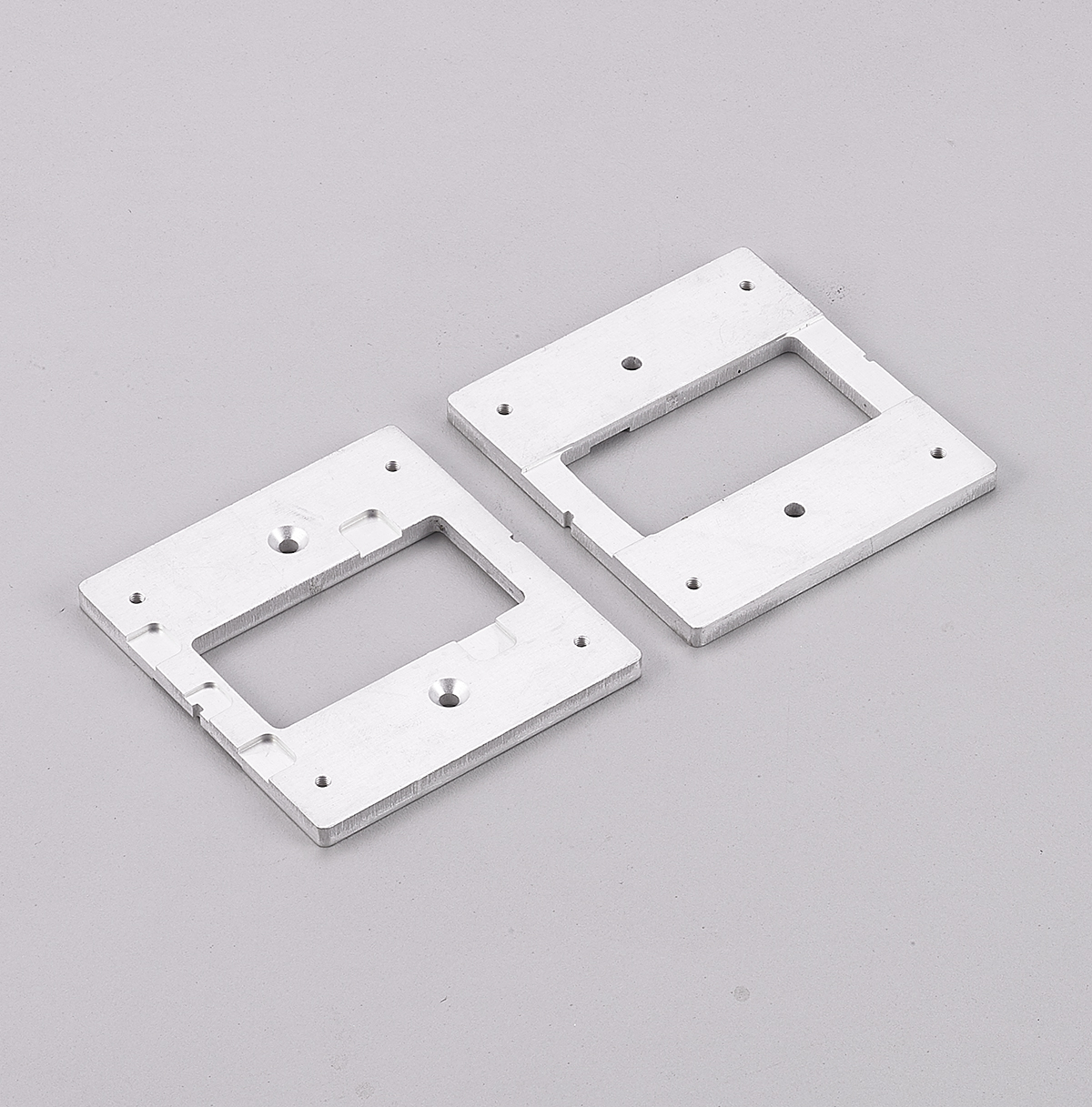
Custom aluminum busbars are manufactured through a combination of forming and processing techniques. How custom aluminum busbars are formed and processed depends on the complexity of the shape and the required tolerances.
The forming methods
The primary forming methods are bending and stamping. Bending is used to create shapes with bends, such as L-brackets and U-channels. The bend radius must be carefully controlled to prevent cracking. Stamping is used to create complex shapes in high volume. The stamping dies must be designed to prevent tearing and maintain dimensional accuracy.
The processing methods
The processing methods include cutting, machining, and punching. Cutting is the first step. The material is cut to the required length using sawing, shearing, or laser cutting. Machining is used to create precise features. Punching is used to create holes and cutouts.
The forming and processing methods
|
Process
|
Method
|
Application
|
Why It's Used
|
|
Bending
|
Press brake or CNC bender
|
Creating angles and U-channels
|
Versatile for custom shapes; low tooling cost
|
|
Stamping
|
Press with custom die
|
High-volume complex shapes
|
Cost-effective for large quantities
|
|
Cutting
|
Sawing, shearing, laser cutting
|
Initial length and profile cutting
|
Provides accurate lengths for further processing
|
|
Machining
|
Milling, drilling
|
Creating precise features
|
Achieves tight tolerances for connections
|
|
Punching
|
Turret punch press
|
Creating holes and cutouts
|
Fast and accurate for repetitive patterns
|
The material selection process for extruded aluminum busbars
The selection of the aluminum alloy for extruded busbars is determined by the required electrical conductivity, mechanical properties, and extrudability. How the material is selected for extruded aluminum busbars involves evaluating these factors against the application requirements.
The electrical conductivity requirement
The alloy must provide the required electrical conductivity. For most busbar applications, a conductivity of at least 60% IACS is required. 6101 alloy is the standard choice for electrical applications, providing approximately 60% IACS conductivity. Alloys with higher conductivity are available, such as 1350 (62% IACS), but they offer lower mechanical strength and are more difficult to extrude.
The mechanical strength requirement
The alloy must provide sufficient mechanical strength to withstand the loads and stresses encountered during installation and operation. The tensile strength and yield strength are the key mechanical properties. The yield strength must be sufficient to prevent deformation under clamping loads.
The extrudability and formability requirements
The alloy must be extrudable into the required shape without cracking or tearing. The extrusion ratio—the reduction in cross-section during extrusion—is a key factor. The alloy must also be formable into bends and other shapes. The formability is a function of the alloy composition and the temper condition.
The key material selection criteria
- Electrical conductivity: the alloy must provide the required conductivity, with 6101 (60% IACS) as the standard choice
- Mechanical strength: the alloy must withstand clamping and mechanical loads, with 6101 offering good strength
- Extrudability: the alloy must be extrudable into the required shape, with 6061 and 6101 both suitable
- Formability: the alloy must be formable into bends and other shapes, with 6101 offering good formability
- Corrosion resistance: the alloy must resist corrosion in the application environment, with 6061 and 6101 both offering good corrosion resistance
FAQ
Q1: Why are aluminum busbars replacing copper busbars?
Aluminum busbars are replacing copper busbars due to their lower weight (about 50% of copper for the same conductance) and lower material cost. These advantages make aluminum particularly attractive for electric vehicles and renewable energy systems where weight and cost are critical factors. The trade-off is lower conductivity, requiring larger cross-sections.
Q2: How do you prevent galvanic corrosion when connecting aluminum and copper?
Galvanic corrosion is prevented by using bi-metallic transition joints, applying joint compound to the contact surface, using corrosion-resistant hardware, and applying protective coatings. The prevention methods must be carefully selected and applied to ensure reliability.
Q3: What are the IP rating requirements for aluminum busbars in EV applications?
The typical IP rating for aluminum busbars in EV applications is at least IP67 for battery packs and under-vehicle locations. IP69K may be required for busbars in areas exposed to high-pressure washing. The IP rating must be verified for the specific application.
Q4: What is the best aluminum alloy for busbars?
The best alloy for busbars is typically 6101, which is specifically designed for electrical applications and offers approximately 60% IACS conductivity with good mechanical strength. 6061 is also commonly used and offers a good balance of strength and conductivity.
Q5: How are custom aluminum busbars processed?
Custom aluminum busbars are processed through a combination of cutting, bending, stamping, machining, and punching. The specific processes depend on the complexity of the shape, the tolerances required, and the production volume.

 English
 Español