 English
 Español

Flexible Copper Connectors for High Voltage Gas Insulated Switchgear
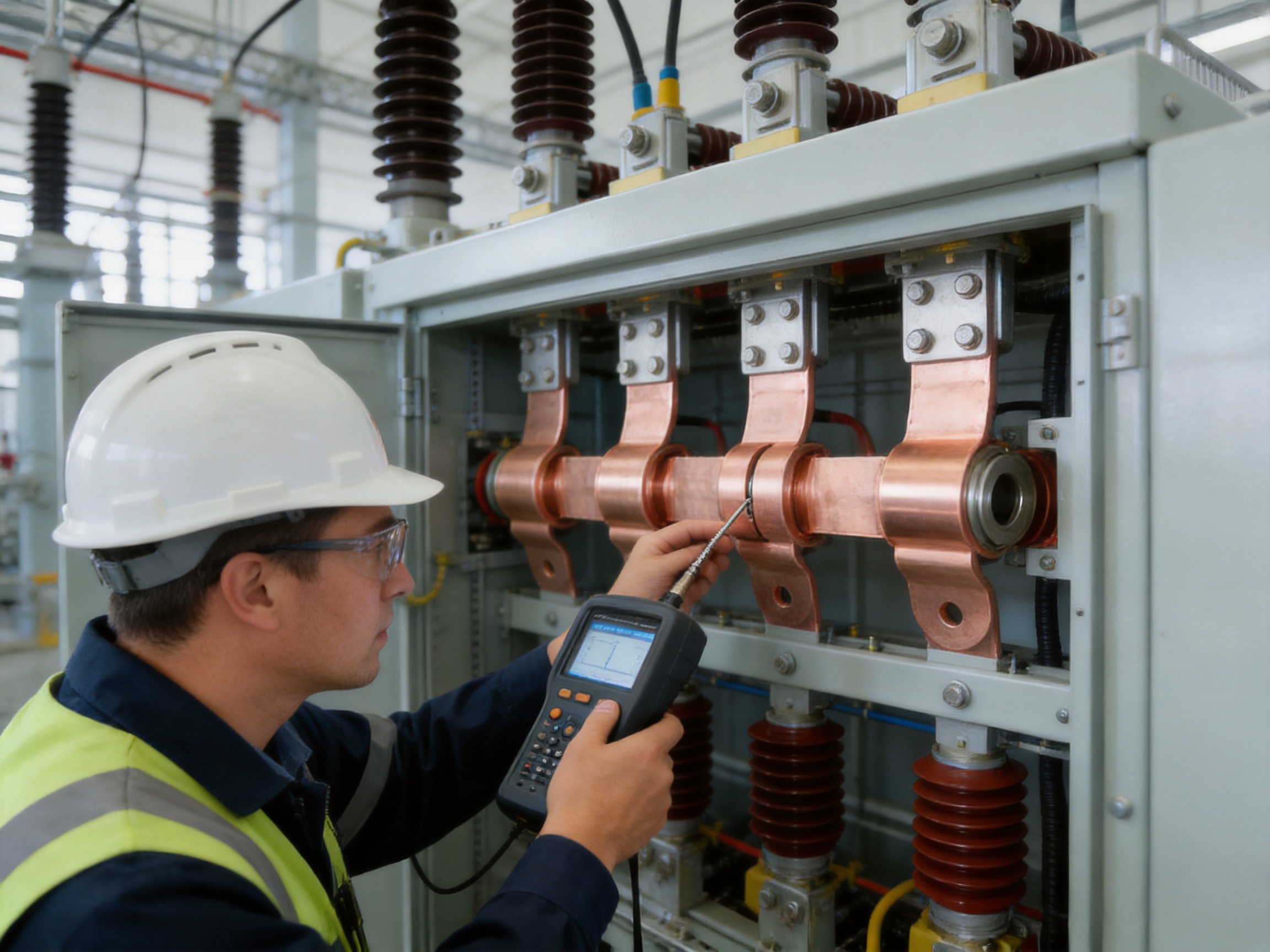
High-voltage electrical equipment depends on connection systems that can carry substantial current, withstand demanding environmental conditions, and maintain electrical stability over long operating periods. In gas insulated switchgear, high-voltage inflatable cabinets, power distribution cabinets, and substation equipment, the connector is not a minor accessory. It is a critical conductive component that directly influences system safety, efficiency, reliability, service life, and maintenance requirements.
Flexible copper connectors provide an effective solution where conventional rigid conductors may be limited by vibration, thermal expansion, installation tolerances, movement between connected components, or restricted cabinet space. Designed with high-purity T2 copper or tinned copper conductors and a high-strength insulating layer, these flexible connections combine high conductivity with mechanical flexibility and reliable electrical insulation. They can be manufactured in a wide range of conductor areas and current ratings to match the requirements of modern transmission, distribution, industrial, and energy infrastructure.
For high-voltage gas insulated switchgear, the value of a flexible copper connector is determined by much more than its nominal current capacity. Its conductor design, insulation quality, welding or forming process, dimensional accuracy, terminal configuration, heat dissipation, bending performance, and quality-control system all affect final performance. A professionally manufactured connector must therefore be engineered as a complete electrical and mechanical component rather than treated as a simple piece of copper.
Zhejiang Zhongyan New Energy Co., Ltd. specializes in conductive components and precision soft connections for power transmission and distribution, new energy vehicles, rail transit, communication systems, and energy storage applications. Its manufacturing capabilities cover high-voltage electrical copper foil soft connections, special-shaped soft connections, battery soft connections, and other customized conductive components. This experience supports the development of flexible copper connectors for demanding high-voltage equipment.
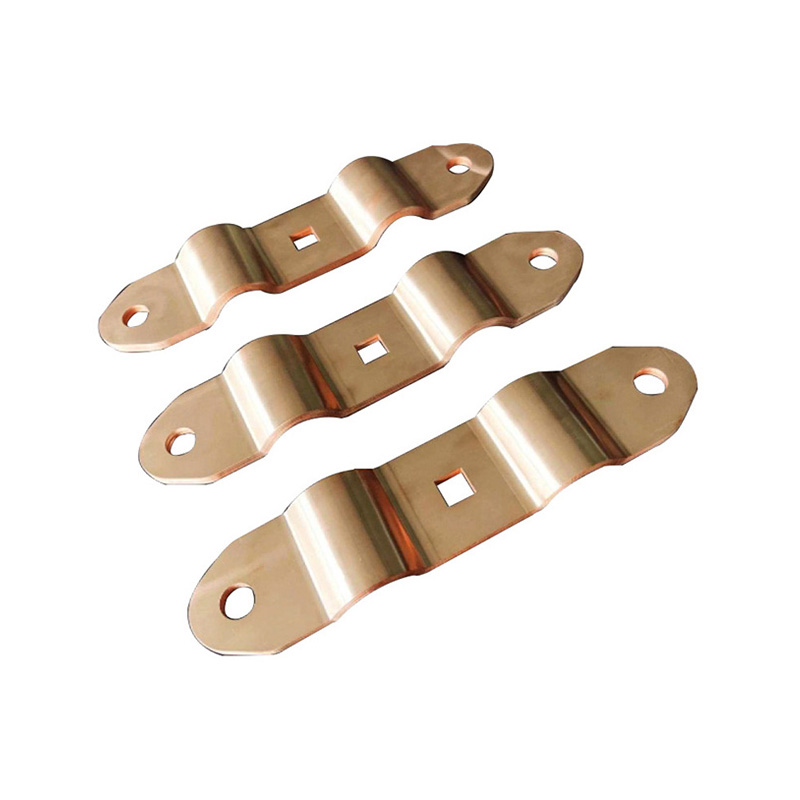
Flexible Copper Connectors for High Voltage Gas Insulated Switchgear
What Are Flexible Copper Connectors?
A flexible copper connector is a conductive component designed to provide a low-resistance electrical path while allowing controlled movement, bending, or compensation between connected electrical parts. Depending on the application, the conductor may be made from copper foil layers, laminated copper, braided copper, stranded copper, or other engineered copper structures. The component can also include formed terminals, drilled connection holes, plating, insulation, protective sleeves, and customized end geometries.
In high-voltage applications, the flexible connector must perform two functions at the same time. First, it must conduct current efficiently with minimal electrical loss and limited temperature rise. Second, it must maintain insulation and mechanical integrity under voltage stress, vibration, thermal cycling, and installation forces. These requirements make material selection and manufacturing accuracy especially important.
The flexible structure is useful because electrical equipment does not remain completely static during operation. Current flow produces heat, and heat causes materials to expand. Switching operations can generate electromagnetic forces. Motors, transformers, cabinets, and substation components may experience vibration. Installation tolerances can also produce small misalignments between connection points. A rigid busbar may transfer these stresses to terminals, bolts, insulators, or enclosure structures. A properly designed flexible connector can absorb or accommodate part of this movement.
Flexible copper connectors for gas insulated switchgear are commonly designed around the physical arrangement of the equipment. The final product may require a straight connection, offset connection, looped connection, layered connection, angled terminal, or special three-dimensional shape. The connector may also need to fit within a specific cabinet envelope while preserving the required insulation distance and bending radius.
Why Copper Is Used in High-Voltage Connections
Copper remains one of the preferred conductive materials for high-current electrical connections because it offers an excellent combination of electrical conductivity, thermal performance, mechanical strength, formability, and process compatibility. High-purity T2 copper is suitable for applications where a stable and efficient conductive path is required. Tinned copper may be selected where additional surface protection, solderability, or resistance to certain environmental conditions is desired.
The low electrical resistance of copper helps reduce I²R losses during operation. Lower losses can reduce unnecessary heat generation and support improved system efficiency. In high-current switchgear, distribution cabinets, and substations, even a small increase in contact resistance can create localized heating. Over time, such heating may accelerate insulation aging, loosen mechanical interfaces, or reduce the service life of neighboring components.
Copper also has favorable thermal conductivity. When a connector is correctly sized and properly installed, heat generated by current flow can be distributed more evenly through the conductor and transferred toward suitable heat-dissipation paths. The actual temperature rise depends on many variables, including current, conductor cross-sectional area, connector geometry, installation orientation, ambient temperature, ventilation, contact resistance, and enclosure design.
In addition to its electrical properties, copper can be formed, laminated, welded, drilled, plated, and machined into customized geometries. This makes it suitable for both standard and special-shaped flexible connections. For high-voltage equipment manufacturers, the ability to match the connector to the internal layout of a cabinet can simplify installation and support more compact equipment designs.
Application in Gas Insulated Switchgear
Gas insulated switchgear is designed to combine switching, protection, isolation, and current-carrying functions in a compact high-voltage enclosure. Because conductive parts and switching components are arranged within a controlled cabinet environment, internal components must meet strict requirements for electrical clearance, insulation coordination, dimensional consistency, and mechanical reliability.
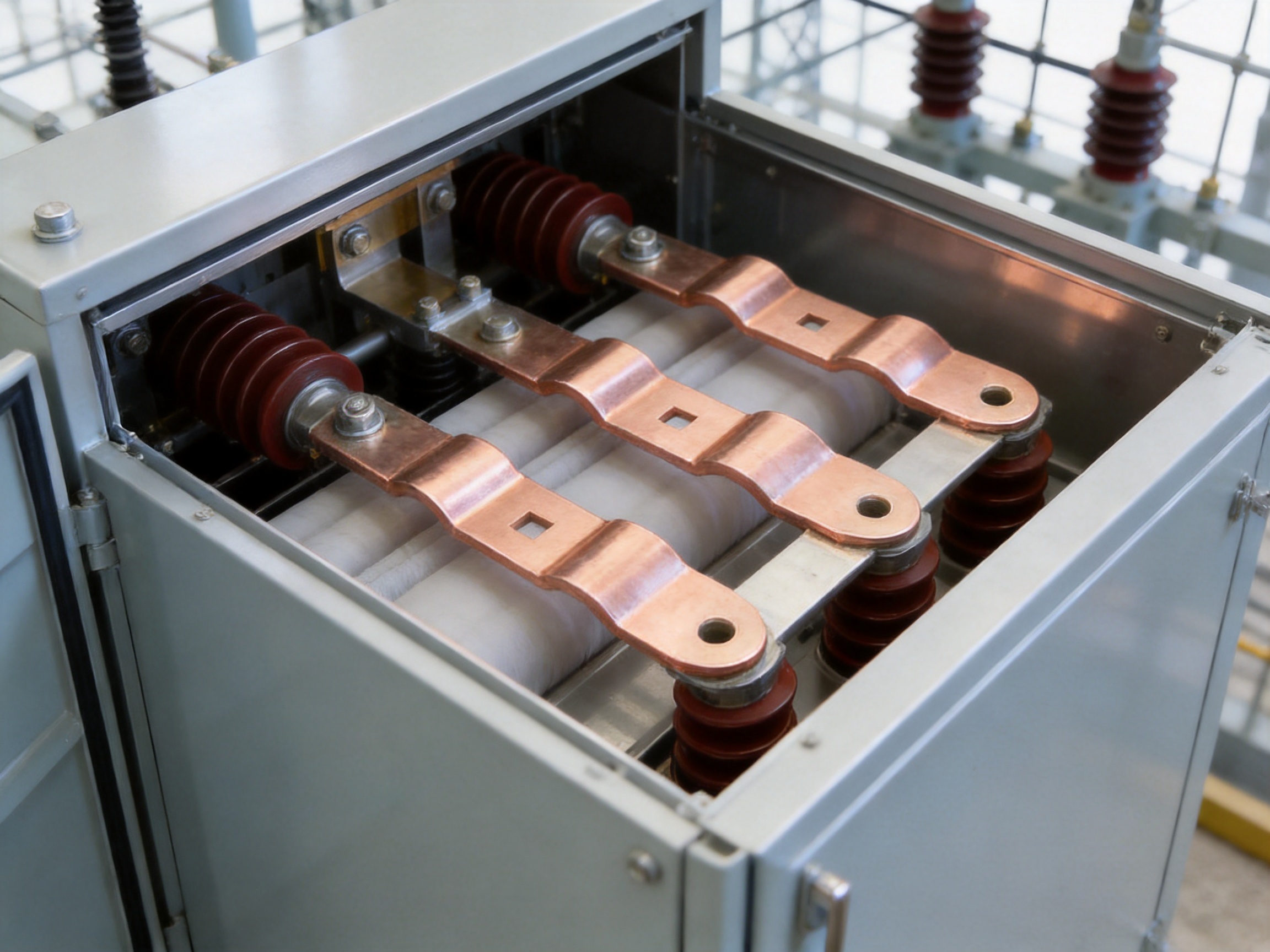
Flexible copper connectors can be used between conductive assemblies, busbar sections, equipment terminals, grounding-related interfaces, and other connection points where a degree of flexibility is required. In some designs, the connector accommodates the relative movement of internal components. In others, it provides a compact connection path that is easier to install than a rigid copper bar with multiple bends and supports.
The connector must be compatible with the overall insulation system of the switchgear. Its insulation layer must be able to withstand the specified working voltage and withstand-voltage testing requirements. The external surface should also be free from defects that could create concentrated electrical stress, such as cuts, cracks, pinholes, sharp protrusions, or uneven transitions around terminals.
For GIS and high-voltage inflatable cabinet applications, a connector is normally designed according to the equipment manufacturer’s drawings. Important input data may include rated voltage, current rating, conductor area, installation direction, terminal hole pattern, length, bending position, insulation thickness, operating temperature, and required testing standard. This drawing-based approach helps prevent installation interference and ensures that the finished part corresponds to the equipment’s electrical and mechanical design.
Key Product Specifications
The flexible copper connectors described for high-voltage switchgear are available with T2 copper or tinned copper conductors. High-voltage insulation materials and halogen-free insulation options can be selected according to the application, environmental requirements, and customer specifications. The stated product range includes rated voltages of 10 kV, 24 kV, and 35 kV, with operating temperatures from -40°C to 125°C.
Available current ratings range from approximately 100 A to 3000 A, while conductor areas can range from 10 mm² to 1500 mm². These figures represent a broad design range rather than a single universal rating. The correct selection must be confirmed according to the complete equipment design, installation conditions, temperature-rise requirements, insulation system, connection method, and applicable testing requirements.
| Parameter | Available or Stated Range | Engineering Consideration |
|---|---|---|
| Conductor material | T2 copper or tinned copper | Selected according to conductivity, surface protection, forming, and environmental requirements |
| Insulation | High-voltage insulation; halogen-free option | Must match rated voltage, temperature, insulation coordination, and safety requirements |
| Rated voltage | 10 kV, 24 kV, or 35 kV | Final suitability depends on the complete switchgear insulation system |
| Operating temperature | -40°C to 125°C | Actual temperature depends on current, enclosure conditions, and installation configuration |
| Withstand voltage | At least 10 kV as specified | Testing values should be confirmed against the customer’s standard and product design |
| Current rating | 100 A to 3000 A | Requires verification through conductor area, thermal design, and contact resistance |
| Conductor area | 10 mm² to 1500 mm² | Customized to current demand, space, flexibility, and heat dissipation |
| Applicable standards | IEC, RoHS, ISO9001-related quality system | Specific compliance documents should be agreed during project qualification |
These parameters demonstrate the product’s application range, but they should not be interpreted as a substitute for project-specific technical confirmation. High-voltage connectors must be selected using the full electrical and mechanical data of the target equipment. A professional supplier should review drawings, operating conditions, installation methods, and testing expectations before mass production.
Electrical Performance Advantages
Low Electrical Resistance
One of the principal advantages of a copper flexible connector is its low-resistance conductive path. High-purity copper, properly processed conductor layers, and accurately formed connection zones help support efficient current transfer. Low resistance contributes to reduced power loss and limits localized heating at the connector itself.
For high-current equipment, the quality of the terminal area is as important as the bulk conductor. Poorly formed ends, inconsistent welding, contamination, inadequate plating, or dimensional deviations can increase contact resistance. A precision manufacturing process therefore needs to control both the conductor body and the terminal interface.
High Current-Carrying Capacity
The product range supports current ratings from 100 A to 3000 A, allowing the connector to be adapted to different switchgear and distribution applications. The final current capacity is influenced by the copper area, connector length, cross-sectional shape, insulation design, ambient temperature, heat dissipation, and connection method.
Flexible copper connectors can also be manufactured in broad conductor areas from 10 mm² to 1500 mm². This gives equipment designers more freedom to balance current capacity, flexibility, cabinet space, installation routing, and weight. A custom cross-section may be more practical than selecting a generic rigid bar that requires additional bends, supports, or transition pieces.
Stable High-Voltage Insulation
The insulating layer protects the conductor and helps maintain safe electrical separation from adjacent components, enclosures, and grounded structures. High-strength insulation is particularly important in compact high-voltage cabinets, where available space is limited and electrical stress may be concentrated around connection points.
Insulation materials must be applied consistently. Uneven thickness, surface damage, trapped contamination, incomplete coverage, or poor transitions at terminals can compromise the performance of the finished assembly. The use of halogen-free insulation may also be considered where low-smoke, flame-retardant, or environmental requirements are part of the project specification.
Withstand-Voltage Capability
The listed products include a withstand-voltage specification of at least 10 kV, subject to the final design and testing conditions. Withstand-voltage performance is evaluated as part of a broader insulation system. The product’s voltage rating, insulation thickness, material properties, terminal geometry, surface condition, and equipment installation must all be considered together.
A responsible manufacturing program should define testing procedures, acceptance criteria, and traceability before production. Electrical testing may be combined with visual inspection, dimensional checks, material verification, and process records to create a more complete quality evaluation.
Mechanical and Installation Advantages
Compensation for Movement and Misalignment
Rigid busbars are effective when connection points remain fixed and accurately aligned. However, high-voltage equipment may experience small movements caused by thermal expansion, vibration, electromagnetic forces, transportation, or assembly tolerances. A flexible connector can accommodate controlled movement and reduce stress transferred to connected components.
This flexibility is particularly valuable where a conductor must bridge two parts that cannot be aligned perfectly without adding complex brackets or rigid transition pieces. By absorbing movement within the connector, the design may reduce mechanical loading on terminals, insulators, and enclosure structures.
Adaptation to Compact Equipment Layouts
Modern power equipment is often designed for a smaller footprint. Internal components may be placed close together, and cable or busbar routes may include limited-access areas. Flexible copper connectors can be formed into customized shapes that follow the available installation path, helping engineers use space more efficiently.
A connector manufactured according to customer drawings can include specific lengths, offsets, bends, terminal directions, mounting holes, and insulation configurations. This reduces the need for on-site modification, which can introduce burrs, damage insulation, create dimensional uncertainty, or affect the repeatability of installation.
Reduced Assembly Complexity
A pre-engineered flexible connection can reduce the number of separate parts required in an electrical assembly. Compared with a rigid bar that needs multiple bends, supports, spacers, and transition pieces, a customized flexible connector may provide a more direct connection path. Fewer interfaces can simplify assembly and reduce the number of potential points requiring inspection.
Improved installation consistency is especially important for switchgear manufacturers producing multiple cabinets or equipment models. When each connector is supplied to a defined drawing and quality specification, assembly teams can work with repeatable components instead of manually adapting standard materials for each unit.
Long-Service Performance
Long service life depends on the entire product system, including copper quality, insulation, terminal construction, welding integrity, surface treatment, dimensional accuracy, and installation. The product is designed for demanding electrical environments with an operating temperature range of -40°C to 125°C. Correct sizing and installation are still essential to achieve the intended service performance.
Stable materials and controlled processes help reduce the likelihood of premature cracking, loosening, excessive heating, insulation deterioration, or mechanical fatigue. These benefits can support lower maintenance requirements and more predictable equipment operation.
Safety and Environmental Characteristics
Safety is a central consideration in high-voltage connection design. The described flexible copper connectors use high-strength insulation and may be supplied with low-smoke, flame-retardant, and halogen-free insulation options. These properties can be important in enclosed electrical rooms, industrial facilities, transportation systems, energy storage installations, and other locations where smoke and fire behavior must be considered.
Low-smoke materials may help reduce the amount of smoke generated during a fire event. Flame-retardant materials are designed to resist ignition or limit flame propagation under specified conditions. Halogen-free materials can be selected where customers seek to reduce corrosive or hazardous gases associated with certain insulating materials during combustion. The precise performance of any material must be confirmed through the relevant test reports and project standards.
The use of RoHS-related material controls can also support environmental compliance and responsible supply-chain management. Product compliance should be documented according to the customer’s market, applicable regulations, and required declaration format. Material selection is not only an environmental issue; it may also affect processing, insulation behavior, surface durability, and long-term reliability.
Advanced Manufacturing Capabilities
The performance of a flexible copper connector is strongly influenced by the manufacturing process. The conductor must be prepared, formed, joined, finished, insulated, and tested with consistent control. Zhejiang Zhongyan New Energy Co., Ltd. has developed experience in precision soft connections and conductive components, supported by engineering personnel, specialized equipment, and modern quality-management practices.
Engineering and Drawing Review
Production begins with a technical review of the customer’s requirements. Engineers evaluate current, voltage, dimensions, terminal configuration, installation space, bending direction, insulation requirements, operating temperature, and expected service conditions. This review helps identify conflicts before tooling and production begin.
For custom copper busbar and flexible connector projects, drawing review may include three-dimensional routing, terminal-hole alignment, edge treatment, insulation boundaries, and connection access. When the connector is intended for GIS or an inflatable cabinet, the available internal space and electrical clearance must be considered at the same time.
Engineering review also supports the selection of copper grade and surface treatment. T2 copper may be suitable for a high-conductivity connection, while tinned copper may be appropriate where improved surface protection or specific joining requirements are desired. The appropriate choice depends on the customer’s technical specification and the final operating environment.
Precision Copper Preparation
Copper foil, sheet, braid, or other conductor materials must be prepared with controlled dimensions and clean surfaces. Material thickness, width, length, flatness, and edge condition can affect both current performance and flexibility. Sharp edges or burrs may create stress concentrations, damage insulation, or interfere with assembly.
Material preparation should therefore include appropriate cutting, trimming, cleaning, and inspection steps. Consistent raw-material handling supports stable downstream processing and reduces the risk of variation between production batches.
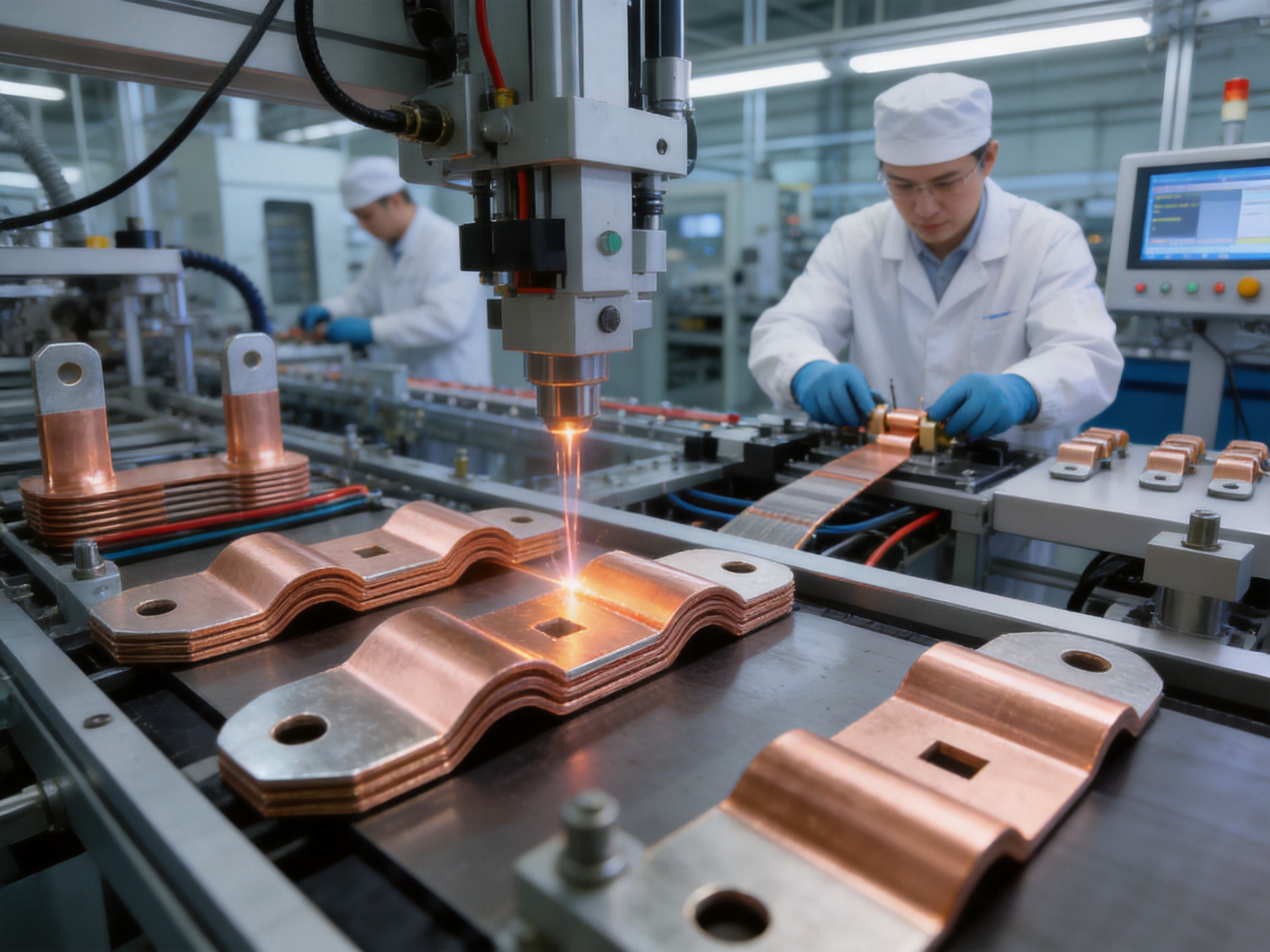
Layering and Conductive Joining
Many flexible connections rely on multiple copper layers or a structured conductive assembly. The layers must be arranged correctly and joined with sufficient uniformity to create a stable current path. Joining quality influences resistance, mechanical strength, flexibility, and thermal behavior.
Zhejiang Zhongyan New Energy reports independently developed polymer diffusion welding and laser technology patents in its broader precision-component manufacturing activities. These technologies reflect the company’s investment in advanced joining and processing methods. For conductive components, controlled joining can help create reliable interfaces while supporting customized geometries and high production consistency.
Laser processing can provide concentrated energy and accurate treatment in suitable applications. Polymer diffusion welding and related technologies may support specialized connection structures where controlled bonding, low resistance, and reliable mechanical integration are required. The exact process used for a specific connector should be defined according to conductor structure, geometry, material combination, and product requirements.
Forming and Special-Shaped Processing
High-voltage connectors are not always straight. They may require offsets, folds, loops, angled terminals, or complex three-dimensional routing. Forming must be controlled to avoid excessive deformation, cracking, layer separation, or reduction of the effective conductive area.
Special-shaped soft connections are one of the company’s areas of focus. Experience in customized forming allows the manufacturer to address applications where a standard flexible strap or rigid bar cannot provide the required fit. The objective is to create a connector that follows the equipment layout while maintaining appropriate electrical, mechanical, and insulation performance.
Terminal Processing
Terminal ends connect the flexible conductor to the switchgear or cabinet assembly. Terminal quality directly affects contact resistance and installation reliability. Depending on the design, terminals may include drilled holes, formed flat ends, plated surfaces, reinforced sections, or other customized features.
Hole position, diameter, edge quality, flatness, and parallelism should be controlled carefully. Inaccurate terminal geometry can create installation stress or prevent the connector from sitting correctly against the mating surface. Proper surface preparation also supports stable contact and reduces the likelihood of localized heating.
Insulation Application
After conductive processing, the flexible connection may receive a high-voltage insulating layer or a halogen-free insulation system. The insulation must cover the required areas without interfering with terminal contact surfaces. Transitions between insulated and exposed conductive regions should be designed to avoid sharp edges and concentrated electrical stress.
Insulation application requires process control over material preparation, thickness, coverage, curing or forming conditions, and final appearance. Depending on the chosen material and design, the process may involve extrusion, coating, sleeving, molding, wrapping, or another controlled method.
Visual inspection is valuable but should be supported by dimensional and electrical testing. A smooth surface alone does not prove that the insulation system meets the required dielectric performance. Testing and traceable process records provide stronger evidence of product consistency.
Testing and Quality Management
The company operates with modern production and quality-management systems and identifies IEC, RoHS, and ISO9001-related requirements within its product information. Quality management for high-voltage connectors should include incoming material checks, in-process inspection, final dimensional control, electrical testing, and documentation.
Typical quality-control activities may include conductor material verification, resistance testing, insulation inspection, withstand-voltage testing, terminal dimension checks, surface inspection, and packaging verification. The precise inspection plan should be agreed with the customer because different switchgear platforms and markets may require different tests.
Traceability is another important strength. A well-organized production system can connect raw materials, processing parameters, inspection results, and finished-product identification. This supports root-cause analysis, batch control, customer audits, and continuous improvement.
Competitive Advantages Compared with Conventional Alternatives
Compared with Rigid Copper Busbars
Rigid copper busbars are widely used and can offer excellent current capacity and structural stability. However, they may require multiple bends, supports, spacers, and precise alignment. When equipment moves or expands thermally, a rigid structure may transfer stress to mounting points and terminals.
Flexible copper connectors offer greater tolerance to movement and installation variation. Their ability to be produced in special shapes can simplify routing within compact cabinets. They may also reduce the number of separate transition components required. The best solution depends on the equipment design; rigid busbars remain appropriate for many fixed, straight, and structurally supported connections.
Compared with Aluminum Conductors
Aluminum can provide weight and cost advantages in selected applications, but copper generally offers higher conductivity and strong compatibility with compact high-current connection designs. For a given current requirement, a copper conductor may achieve the desired performance in a smaller or more compact cross-section, depending on the design and thermal conditions.
Copper also provides favorable mechanical characteristics for forming, joining, and terminal processing. Tinned copper can further support surface protection requirements. Material selection should be based on total system performance rather than material price alone, especially where equipment space, connection reliability, and long service life are important.
Compared with Generic Braided Straps
Generic copper braided straps can provide flexibility, but they may not meet the exact dimensional, insulation, terminal, or voltage requirements of a high-voltage switchgear assembly. A purpose-designed connector can be manufactured with defined conductor area, end geometry, insulation coverage, mounting holes, and testing criteria.
Customized design also allows the supplier to address the actual mechanical movement and routing conditions of the equipment. This can provide a better fit than selecting an off-the-shelf braid and modifying it during installation.
Compared with Uninsulated Flexible Links
Uninsulated flexible links may be acceptable in controlled low-voltage or protected environments, but high-voltage cabinets require more careful management of electrical clearance and accidental contact risks. An insulated connector can help provide a defined protective barrier and support the equipment’s insulation coordination strategy.
Insulation is not a replacement for correct cabinet design or safe working procedures. However, a properly specified high-voltage insulation layer can increase protection and reduce the likelihood of unintended contact or surface-related failure.
Applications Beyond GIS
Although the product is designed for high-voltage gas insulated switchgear and related equipment, the underlying flexible connection technology can be adapted to many power and industrial applications.
High-Voltage Inflatable Cabinets
Inflatable cabinet systems require compact and reliable internal conductive connections. Flexible connectors can help accommodate equipment layout constraints and maintain a reliable path between internal components. Insulation and terminal design must match the cabinet’s voltage class and internal arrangement.
Power Distribution Cabinets
Power distribution cabinets often include busbars, breakers, transformers, terminals, and protective devices in a limited space. Customized flexible links can connect components while reducing assembly stress and supporting thermal movement. Current rating and temperature-rise requirements should be confirmed for each cabinet design.
Substation Equipment
Substations contain equipment exposed to changing temperature, vibration, switching forces, and demanding service conditions. Flexible copper connections may be used where movement compensation or installation flexibility is required. Outdoor applications may also require enhanced surface protection, sealing, and environmental resistance.
Industrial High-Voltage Equipment
Industrial systems such as large drives, power conversion equipment, furnaces, processing lines, and specialized machinery may require high-current flexible connections. A custom design can help integrate the connector into the machine’s mechanical layout while providing low-resistance current transfer.
Renewable Energy and Energy Storage Systems
Renewable-energy conversion equipment and energy-storage systems use many conductive components, including busbars, cell connections, battery links, and power-distribution interfaces. While the voltage and insulation requirements may differ from GIS, the same manufacturing strengths—precision forming, controlled joining, low resistance, insulation, and traceability—are valuable in these sectors.
Customization Process for OEM Projects
Custom copper busbar and flexible connector projects are most successful when the supplier and equipment manufacturer exchange complete technical information at the beginning of the project. A typical process begins with a product brief or drawing package.
The customer should provide the rated voltage, current, conductor area or target capacity, connection points, overall length, terminal dimensions, hole pattern, bending direction, minimum installation space, insulation requirements, ambient conditions, and applicable standards. Photographs, three-dimensional models, existing samples, or cabinet layouts can also assist the engineering review.
The supplier then evaluates feasibility, proposes material and process options, and confirms whether tooling or fixtures are required. A prototype or first article may be produced for dimensional verification and equipment-fit testing. If changes are necessary, the drawing can be revised before formal production approval.
For repeated orders, production documentation can include controlled drawings, bills of materials, inspection plans, packaging specifications, and traceability requirements. This supports consistent delivery across multiple batches and equipment models.
Customization can cover conductor thickness, number of copper layers, terminal shape, hole size, plating, insulation material, insulation color, overall dimensions, bend radius, protective sleeving, marking, and packaging. The scope of customization should always be balanced against the electrical and mechanical requirements of the application.
Installation and Performance Considerations
Even a high-quality flexible connector can perform poorly if installed incorrectly. The connector should be installed according to the approved drawing and without forcing it into a position that creates excessive twist, sharp bending, or terminal misalignment. The natural shape of the connector should be respected wherever possible.
Fasteners should be tightened according to the equipment manufacturer’s specified torque. Under-tightening may increase contact resistance, while over-tightening may deform terminals or damage the connection. Contact surfaces should be clean and compatible with the selected material and surface treatment.
The connector should not be used as an unintended structural support. If the design requires independent support, appropriate brackets or retainers should be provided. Excessive mechanical loading can reduce flexibility and place stress on the terminal interface.
After installation, inspection should confirm that insulation has not been cut, scraped, compressed, or displaced. The connector should maintain the required clearance from adjacent conductive or grounded parts. In high-voltage systems, final inspection and electrical testing should be completed according to the equipment’s commissioning procedures.
Why Choose an Experienced Manufacturer?
Flexible copper connectors combine material science, electrical engineering, mechanical forming, insulation technology, precision joining, and quality assurance. An experienced manufacturer can coordinate these disciplines instead of treating them as isolated processes.
Zhejiang Zhongyan New Energy Co., Ltd. was established in 2022 and focuses on new-energy precision components, including battery soft connections and high-voltage conductive components. The company has brought together experienced engineers and technical teams and has developed production capabilities covering product design, research and development, manufacturing, and customized solutions.
Its broader customer and technology experience includes conductive components for electric vehicles, power transmission and distribution, rail transit, communication, and energy storage. The company identifies leading enterprises such as BYD, CATL, and Jaguar among the customers or business partners supported by its product development activities. Such experience reflects the importance of high consistency, low internal resistance, customized design, and reliable production in demanding industries.
The company’s investment in polymer diffusion welding, laser technologies, materials research, precision machining, testing, and verification contributes to a broader technical foundation. These capabilities can support the development of flexible copper connectors that are optimized for specific equipment rather than limited to generic catalog dimensions.
Another advantage is the ability to support customers through multiple stages of a project. The manufacturer can participate in early design review, sample development, process selection, mass production, inspection, and delivery coordination. This integrated approach can reduce communication gaps and improve the transition from prototype to repeat production.
Purchasing Checklist for High-Voltage Flexible Connectors
Before selecting a supplier, buyers should confirm the conductor material and purity designation, required current rating, rated voltage, withstand-voltage test, operating temperature range, conductor area, insulation material, terminal dimensions, overall geometry, bending requirements, and applicable standards.
It is also useful to ask about engineering support, prototype capability, material traceability, inspection records, production capacity, packaging, lead time, change-control procedures, and after-sales technical support. For safety-critical electrical applications, documentation quality can be as important as the physical product.
Buyers should distinguish between a supplier that merely cuts and bends copper and a manufacturer capable of delivering a complete engineered component. The latter should understand how conductor structure, terminal quality, insulation, heat, movement, and testing interact in a high-voltage system.
| Purchasing Question | Why It Matters |
|---|---|
| Can the supplier review customer drawings? | Drawing review helps identify fit, clearance, terminal, and manufacturing issues before production. |
| What copper materials are available? | Material choice affects conductivity, surface protection, forming, and joining performance. |
| Can the connector be customized? | Custom geometry may be necessary for compact GIS and distribution-cabinet layouts. |
| What insulation options are offered? | Insulation must match voltage, temperature, fire-safety, and environmental requirements. |
| How are terminals joined and inspected? | Terminal integrity has a direct effect on contact resistance and service reliability. |
| Are prototype and first-article services available? | Sampling allows dimensional, electrical, and installation verification before mass production. |
| What quality records are provided? | Traceability and test documentation support audits, qualification, and long-term maintenance. |
Frequently Asked Questions
What is the main purpose of a flexible copper connector in GIS?
Its main purpose is to provide a reliable, low-resistance electrical connection while accommodating controlled movement, thermal expansion, vibration, installation tolerances, or restricted routing space. It can connect high-voltage conductive components without imposing the same level of mechanical stress as a fully rigid connection.
What copper materials can be used?
The product is available with T2 copper or tinned copper conductors. T2 copper is suitable for high-conductivity applications, while tinned copper may be selected where surface protection or specific joining and environmental requirements are important. The final material should be confirmed according to the project specification.
What voltage ratings are available?
The stated product range includes 10 kV, 24 kV, and 35 kV applications. Actual suitability depends on insulation design, equipment configuration, clearance, creepage, test requirements, and the complete high-voltage system.
What current ratings are available?
The listed range is approximately 100 A to 3000 A. Current capacity depends on conductor area, copper structure, connector length, temperature conditions, terminal resistance, installation, and heat dissipation. The correct rating should be verified through project-specific engineering analysis.
Can the connector be produced in a special shape?
Yes. Flexible connectors can be customized with different lengths, offsets, terminal directions, bends, hole patterns, conductor areas, and insulation configurations. Special-shaped connections are useful where cabinet space is limited or connection points are not aligned in a simple straight line.
What insulation options are available?
High-voltage insulation materials are available, and halogen-free insulation can be selected as an option. Low-smoke and flame-retardant characteristics may also be included according to the selected material and project requirements. Specific performance should be confirmed through technical documentation and testing.
Can these connectors be used in substations?
They are intended for applications including substation equipment, high-voltage transmission and distribution systems, power distribution cabinets, and industrial high-voltage equipment. Each application should be reviewed for voltage, environmental exposure, installation method, mechanical movement, and applicable standards.
How does a flexible connector compare with a rigid busbar?
A flexible connector can better accommodate movement, thermal expansion, and installation misalignment. It may also simplify routing in compact equipment. A rigid busbar can still be the preferred choice for fixed and structurally supported connections. The best selection depends on the equipment layout and mechanical requirements.
What manufacturing processes support product reliability?
Important processes include engineering drawing review, precision copper preparation, controlled layering, conductive joining, special-shaped forming, terminal processing, insulation application, dimensional inspection, electrical testing, and traceable quality management. The appropriate process combination depends on the connector design.
Can the manufacturer support OEM and customized orders?
Yes. The company focuses on customized conductive components and can support design review, prototype development, manufacturing, testing, and repeat production. Customers should provide drawings or detailed technical requirements so the product can be engineered for the intended equipment.
What information should be included in an inquiry?
An inquiry should include rated voltage, current, conductor material, conductor area, overall dimensions, terminal details, hole pattern, insulation requirements, operating temperature, installation environment, quantity, applicable standards, and drawings or photographs. Complete information helps the manufacturer provide a more accurate technical proposal.
Conclusion
Flexible copper connectors are important precision components for high-voltage gas insulated switchgear, inflatable cabinets, power distribution cabinets, substations, and industrial electrical equipment. By combining high-purity T2 copper or tinned copper with high-strength insulation, these connectors can provide low resistance, high current capacity, mechanical flexibility, reliable insulation, and long-service potential.
Their advantages over conventional rigid or generic connection solutions include improved tolerance to movement, better adaptation to compact layouts, reduced assembly complexity, and the ability to match exact equipment drawings. Their performance, however, depends on correct engineering, conductor sizing, terminal construction, insulation quality, installation, and testing.
Zhejiang Zhongyan New Energy Co., Ltd. brings together experience in high-voltage copper foil soft connections, special-shaped soft connections, battery conductive components, precision joining, laser technology, polymer diffusion welding, testing, and quality management. This combination supports the development of customized copper busbar and flexible connector solutions for demanding electrical and new-energy applications.
For equipment manufacturers seeking a reliable copper busbar supplier or OEM partner, the most valuable solution is not simply a piece of flexible copper. It is a fully engineered connection system supported by material control, precise manufacturing, consistent insulation, documented testing, and responsive technical service.
References
International Electrotechnical Commission. IEC standards and technical guidance for high-voltage switchgear and controlgear.
International Electrotechnical Commission. Guidance on insulation coordination for electrical power systems.
International Organization for Standardization. Quality management system principles and ISO 9001 requirements.
Restriction of Hazardous Substances. Technical requirements and compliance principles for restricted materials in electrical and electronic equipment.
Electrical engineering reference literature covering copper conductivity, current-carrying capacity, conductor temperature rise, contact resistance, and busbar design.
Industrial material science references covering copper alloys, tin-plated copper, polymer insulation, flame-retardant materials, halogen-free materials, and electrical aging.
Manufacturer technical documentation for high-voltage flexible copper connectors, insulated busbars, special-shaped soft connections, and precision conductive components.
Product: Flexible Copper Connectors for High Voltage Gas Insulated Switchgear

Driven by the development of new energy and aiming for "zero carbon".
Copyright © Zhejiang Zhongyan New Energy Co., Ltd. All Rights Reserved.
