 English
 Español

350A High-Voltage MSD with Fuse for LFP Battery and Energy Storage Systems
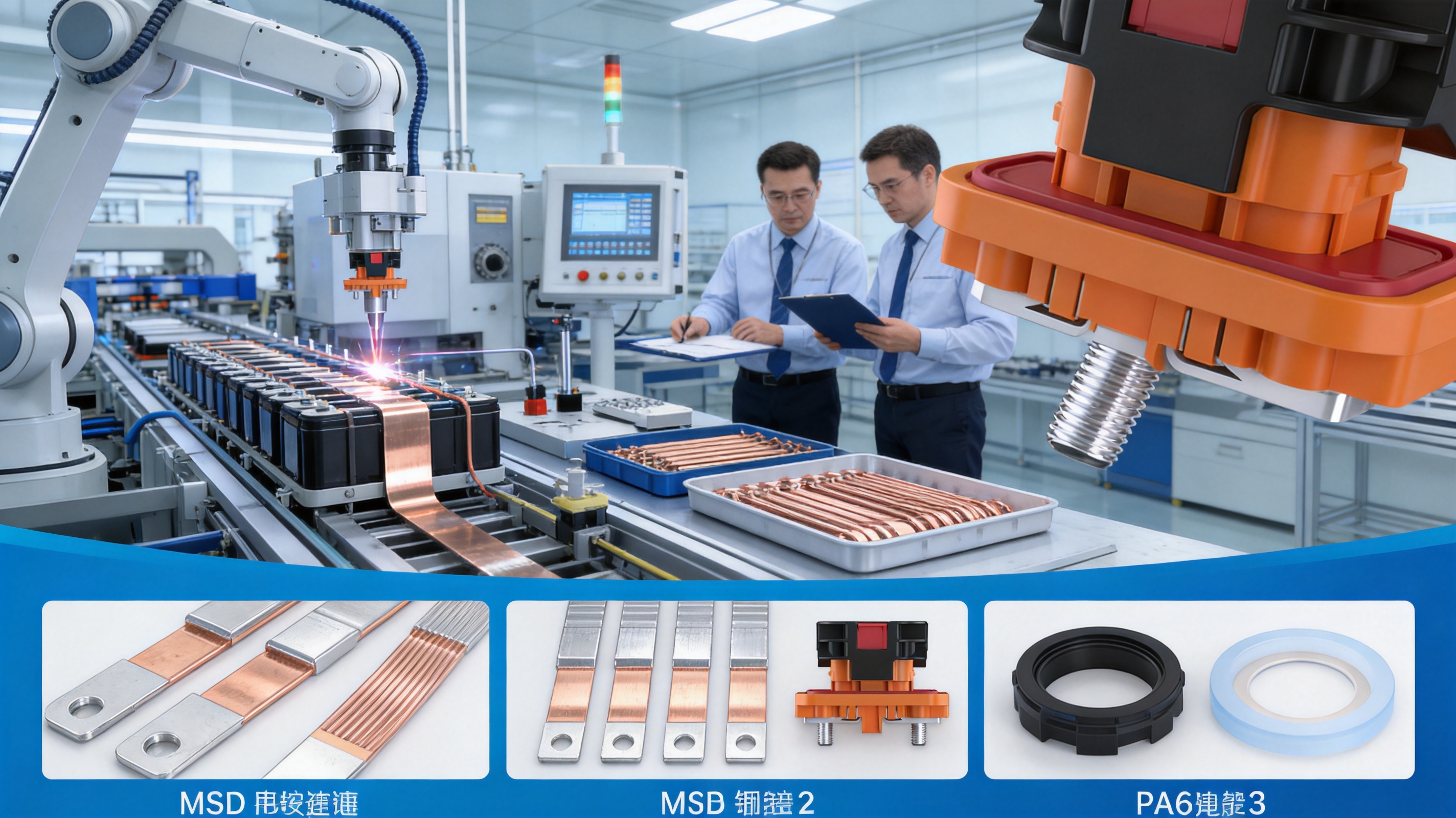
Modern battery energy storage systems require more than high-capacity cells and power conversion equipment. They also need dependable protection, controlled isolation, and service-friendly connection technology. As energy storage cabinets, battery packs, electric vehicles, and high-voltage distribution units become more powerful, the manual service disconnect has become an essential safety component. A well-designed MSD allows qualified personnel to isolate a high-voltage circuit rapidly during maintenance, inspection, troubleshooting, or emergency response.
The 350A high-voltage MSD with fuse is engineered for demanding direct-current applications up to 1500V DC. It combines a high-current conductive path, flame-retardant insulation, environmental sealing, a two-stage locking mechanism, and a bolted wall-mount structure. Designed for LFP battery systems and other energy storage applications, the product provides a practical interface between electrical protection and service operation. Its architecture supports safe manual disconnection while helping equipment manufacturers simplify cabinet integration and improve overall system reliability.
Manufactured by Zhejiang Zhongyan New Energy Co., Ltd., the MSD reflects the company’s specialization in new-energy conductive components, battery soft connections, copper foil flexible connections, and precision electrical assemblies. The company’s capabilities in materials engineering, precision processing, polymer diffusion welding, laser technology, quality control, and customized production support the consistent performance required by high-voltage battery equipment.
Content
- Why a Manual Service Disconnect Matters in High-Voltage Systems
- Product Overview
- Key Technical Specifications
- Electrical Performance and Low-Resistance Current Transfer
- Mechanical Safety and Two-Stage Interlocking
- Environmental Protection for Energy Storage Equipment
- Advantages Compared with Conventional Service Connectors
- Manufacturing Strengths Behind the Product
- Integration into LFP Battery Systems
- Applications in Energy Storage and Power Equipment
- Installation and Maintenance Considerations
- Customization and OEM Support
- How the MSD Supports Total System Reliability
- Q&A
- What is the primary function of this MSD?
- What are the current and voltage ratings?
- Can it be used with LFP batteries?
- Does the product include a fuse?
- What does IP67 mean for this product?
- Why are the contacts silver-plated?
- What is the purpose of the two-stage interlock?
- What materials are used?
- How many mating cycles can the MSD withstand?
- Can the MSD be customized?
- Is the MSD suitable for outdoor energy storage?
- Can it be disconnected under load?
- What should be checked during maintenance?
- What information is needed for an OEM quotation?
- Conclusion
- References
- Product: 350A High Voltage MSD with Fuse – Bolted Wall-Mount Repair Plug for LFP Battery & Energy Storage Systems
Why a Manual Service Disconnect Matters in High-Voltage Systems
A battery system may contain hundreds of volts and very high available fault current. Even when the main power converter is switched off, stored electrical energy and connected battery modules can remain hazardous. Maintenance personnel therefore need a clearly defined method for separating the battery source from downstream circuits.
A manual service disconnect, commonly called an MSD, is the operational component used to establish this isolation. When correctly installed and operated, it interrupts the high-voltage connection between battery modules and the rest of the electrical system. This creates a safer condition for authorized service personnel working on power distribution units, inverters, contactors, busbars, battery racks, or related equipment.
The MSD is not merely a conventional plug. It is part of the safety architecture of the complete battery system. Its electrical contacts must carry high continuous current with minimal loss. Its insulation must withstand high voltage and transient electrical stress. Its housing must resist heat, flame, dust, and water. Its mechanical locking system must prevent incomplete engagement or accidental release. Its mounting structure must also withstand vibration and the forces associated with repeated service operations.
In an external short-circuit event, equipment fault, collision, abnormal temperature condition, or scheduled maintenance operation, rapid isolation can limit the duration of hazardous current flow. The MSD may work together with fuses, contactors, pre-charge circuits, battery management systems, interlock loops, and emergency shutdown controls. The exact protective sequence depends on the system design, but the MSD provides a direct and visible manual isolation point.
Product Overview
The 350A high-voltage MSD is a bolted wall-mount repair plug designed for high-current battery and energy storage applications. Its rated current is 350A, and its rated voltage is 1500V DC. The current path uses high-conductivity copper with silver plating, while the insulating housing uses PA66 material selected for mechanical strength, electrical insulation, and resistance to elevated temperature.
The design incorporates a sealed blade-contact structure. This construction helps maintain a stable contact interface while reducing the impact of moisture, dust, and environmental contaminants. A silicone sealing ring supports the IP67 protection objective when the connector is correctly assembled with compatible equipment and installed according to the relevant sealing requirements.
A two-stage interlocking mechanism improves operational safety. The first stage helps guide and secure the plug during engagement, while the second locking action helps prevent unintended separation. The locking system also provides a more controlled service procedure than a simple friction-fit connection. For equipment designers, this feature is particularly important where vibration, movement, or repeated maintenance could otherwise compromise connection security.
The wall-mount format allows the MSD to be fixed directly to an enclosure, battery cabinet, service panel, or other structural surface using M8 mounting screws. This arrangement supports a clean and accessible service interface while reducing the need for complicated supporting brackets. The product can be adapted to specific equipment layouts through customization of mechanical dimensions, cable or busbar interfaces, marking, and other integration details, subject to technical review.
The product is described as an MSD with fuse. The fuse function should be specified according to the complete battery system, including prospective short-circuit current, operating voltage, interrupting capacity, coordination with contactors, thermal conditions, and applicable standards. If a project requires a particular fuse link, fuse class, or fuse-monitoring arrangement, the final configuration should be confirmed during engineering review rather than assumed from the general MSD rating alone.
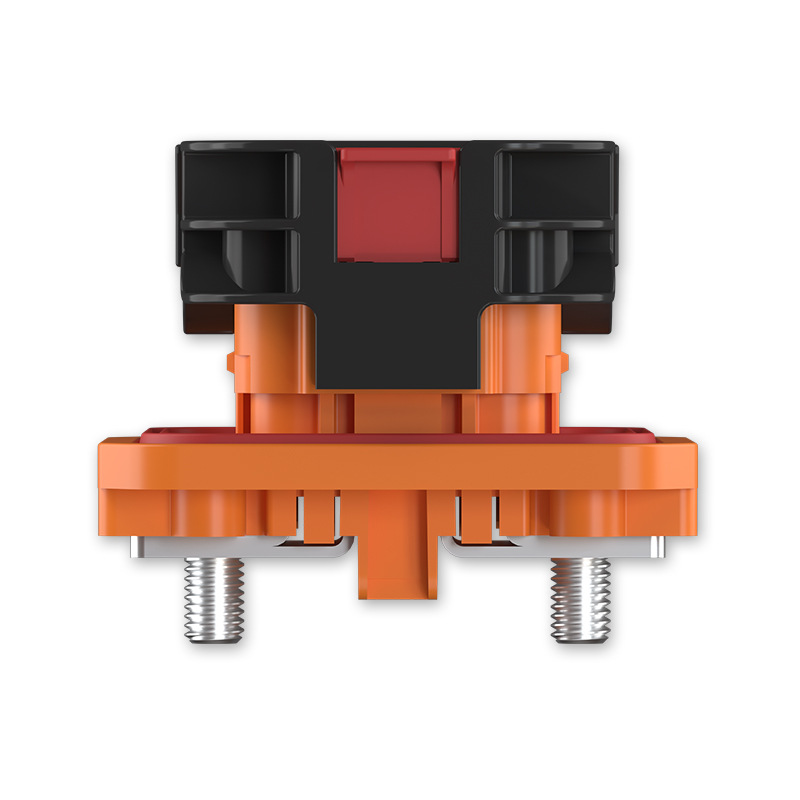
350A High Voltage MSD with Fuse – Bolted Wall-Mount Repair Plug for LFP Battery & Energy Storage Systems
Key Technical Specifications
The following specifications summarize the principal characteristics supplied for this product. Final production specifications, dimensional drawings, fuse selection, terminal configuration, and certification documentation should be confirmed for each project before ordering.
| Parameter | Specification |
|---|---|
| Product type | High-voltage manual service disconnect |
| Application | LFP batteries, energy storage systems, high-voltage electrical equipment, and electric vehicle systems |
| Rated current | 350A |
| Rated voltage | 1500V DC |
| Insulation material | PA66 flame-retardant insulating plastic |
| Conductor material | High-conductivity copper with silver plating |
| Contact resistance | ≤0.20mΩ |
| Insulation resistance | >100MΩ at 1000V DC |
| Dielectric strength | 4000V AC |
| Protection rating | IP67, with UL94 V-0 housing performance stated |
| Operating temperature | -40°C to 125°C |
| Mating or plugging force | ≤75N, subject to configuration and test method |
| Locking method | Two-stage interlocking |
| Mounting hardware | M8 screws |
| Service operation | Manual high-voltage circuit isolation |
Some supplied product materials state a minimum of 300 mating cycles, while another specification states 2300 mating cycles. This difference should be resolved through the approved technical datasheet, validation report, and project-specific quality agreement. Mating-cycle performance can depend on contact configuration, operating current, environmental conditions, insertion speed, cleaning practices, and the definition of acceptable electrical and mechanical performance after cycling.
Electrical Performance and Low-Resistance Current Transfer
At 350A, even a small increase in contact resistance can produce significant heat. Electrical power converted into contact heating follows the relationship P = I²R. This means that resistance becomes increasingly important as current rises. The stated contact resistance of no more than 0.20mΩ is intended to support efficient current transfer and reduce localized thermal stress at the connection point.
Silver-plated copper contacts provide several advantages in this environment. Copper offers excellent electrical conductivity and a strong balance between performance, weight, machinability, and cost. Silver plating can improve the surface contact interface and help maintain stable conductivity when the connector is exposed to repeated operation or moderate environmental influence. The plating process must be controlled carefully to achieve uniform coverage, strong adhesion, and consistent thickness across the functional contact areas.
The low-resistance current path is valuable in LFP battery systems because energy storage equipment may operate continuously for many hours during charging and discharging. Lower connection losses can reduce heat generation and improve the efficiency of the overall current path. Reduced local heating can also support longer service life for adjacent insulation, terminals, busbars, and cable assemblies.
Electrical performance should always be evaluated together with thermal conditions. The actual permissible current depends on conductor size, cable routing, enclosure temperature, airflow, duty cycle, ambient temperature, mounting orientation, and the heat dissipation capacity of the complete assembly. A 350A rating is therefore a product-level reference that must be confirmed against the final installation and application profile.
The 1500V DC rating makes the MSD suitable for high-voltage battery architectures where the system voltage may exceed the range of conventional low-voltage connectors. The dielectric strength rating of 4000V AC and insulation resistance above 100MΩ at 1000V DC provide important electrical insulation benchmarks. These values support design verification, but they do not replace system-level insulation monitoring, creepage and clearance evaluation, or high-voltage safety procedures.
Mechanical Safety and Two-Stage Interlocking
High-voltage service components must be designed to resist both electrical and mechanical misuse. A connector that is electrically capable but mechanically insecure can create serious risks. The two-stage interlocking structure of this MSD is intended to promote correct engagement and help prevent unintentional disconnection.
During installation, the plug is guided into its mating position before the locking action is completed. This controlled sequence reduces the likelihood of an incompletely seated contact. The second locking stage provides an additional retention point that can help resist vibration, shock, and accidental handling. Depending on the system configuration, the interlock can also be integrated into a service procedure or auxiliary detection circuit.
The M8 bolted wall-mount structure provides a stable mechanical reference for the disconnect. Compared with an unsupported in-line plug, a fixed wall-mount device can offer better control over cable movement and easier access for authorized technicians. It can also help maintain consistent sealing pressure when mounted to a suitable panel with the appropriate gasket, fasteners, and torque control.
Installation quality remains essential. Mounting surfaces should be flat and structurally adequate. Fasteners should be tightened to the specified torque. Cables, busbars, or flexible copper connections should be supported independently so that their weight and vibration do not transfer excessive force to the MSD. The connector should not be used as a structural suspension point unless the product design specifically permits it.
The stated plugging force of no more than 75N supports practical service operation. A controlled mating force helps technicians engage the product without excessive effort while also reducing the possibility of damage caused by forced insertion. The mating surfaces should be kept aligned, clean, and free from foreign particles. If unusual resistance is felt, the operator should stop and inspect the alignment rather than apply additional force.
Environmental Protection for Energy Storage Equipment
Energy storage systems are installed in a wide range of environments, including indoor electrical rooms, outdoor cabinets, industrial facilities, renewable energy sites, transportation equipment, and mobile power units. The electrical connection must therefore be able to withstand more than nominal operating voltage and current. It must also tolerate temperature variation, humidity, dust, vibration, and occasional exposure to water.
The IP67 protection designation indicates protection against dust ingress and temporary immersion under defined test conditions. The actual protection level depends on correct assembly, intact seals, compatible mating components, and proper cable or busbar interface design. A damaged silicone sealing ring, loose fastener, incorrect panel cutout, or improperly routed conductor can reduce the effective protection of the installed product.
The flame-retardant PA66 housing is specified with UL94 V-0 performance. Flame-retardant insulation helps limit the spread of fire through the plastic housing when exposed to an ignition source under the applicable test method. It is an important part of the safety design of high-voltage battery equipment, although it does not make the complete system fireproof. Battery enclosure design, thermal management, cell protection, venting, fire detection, and emergency response remain necessary.
The operating temperature range of -40°C to 125°C allows the MSD to serve in demanding environments. Low-temperature capability is important for outdoor energy storage and vehicle applications, where winter startup and charging may expose components to freezing conditions. High-temperature capability is important near battery modules, power electronics, busbars, and enclosed cabinets where current flow and limited ventilation can raise local temperatures.
Silicone sealing components must be compatible with the expected temperature range, chemicals, cleaning agents, and service environment. During maintenance, seals should be inspected for cuts, deformation, compression loss, or contamination. Replacing a damaged seal is generally preferable to relying on a previously compressed component after repeated service operations.
Advantages Compared with Conventional Service Connectors
The 350A MSD offers a combination of features that can provide advantages over simpler connectors, low-voltage service plugs, or manually separated cable terminations.
High-Voltage Capability
A 1500V DC rating enables use in advanced battery architectures with higher series voltage. This can help equipment manufacturers reduce current for a given power level, improve system efficiency, and reduce the amount of copper required in some parts of the power path. The disconnect is designed for the insulation and safety demands associated with high-voltage DC rather than ordinary low-voltage auxiliary circuits.
High-Current Conductive Path
The 350A current rating supports high-power charging, discharging, and energy conversion applications. The silver-plated copper contact system is intended to provide a stable, low-resistance interface. This can be more effective than using undersized terminals or general-purpose connectors that are not designed for sustained high current.
Integrated Mechanical Retention
The two-stage locking mechanism provides a more controlled connection than a basic friction-fit plug. It helps support repeatable service operation and reduces the risk of incomplete engagement. The bolted wall-mount design also offers better enclosure integration than loose in-line components.
Environmental Sealing
IP67 protection and silicone sealing help the MSD meet the environmental requirements of many battery cabinets and outdoor power systems. Compared with open terminal blocks or unsealed manual links, a sealed disconnect can reduce the risk of contamination at the contact interface.
Flame-Retardant Insulation
The PA66 housing with stated UL94 V-0 performance contributes to enclosure safety and material reliability. This is especially valuable in compact battery systems where electrical components are installed close to heat sources and high-energy cells.
Service Accessibility
A dedicated MSD gives technicians a clearly identified isolation point. This can reduce the time needed to make a system safe for maintenance and can support standardized service procedures across a product family. A visible and accessible disconnect is easier to inspect, label, and include in training documentation than an improvised cable separation method.
Customization Potential
Battery manufacturers often require different panel dimensions, terminal orientations, cable exits, busbar interfaces, auxiliary contacts, markings, and fuse arrangements. The product is suitable for customization discussions, allowing the manufacturer and customer to coordinate the electrical, mechanical, and production requirements of a specific platform.
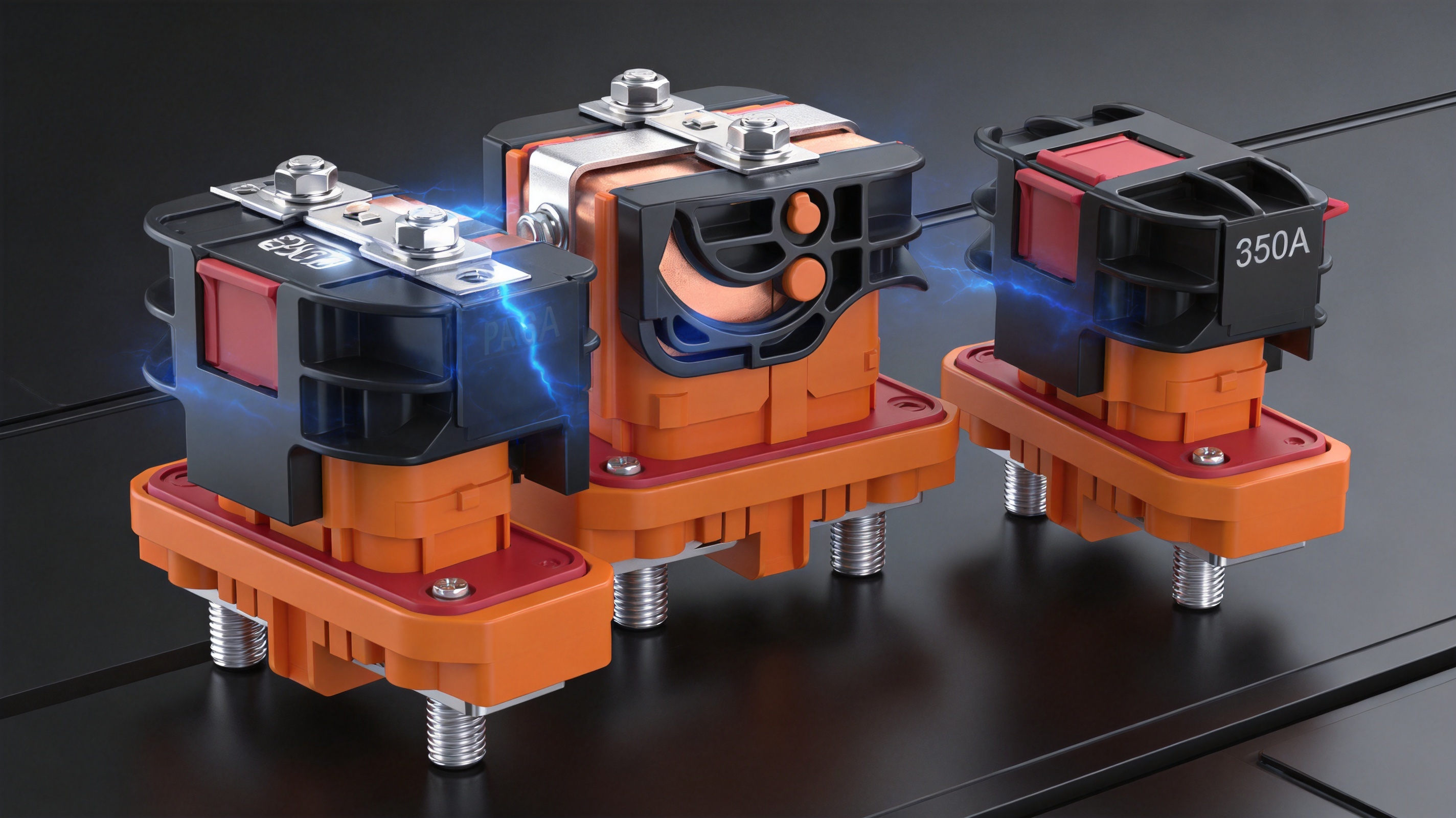
Manufacturing Strengths Behind the Product
The performance of an MSD depends not only on its design but also on the consistency of its manufacturing process. Zhejiang Zhongyan New Energy Co., Ltd. focuses on precision conductive components for new-energy applications. Its product range includes high-voltage copper foil flexible connections, special-shaped flexible connections, battery soft connections, composite laminated busbars, cell contact systems, battery storage connectors, aluminum busbars, rigid busbars, braided copper tape, stranded copper wires, and related insulating components.
This product portfolio creates useful manufacturing synergies. Experience with copper foil, laminated materials, flexible connections, and battery terminals helps the company understand current distribution, resistance control, mechanical fatigue, heat dissipation, and compact packaging. Knowledge gained from one type of conductive component can be applied to the design and production of another, especially when the application involves limited installation space and demanding electrical performance.
Materials Engineering
Material selection is central to high-voltage connector performance. The company works with conductive copper materials, silver-plated contact surfaces, engineering plastics, silicone seals, flexible copper foils, and insulating components. Each material must be evaluated for conductivity, mechanical durability, thermal expansion, chemical compatibility, processing behavior, and long-term stability.
For the MSD, the copper conductor must support high current while maintaining dimensional accuracy. The silver-plated surface must offer consistent contact performance. PA66 must provide insulation, strength, and flame-retardant behavior. Sealing materials must maintain their elastic properties over the specified temperature range. Effective production requires these individual material decisions to be treated as part of one integrated system.
Polymer Diffusion Welding
The company reports independent development involving polymer diffusion welding technology. In new-energy conductive components, advanced joining processes can help produce low-resistance connections between conductive layers while maintaining a compact profile. The process can be particularly valuable for battery soft connections, copper foil assemblies, and flexible current paths where conventional joining methods may increase bulk or create stress concentrations.
Process control is essential for diffusion-based joining. Pressure, temperature, surface condition, alignment, dwell time, and cooling behavior all influence the final joint. Consistent control can help reduce internal resistance and improve repeatability across production batches. The same manufacturing philosophy—careful preparation, controlled energy input, and verification—supports the reliability expectations of high-voltage disconnect components.
Laser Processing and Precision Manufacturing
Laser technology can support accurate cutting, welding, marking, and localized processing of conductive materials. It offers the possibility of narrow heat-affected zones, precise geometry, and repeatable production for complex battery connection components. Laser processing is useful when products require special shapes, compact terminals, fine features, or clear traceability markings.
For an MSD program, precision processing can contribute to consistent contact geometry, accurate metal parts, clean terminal interfaces, and stable assembly dimensions. It also supports customized designs where the customer needs a specific interface for a busbar, cable, battery module, or cabinet structure.
Design, Research, and Development
The company has developed a research and development system involving materials science, precision machining, testing, and verification. This integrated approach is important because an energy storage connector cannot be evaluated successfully through electrical testing alone. It must also be assessed for thermal behavior, mechanical retention, sealing, insulation, vibration, assembly variation, and service life.
Engineering teams can use application information to select an appropriate conductor configuration, insulation structure, mounting format, and interface. Important inputs include continuous current, peak current, system voltage, short-circuit conditions, duty cycle, ambient temperature, enclosure size, cooling method, vibration level, installation orientation, and expected service frequency.
Through design review and sample validation, the customer and manufacturer can identify possible risks before mass production. These may include excessive temperature rise, insufficient creepage distance, interference with nearby components, unsuitable cable bending radius, seal compression variation, or incorrect fuse coordination.
Quality and Production Consistency
High-voltage components require consistent production because small variations can affect safety and performance. Quality management should cover incoming materials, plating condition, molded housing dimensions, seal quality, contact geometry, assembly torque, electrical resistance, insulation performance, dielectric strength, and final appearance.
Traceability is also valuable. Batch identification for conductive materials, insulating plastics, plating operations, and assembly processes can help identify the source of any nonconformance. For customers producing battery packs at scale, traceability supports supplier management, warranty analysis, process improvement, and regulatory documentation.
Zhejiang Zhongyan New Energy was established in 2022 and has developed relationships with leading enterprises in the new-energy sector, including BYD, CATL, and Jaguar, according to the supplied company information. These relationships reflect experience in demanding applications, although each customer project remains subject to its own qualification and approval requirements.
Integration into LFP Battery Systems
LFP batteries are widely used in stationary energy storage, commercial power systems, electric vehicles, industrial equipment, and backup power applications. They are valued for their thermal stability, cycle life, material availability, and suitability for high-utilization systems. However, an LFP battery pack still contains substantial electrical energy and requires careful high-voltage protection.
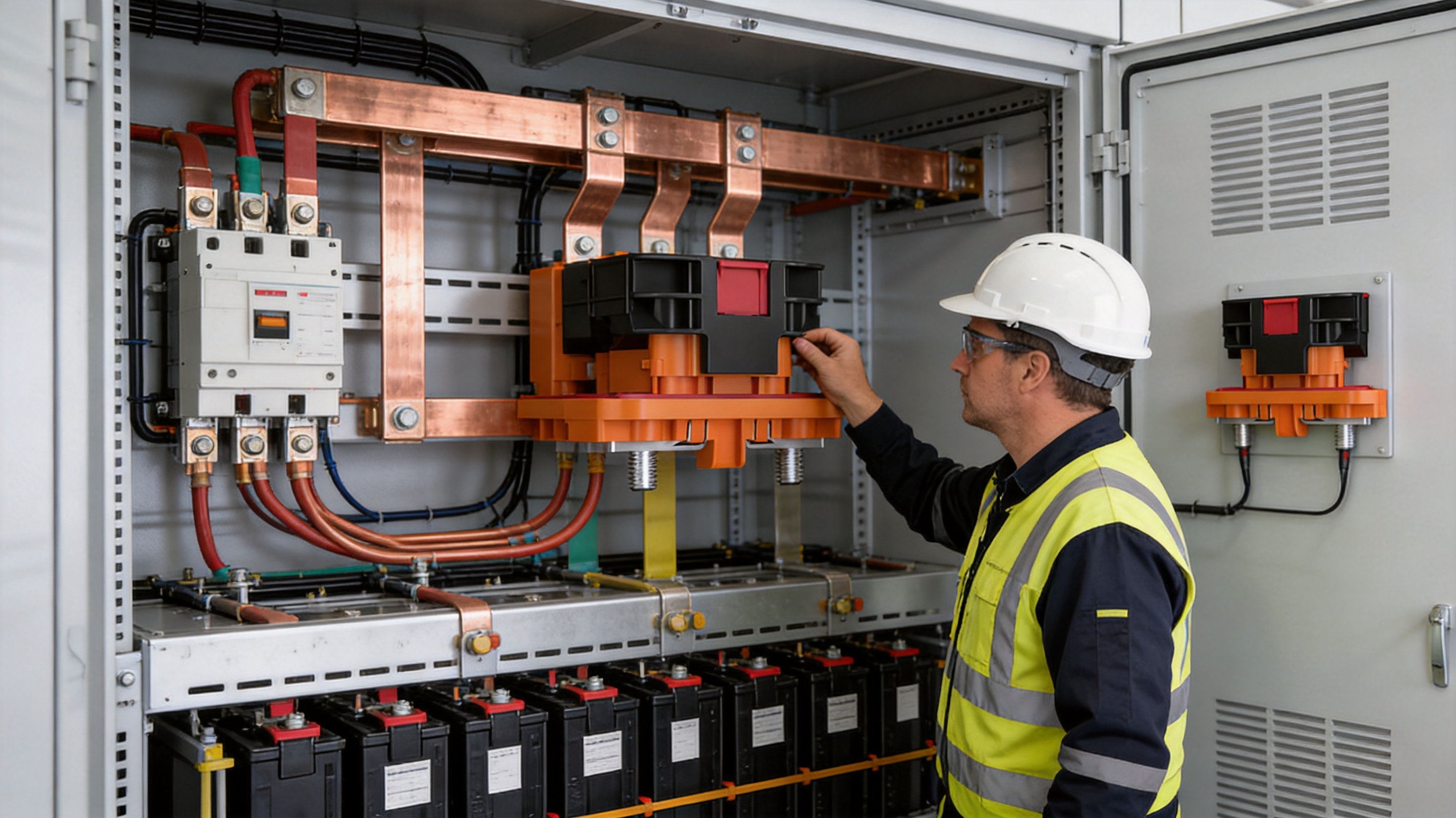
The MSD can be installed between the battery module assembly and the main high-voltage distribution path. Depending on the architecture, it may be positioned near the pack output, inside a battery enclosure, in a power distribution unit, or on a service panel. The selected location should allow technicians to operate it safely and should minimize the length of unprotected high-voltage conductors outside the protected enclosure.
In a typical system, the MSD may operate alongside main positive and negative contactors, a pre-charge circuit, current sensors, a battery management system, and one or more high-voltage fuses. The battery management system can monitor cell voltage, temperature, current, insulation status, and fault conditions. The contactors can control normal energization, while the MSD provides a manual service isolation function.
The exact electrical sequence must be defined by the system designer. The MSD should not be opened under load unless the approved product design and operating instructions explicitly permit that action. In many high-voltage systems, contactors are opened first to remove operating current, followed by a controlled manual isolation procedure. Technicians must verify the absence of hazardous voltage using appropriate instruments and lockout procedures.
Fuse integration can provide additional protection against severe overcurrent and short-circuit events. Fuse selection must account for voltage rating, current rating, interrupting capability, time-current behavior, pulse conditions, pre-arcing characteristics, ambient temperature, and coordination with other protective devices. The MSD housing and terminals must also be compatible with the physical and thermal requirements of the selected fuse.
Applications in Energy Storage and Power Equipment
The product is suitable for a broad range of high-voltage applications where manual isolation and high-current connection are required.
Stationary Battery Energy Storage
Containerized and cabinet-based energy storage systems use battery racks, power conversion systems, thermal management equipment, and monitoring controls. An MSD can provide an accessible isolation point for a battery rack or cabinet. Its IP67 housing and high-voltage rating support use in protected outdoor enclosures when the complete installation is correctly sealed.
Commercial and Industrial Storage
Factories, data centers, charging facilities, and commercial buildings may use battery systems for peak shaving, backup power, renewable energy integration, and demand management. These systems often require regular inspection and planned maintenance. A robust manual service disconnect can help standardize the isolation procedure across multiple cabinets.
Electric Vehicles and Special-Purpose Vehicles
Electric vehicles, utility vehicles, construction equipment, and specialty platforms require compact, vibration-resistant, high-current connection components. The wall-mount format can be adapted to battery enclosure or service compartment layouts. The operating temperature range and two-stage locking design are relevant to mobile equipment, although vehicle-level qualification must include vibration, shock, crash, thermal cycling, corrosion, and other applicable requirements.
Power Supply Units and DC Distribution Cabinets
High-voltage DC power supplies and distribution units often contain multiple branches and protection devices. An MSD can act as a manual service interface for a battery input, converter output, or dedicated high-current branch. Its fixed mounting arrangement can support clean cabinet organization and accessible maintenance.
Renewable Energy Systems
Solar and wind installations increasingly use battery storage to manage intermittency and improve energy availability. Outdoor conditions can expose electrical components to humidity, dust, temperature fluctuation, and water. A sealed, flame-retardant, high-voltage disconnect can support the environmental and service requirements of these systems when properly integrated.
Installation and Maintenance Considerations
Before installation, the system designer should verify voltage, current, fault current, cable or busbar dimensions, fuse requirements, mounting space, clearances, creepage distances, enclosure thickness, operating temperature, and service access. The final design should also consider how technicians will identify the device and confirm its open or isolated condition.
The panel cutout and mounting holes should be manufactured according to the approved drawing. The mounting surface should be free from burrs, sharp edges, oil, and contamination that could damage the sealing ring or distort the housing. M8 screws should be installed with suitable washers and tightened according to the specified torque. Over-tightening can damage the housing or sealing system, while insufficient tightening can reduce mechanical stability and water resistance.
Conductors should be routed with adequate bending radius and strain relief. Flexible copper connections, laminated busbars, and cables should be supported so that the MSD contacts are not exposed to continuous pulling, twisting, or bending forces. High-current terminals should be clean and properly prepared. Any protective coating or oxidation that interferes with the electrical interface should be removed according to the approved assembly procedure.
During commissioning, technicians should perform visual inspection, continuity checks, contact-resistance verification, insulation-resistance testing, and dielectric testing where required by the system qualification plan. Testing must be conducted by trained personnel using equipment suitable for the rated voltage. The product must be disconnected from other equipment as necessary to prevent damage to sensitive electronics during high-voltage tests.
Maintenance intervals depend on the application. A routine inspection may include checking the locking mechanism, mounting hardware, seal condition, housing damage, signs of overheating, discoloration, corrosion, and cable strain. A rising contact resistance or abnormal temperature rise can indicate contamination, insufficient mating, terminal loosening, plating damage, or overload conditions.
Operators should never bypass the locking mechanism, operate the disconnect with damaged insulation, or continue using a connector that shows evidence of severe arcing or thermal damage. Replacement procedures should follow the battery system’s lockout and verification requirements.
Customization and OEM Support
Battery and energy storage manufacturers frequently need products adapted to a specific platform. Standard catalog dimensions may not fit every cabinet, battery rack, or vehicle enclosure. Customization may include mounting geometry, terminal orientation, conductor arrangement, housing color, labeling, sealing details, auxiliary interlock provisions, fuse configuration, and interface with flexible copper or laminated busbar assemblies.
Zhejiang Zhongyan New Energy provides OEM-oriented support based on its experience with conductive components and battery connection systems. The development process can begin with electrical and mechanical requirements, followed by preliminary design, sample production, testing, design refinement, and controlled mass production.
For an effective customization project, the customer should provide a complete requirement profile. This should include rated and peak current, voltage range, fault conditions, duty cycle, ambient temperature, installation environment, desired service life, number of operations, available space, connection method, fuse requirements, applicable standards, and inspection criteria.
Early collaboration can prevent costly changes later. For example, a contact position that appears suitable in a preliminary drawing may create an excessive cable bend radius in the finished cabinet. A fuse that meets the electrical rating may not fit the thermal envelope. A sealing interface may require a different panel thickness or compression range. Design-for-manufacturing review helps identify such issues before tooling and production release.
The company’s wider manufacturing portfolio also supports integrated supply opportunities. Customers may source MSD assemblies together with copper busbars, laminated busbars, flexible copper foil connections, braided copper tape, stranded copper conductors, battery terminals, and insulating covers. Coordinating these parts through one technical supply chain can reduce interface variation and simplify purchasing, inspection, and assembly management.
How the MSD Supports Total System Reliability
Reliability is not determined by a single specification. It results from the interaction of electrical design, mechanical construction, materials, manufacturing consistency, installation, and maintenance. The 350A MSD supports this broader reliability objective in several ways.
First, the low-resistance copper contact path helps reduce connection losses. Second, the 1500V DC insulation rating supports high-voltage system architecture. Third, the flame-retardant housing and sealed structure help protect the connection from environmental and thermal influences. Fourth, the two-stage interlock improves mechanical retention and service control. Fifth, the wall-mount design supports consistent enclosure integration. Finally, the product can be customized to match the battery pack and power distribution design rather than forcing the system to accommodate an unsuitable connector.
When these features are combined with controlled manufacturing and appropriate validation, the MSD can help reduce unplanned downtime, simplify service procedures, and improve confidence in high-voltage isolation. It should nevertheless be regarded as one component within a complete safety system. Proper battery management, contactor control, fusing, insulation monitoring, grounding, enclosure design, warning labels, personal protective equipment, and trained personnel remain essential.
Q&A
What is the primary function of this MSD?
The primary function is to provide a manual means of isolating a high-voltage DC circuit. It can disconnect the battery from downstream equipment during maintenance, troubleshooting, inspection, or an emergency procedure conducted according to the system design.
What are the current and voltage ratings?
The stated ratings are 350A and 1500V DC. Actual application suitability must also consider duty cycle, ambient temperature, conductor arrangement, enclosure cooling, peak current, and system fault conditions.
Can it be used with LFP batteries?
Yes. The product is intended for LFP battery systems and other high-voltage energy storage applications. The battery pack designer must confirm the electrical, mechanical, thermal, and safety compatibility of the complete assembly.
Does the product include a fuse?
The product designation identifies an MSD with fuse, but the specific fuse type, rating, interrupting capacity, and installation configuration should be confirmed for each project. Fuse selection must be coordinated with the battery voltage, short-circuit current, contactors, cables, and protection strategy.
What does IP67 mean for this product?
IP67 indicates dust-tight protection and protection against temporary immersion under defined test conditions. The rating applies only when the product is correctly assembled with compatible interfaces, intact seals, and appropriate installation practices.
Why are the contacts silver-plated?
Silver plating provides a conductive surface designed to support stable contact performance. It is applied over high-conductivity copper to combine the electrical advantages of copper with the functional properties of a plated contact interface.
What is the purpose of the two-stage interlock?
The two-stage interlock helps guide and secure the connection and reduces the risk of incomplete engagement or accidental release. It also supports a more controlled service procedure in equipment exposed to vibration or repeated maintenance.
What materials are used?
The stated materials are PA66 for the insulating housing and high-conductivity copper with silver plating for the conductor and contact system. A silicone sealing ring is used to support environmental protection.
How many mating cycles can the MSD withstand?
The supplied specifications include both 300 cycles and 2300 cycles. Because these values differ, the approved project datasheet and validation documentation should be used to confirm the guaranteed mating-cycle performance for the selected configuration.
Can the MSD be customized?
Customization is available for suitable projects. Possible areas include mounting structure, terminal orientation, connection interface, housing details, labeling, sealing arrangement, auxiliary functions, and fuse configuration. Engineering review is required before production approval.
Is the MSD suitable for outdoor energy storage?
It may be suitable for outdoor equipment when installed inside a properly designed enclosure and when the complete assembly meets the environmental requirements. The installer must consider temperature, ultraviolet exposure, water drainage, corrosion, condensation, cable routing, and enclosure sealing.
Can it be disconnected under load?
Operators should not disconnect the MSD under load unless the approved product documentation and system operating procedure specifically authorize it. In many systems, contactors must first remove normal current before manual service isolation is performed.
What should be checked during maintenance?
Maintenance checks may include housing condition, locking operation, mounting security, seal integrity, terminal temperature, discoloration, corrosion, contact resistance, insulation resistance, and signs of arcing or mechanical damage. All work must follow high-voltage lockout and verification procedures.
What information is needed for an OEM quotation?
Important information includes rated and peak current, voltage range, fuse details, connection type, mounting dimensions, installation environment, temperature range, expected mating cycles, cable or busbar size, required certifications, production volume, inspection requirements, and target delivery schedule.
Conclusion
The 350A high-voltage MSD with fuse is a practical service and protection component for LFP battery packs, stationary energy storage systems, electric vehicles, DC distribution cabinets, and other high-voltage equipment. Its combination of 350A current capability, 1500V DC voltage rating, silver-plated copper contacts, low stated contact resistance, PA66 flame-retardant insulation, IP67 protection, silicone sealing, two-stage interlocking, and M8 wall mounting addresses many of the electrical, mechanical, environmental, and service requirements found in modern battery systems.
Its value extends beyond the connector itself. A dedicated manual service disconnect helps system designers create clearer maintenance procedures and gives technicians a defined point for high-voltage isolation. When coordinated with fuses, contactors, battery management systems, pre-charge circuits, insulation monitoring, and enclosure safety features, it can contribute to a more controlled and reliable energy storage architecture.
Zhejiang Zhongyan New Energy Co., Ltd. strengthens this product offering through its focus on new-energy conductive components, precision manufacturing, polymer diffusion welding, laser processing, materials engineering, and customized OEM development. Its experience with battery soft connections, copper busbars, laminated busbars, flexible connections, and related components supports a broader understanding of the interfaces required in battery and power distribution systems.
For each application, the final product configuration should be confirmed through engineering review and validation. Fuse selection, current derating, thermal performance, mating-cycle requirements, mounting dimensions, sealing conditions, and applicable certifications should be documented before production release. With correct specification, installation, and maintenance, the MSD can provide a dependable foundation for safer service access and high-current connection in next-generation energy storage equipment.
References
1. IEC 60664-1, Insulation Coordination for Equipment Within Low-Voltage Systems, principles for clearance, creepage, and insulation requirements.
2. IEC 60529, Degrees of Protection Provided by Enclosures, classification of enclosure protection against solids and water.
3. UL 94, Tests for Flammability of Plastic Materials for Parts in Devices and Appliances.
4. IEC 60269, Low-Voltage Fuses, general principles for fuse characteristics and application.
5. IEC 61851, Electric Vehicle Conductive Charging System, considerations for electrical safety and charging interfaces.
6. IEC 62619, Safety Requirements for Secondary Lithium Cells and Batteries Used in Industrial Applications.
7. IEC 62477-1, Safety Requirements for Power Electronic Converter Systems and Equipment.
8. Manufacturer technical information for the 350A high-voltage manual service disconnect, including supplied electrical, mechanical, material, and environmental specifications.
Product: 350A High Voltage MSD with Fuse – Bolted Wall-Mount Repair Plug for LFP Battery & Energy Storage Systems

Driven by the development of new energy and aiming for "zero carbon".
Copyright © Zhejiang Zhongyan New Energy Co., Ltd. All Rights Reserved.
