 English
 Español
Battery Busbar Connector: The Small Part That Decides Whether the Pack Holds Together
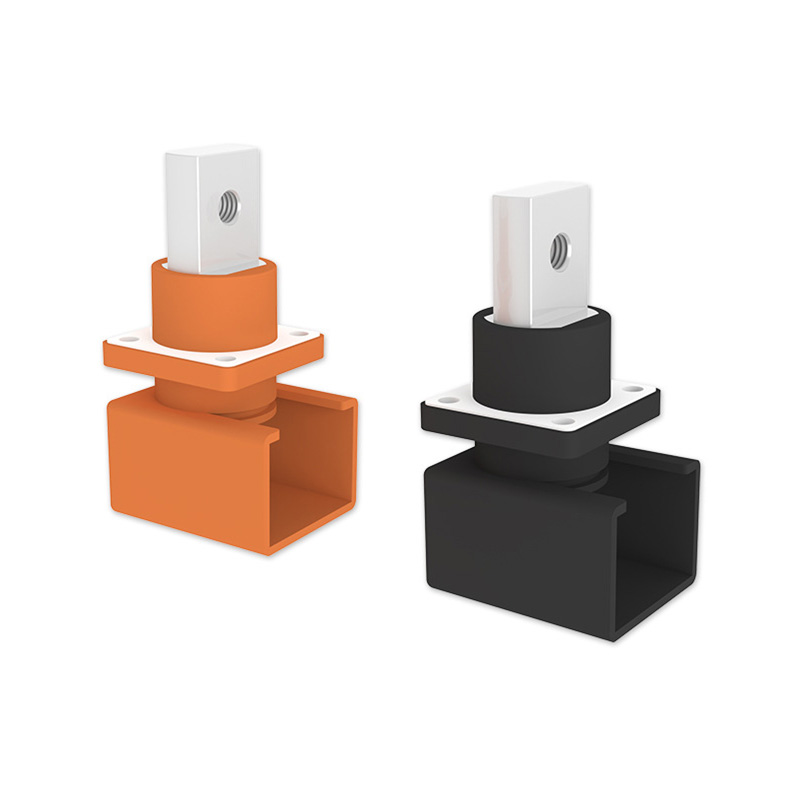
A battery pack has cells, and the cells have terminals. Something has to join those terminals into a circuit. That something is the battery busbar connector. It is a piece of copper or aluminum, shaped to reach from one terminal to the next, plated for the joint, and sized for the current. It is not the cell, and it is not the busbar. It is the interface between them. When the pack fails, the connector is often where the failure started.
Content
The Joint Is the Product
The connector exists to make a joint. Everything else, the shape, the material, the plating, follows from how that joint is made. There are two ways: bolted or welded.
A bolted connector is serviceable. The busbar sits over the terminal stud, the nut clamps it down, and the technician can take it apart. The joint depends on torque, surface condition, and the plating. A bolted battery busbar connector that is under-torqued or installed on an oxidized surface heats up. The heat raises the resistance, and the higher resistance makes more heat. That loop ends in a melted connector.
A welded connector is permanent. The busbar is fused to the terminal with a laser or an ultrasonic welder. The weld penetrates the oxide and makes a metal-to-metal bond. There is no torque to check, no compound to apply. But the weld has to be the right size and depth. Too small and the joint overheats. Too deep and the cell is damaged.
The Plating Has One Job
The plating is not for the bar. The bar conducts fine without it. The plating is for the joint. It prevents the oxide from forming between the two surfaces that have to touch.
Nickel plating suits the welded joints. It takes the weld and resists the corrosion. Silver plating suits the high-current bolted joints. It gives the low contact resistance. The choice follows the joint method, not the bar.
A battery busbar connector with the wrong plating, or with plating that wears through at the contact point, develops the resistance and the heat.
The Shape Follows the Pack
The connector is rarely a straight bar. The cells sit in a layout, and the connector has to reach the terminals without touching anything it should not. It bends, it steps, it forms the L and the Z. A battery busbar connector that does not fit the pack layout is a connector that will be forced into place, and a forced connector does not sit flat on the terminal.
Here is what a battery busbar connector needs to deliver:
- Material matched to the cell terminal
- Plating for the joint method
- Cross-section for the current
- Shape that fits the pack layout without forcing
- Clean contact surface
- Torque or weld spec for the installer
What Vibration Does to the Joint
A pack in an EV, a power tool, or an e-bike lives with vibration. A bolted joint can loosen. A welded joint can crack. The connector has to hold through the miles and the cycles. The bolted joint needs the locking washer or the thread locker. The welded joint needs the penetration that survives the flex.
The pack is only as good as its joints. The cells can be superb, the busbar can be superb, and one loose connector takes the pack down.
The Connector That Was Not the Problem
A bolted connector heats up and the connector gets blamed. Often the connector was fine. The torque was wrong. The surface was not cleaned. The compound was not applied. The battery busbar connector did its job. The installation did not.
A battery busbar connector is the interface between the cell and the busbar. The joint is the product. Choose the connector with the right material, the right plating, and the right shape. Then install it the way the spec says. The current will flow and the joint will hold.
Driven by the development of new energy and aiming for "zero carbon".
Copyright © Zhejiang Zhongyan New Energy Co., Ltd. All Rights Reserved.
