 English
 Español

Insulating Round Tinned Copper Braided Tape for Flexible Electrical Connections
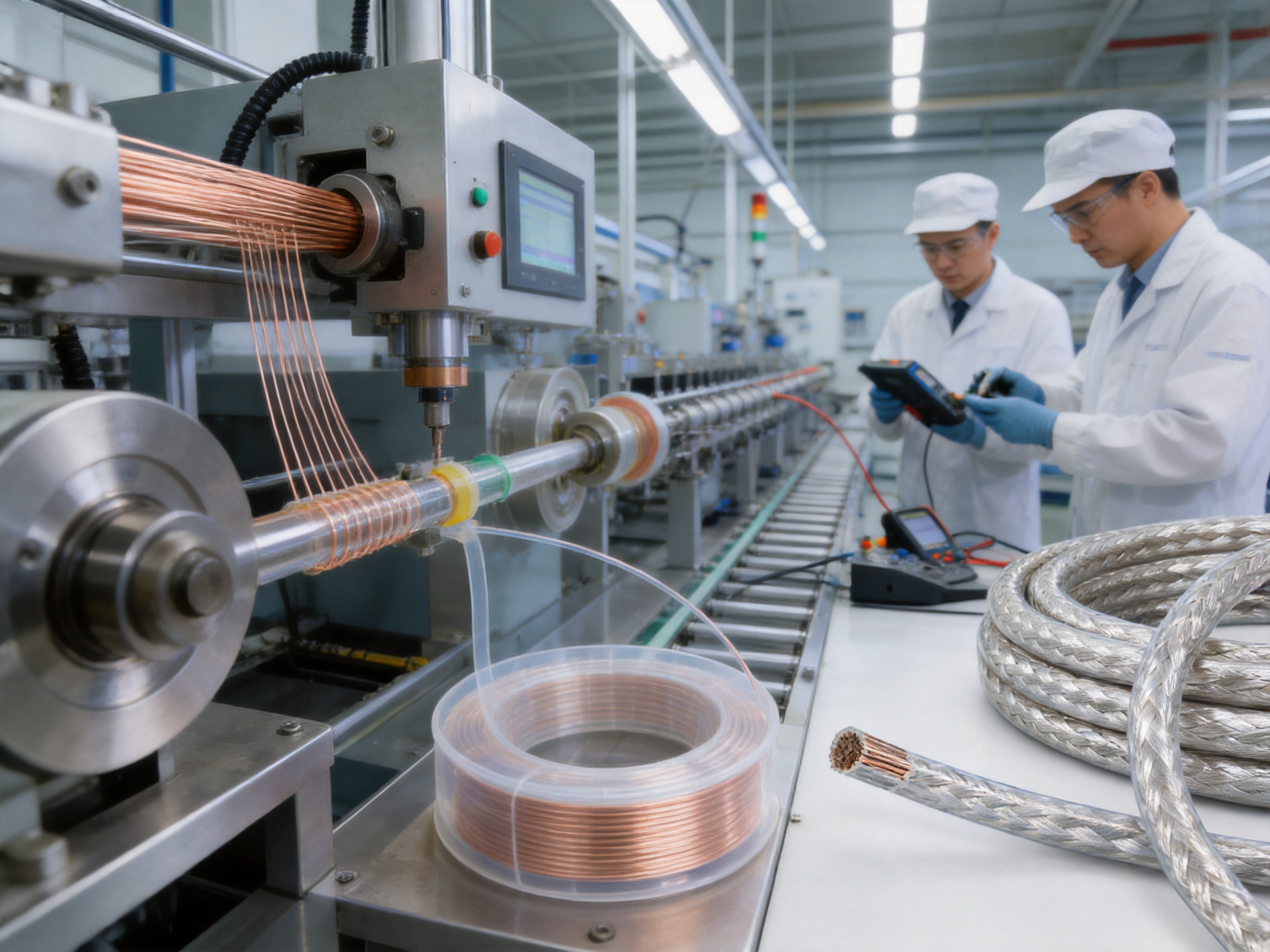
Reliable electrical connections must carry current safely while accommodating movement, vibration, thermal expansion, and installation limitations. In many power distribution and industrial applications, a rigid conductor is not sufficient. Equipment doors move, transformer terminals vibrate, switchgear components expand during operation, and battery or power-conversion assemblies often require a connection that can flex repeatedly without imposing excessive mechanical stress on adjoining terminals.
Insulating round tinned copper braided tape is designed for this type of demanding connection. It combines the electrical conductivity of copper, the corrosion resistance of tin plating, the flexibility of a fine-wire braid, and the protective function of transparent PVC insulation. The result is a compact, flexible conductor suitable for grounding, internal equipment connections, switchgear, transformers, high-current assemblies, and other applications where a soft electrical connection is required.
The RTCBI and RTCBI HL product families provide several cross-sectional options, current ratings, and coil lengths. The standard versions are supplied in 25-meter coils, while the HL versions are designed for longer flexible cable applications and are available in extended packaging lengths. With a standard individual wire diameter of 0.15 mm, the braid is formed from many fine conductors that distribute bending across the assembly rather than concentrating stress at one rigid point.
This article examines the construction, electrical performance, insulation system, manufacturing strengths, application value, selection process, and quality considerations associated with insulating round tinned copper braided tape.
Content
- What Is Insulating Round Tinned Copper Braided Tape?
- Core Construction and Functional Layers
- Principal Advantages Compared with Conventional Alternatives
- Available Models and Technical Data
- Understanding the RTCBI and RTCBI HL Versions
- Advanced Manufacturing Considerations
- Quality Assurance and Inspection
- Applications in Electrical and New Energy Equipment
- How to Select the Correct Product
- Installation Recommendations
- Manufacturing and Engineering Strengths
- Comparison with Other Flexible Connection Solutions
- Q&A
- What is the main purpose of insulating round tinned copper braided tape?
- Why is the copper tinned?
- What does the 0.15 mm wire diameter mean?
- What insulation material is used?
- What is the stated operating temperature?
- What is the difference between RTCBI and RTCBI HL?
- Can the braid be used as a grounding conductor?
- Can it replace a rigid copper busbar?
- How should the correct size be selected?
- Is the transparent insulation useful?
- Can the product be customized?
- Conclusion
- References
- Product: RTCBI/RTCBI HL Insulating Round Tinned Copper Braided Tape
What Is Insulating Round Tinned Copper Braided Tape?
Insulating round tinned copper braided tape is a flexible conductive braid made from fine copper wires that are arranged into a round or tubular braided structure and protected by transparent PVC insulation. The copper provides a low-resistance path for electrical current. Tin plating helps protect the copper surface from oxidation and improves its suitability for humid or corrosive operating environments. The PVC covering provides electrical separation from adjacent conductive parts and reduces the risk of accidental contact.
The term “tape” refers to the flexible braided conductor format rather than a flat adhesive strip. Unlike a solid copper bar, the braided construction can bend, twist, and accommodate relative movement between connection points. Unlike a conventional uninsulated braid, the PVC insulation provides an additional layer of protection during installation and operation.
The round structure is particularly useful where the conductor must be routed through compact spaces or connected to terminals with different orientations. Its flexibility allows installers and equipment designers to avoid sharp bends, excessive terminal loading, and unnecessarily long rigid conductor paths.
The product uses a standard wire diameter of 0.15 mm. Fine strands are important because flexibility is determined not only by the total cross-sectional area but also by the diameter and arrangement of individual wires. A conductor built from many fine wires generally bends more easily than a conductor with the same area made from fewer, thicker wires.
Core Construction and Functional Layers
Fine-Strand Tinned Copper Conductor
The conductive core is made from copper wire with a tin-plated surface. Copper is widely selected for power connections because it combines high electrical conductivity with good thermal performance and mechanical workability. The tin coating adds a protective surface layer that helps limit direct exposure of copper to air, moisture, and contaminants.
Tinned copper is especially useful in equipment that may experience humidity, condensation, industrial pollutants, or long service periods. The plated surface can also support more consistent terminal contact when suitable lugs, clamps, or connection hardware are used. Proper termination remains essential, but the material provides a valuable foundation for stable electrical performance.
Braided Flexible Structure
The wires are interlaced to form a braided conductor. This construction gives the product a combination of current-carrying capacity and mechanical flexibility. When the braid is bent, the individual strands can shift slightly within the braided structure. This reduces the severe localized strain that can occur in a solid bar or a single large conductor.
A braided connection is also able to absorb small amounts of vibration and dimensional movement. This makes it appropriate for connections between components that are electrically close but mechanically dynamic. Examples include a switchgear panel and its moving door, a transformer connection exposed to operating vibration, or equipment sections affected by thermal expansion.
Transparent PVC Insulation
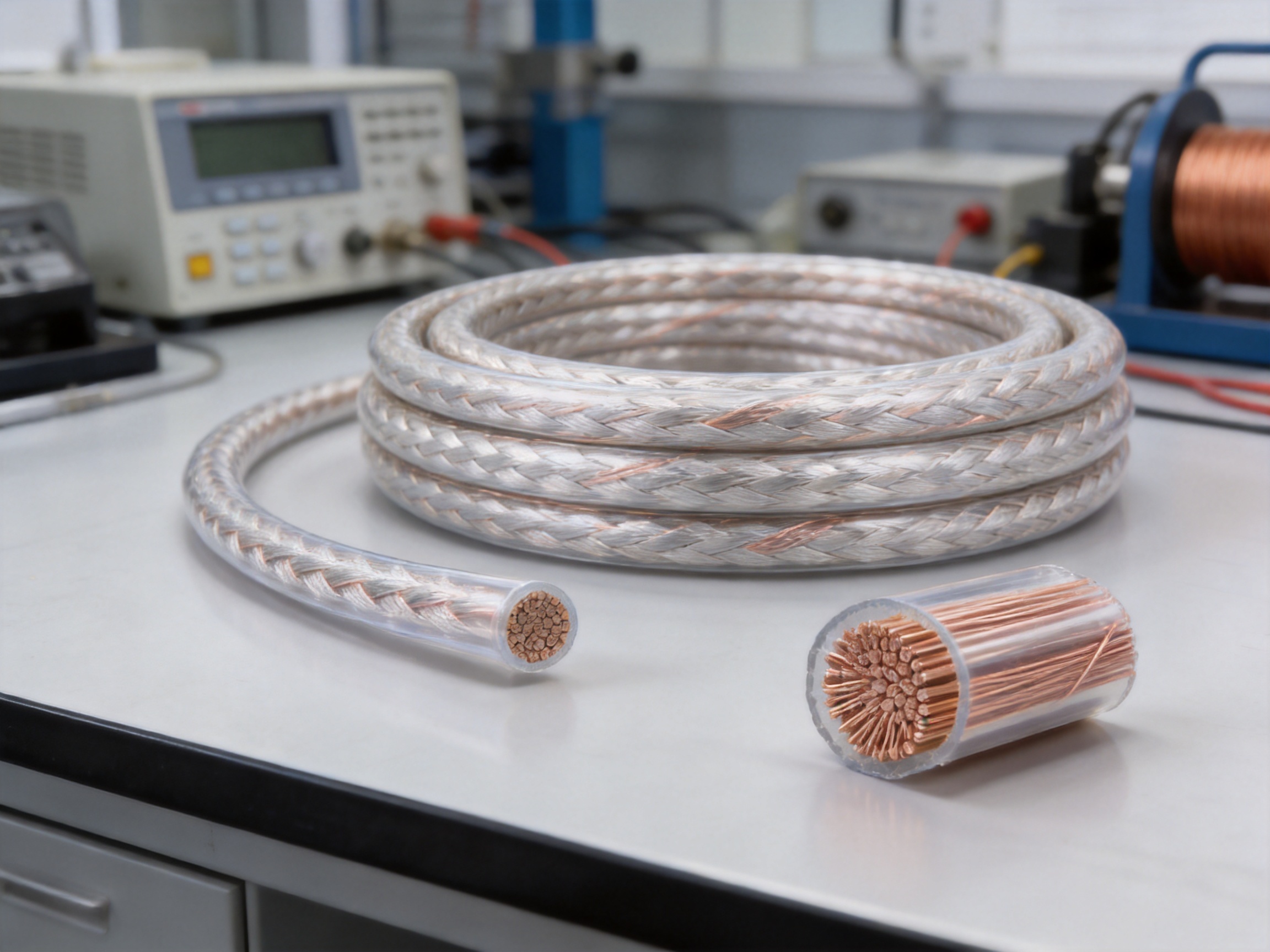
The outer insulation is transparent PVC. Transparency can assist visual inspection because the braid remains partially visible through the covering. Inspectors may be able to identify the general position of the conductor, observe the condition of the insulation, and confirm routing without removing the protective layer.
The PVC material is specified as self-extinguishing and compliant with the UL 94 V-0 flammability classification according to the supplied product information. This classification indicates that the material is designed to resist continued burning under the applicable test conditions. It should not be interpreted as making the complete electrical system fireproof; system-level fire performance still depends on installation, surrounding materials, current protection, temperature, and fault conditions.
The stated insulation voltage is 450 V, and the stated operating temperature is up to 70°C. Designers should evaluate actual voltage, temperature, fault current, installation spacing, and environmental exposure before final approval. The rating of the finished assembly may also be influenced by terminals, fasteners, enclosures, and adjacent components.
Principal Advantages Compared with Conventional Alternatives
Greater Flexibility than Solid Busbars
Rigid copper or aluminum busbars are efficient for fixed, straight-line distribution paths, but they are not ideal where relative movement exists. A solid busbar can transmit mechanical force to terminals when equipment vibrates or shifts. Repeated bending may also cause fatigue or cracking if the bar is not carefully formed and supported.
Flexible braided tape provides a more forgiving connection. It can be routed around obstacles, connected between offset terminals, and installed in areas where a rigid bar would require multiple bends or additional joints. This can simplify assembly and reduce the need for complicated forming operations.
Improved Environmental Protection over Bare Braid
Bare copper braid is flexible and conductive, but it is exposed to accidental contact, contamination, and mechanical damage. It may also be unsuitable where creepage, clearance, or insulation requirements must be maintained. The transparent PVC covering protects the braid while preserving the basic flexibility of the conductor.
The insulated design can reduce the chance of unintended contact with nearby metalwork. It can also make routing more orderly inside electrical cabinets, battery assemblies, transformers, and power-conversion equipment. By combining conductivity and insulation in one component, it may reduce the need for separate protective sleeving or insulating barriers, depending on the application design.
Corrosion Resistance from Tin Plating
Unplated copper can gradually develop surface oxidation when exposed to air, humidity, or contaminants. Although oxidation does not necessarily eliminate conductivity, it can complicate termination and may contribute to inconsistent contact behavior over time. Tinned copper offers a more resistant surface and is therefore better suited to applications where environmental stability is important.
The tin-plated surface is particularly valuable in flexible connectors because repeated handling and termination should not expose an unprotected copper surface unnecessarily. The correct terminal preparation and connection torque are still required, but the plated conductor provides an additional measure of durability.
Efficient Installation from Coil Supply
The product is supplied in coils rather than as only fixed-length pieces. Coil packaging allows users to cut or prepare lengths according to equipment design. Standard RTCBI versions are supplied in 25-meter coils, while RTCBI HL options are supplied in longer packaging lengths for selected sizes.
Coil supply can reduce unnecessary joints and help manufacturers optimize material consumption. It is also useful for panel builders and equipment manufacturers who use several connection lengths within the same product family. Before cutting, the installer should account for terminal preparation, bend radius, insulation stripping, and any required overlap or fixing length.
Stable Product Family Across Multiple Sizes
A product family with several cross-sectional options allows engineers to select a conductor according to current demand and available space. The listed versions range from 10 mm² to 50 mm². Nominal current values range from 75 A to 250 A within the supplied specifications.
Using related products across different equipment ratings can simplify purchasing, production instructions, and maintenance. It can also help standardize connection methods across a manufacturer’s product portfolio.
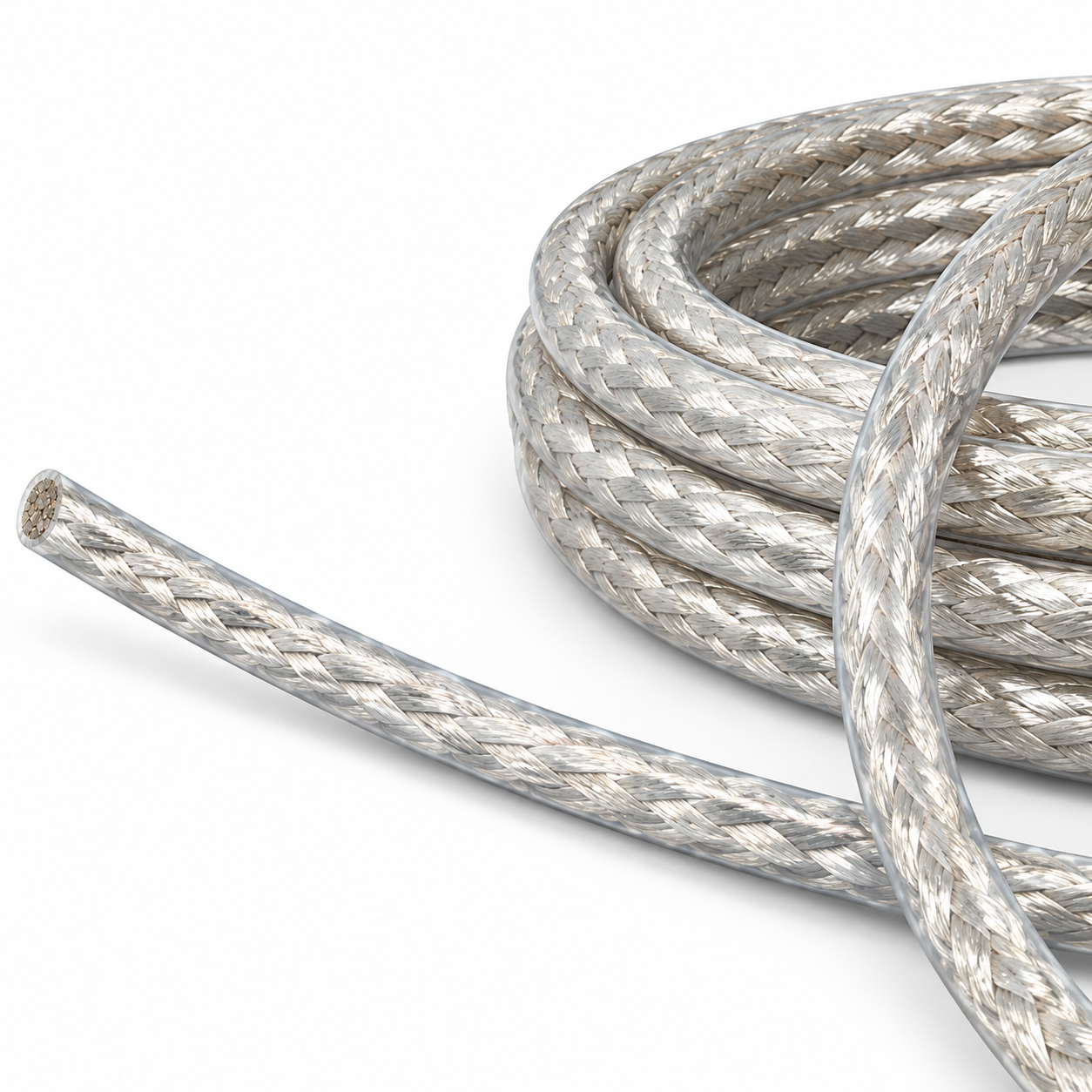
RTCBI/RTCBI HL Insulating Round Tinned Copper Braided Tape
Available Models and Technical Data
The following table summarizes the supplied product information. The catalog includes standard RTCBI versions and longer-length RTCBI HL versions. Dimensions and current values should be confirmed against the latest technical drawing and the actual installation conditions before production release.
| Part Number | Description | Cross Section (mm²) | Catalog Dimension (mm) | Catalog Core Value | Nominal Current (A) | Packaging | Weight (kg) |
|---|---|---|---|---|---|---|---|
| 23000516 | RTCBI 15-10 | 10 | 7 | 560 | 75 | 25 m | 0.12 |
| 23000517 | RTCBI 15-16 | 16 | 8 | 900 | 120 | 25 m | 0.18 |
| 23000518 | RTCBI 15-25 | 25 | 9.5 | 1416 | 150 | 25 m | 0.25 |
| 23000519 | RTCBI 15-30 | 30 | 10 | 1680 | 180 | 25 m | 0.35 |
| 23000520 | RTCBI 15-50 | 50 | 12.5 | 2820 | 250 | 25 m | 0.58 |
| 23000521 | RTCBI 15-10HL | 10 | 7 | 560 | 75 | 100 m | 0.12 |
| 23000522 | RTCBI 15-16HL | 16 | 8 | 900 | 120 | 100 m | 0.18 |
| 23000523 | RTCBI 15-25HL | 25 | 9.5 | 1416 | 150 | 100 m | 0.28 |
| 23000524 | RTCBI 15-30HL | 30 | 10 | 1680 | 180 | 75 m | 0.35 |
The catalog field identified as “number of cores” contains values such as 560, 900, 1416, 1680, 2820. These values are reproduced as supplied and should be checked against the manufacturer’s detailed construction drawing to confirm whether they represent strand count, braid count, or another construction parameter. This verification is important when the product is being integrated into a formal engineering specification.
Understanding the RTCBI and RTCBI HL Versions
Standard RTCBI Versions
The standard RTCBI series is supplied in 25-meter coils. It includes 10 mm², 16 mm², 25 mm², 30 mm², and 50 mm² options. The listed nominal current ratings are 75 A, 120 A, 150 A, 180 A, and 250 A respectively.
These sizes can support a broad range of flexible connection requirements. Smaller versions may be suitable for control cabinet bonding, equipment grounding, and moderate-current interconnections. Larger versions can be used for higher-current links in switchgear, transformers, power distribution assemblies, and energy equipment, subject to the applicable thermal and electrical design rules.
Extended-Length RTCBI HL Versions
The HL versions are described as long flexible cable holder options and are supplied in longer coils for selected cross sections. The 10 mm² and 16 mm² versions are listed with 100-meter packaging, the 25 mm² version with 100-meter packaging, and the 30 mm² version with 75-meter packaging.
Longer packaging can be useful for high-volume production, repetitive panel layouts, and applications where multiple connection pieces are cut from a continuous supply. It may reduce packaging waste and simplify material planning. However, longer coils should be stored and handled carefully to prevent crushing, contamination, sharp kinks, or deformation of the braid.
The HL series does not automatically imply a different electrical rating. The listed current values correspond to the same cross-sectional sizes as the standard versions. The main distinction shown in the supplied data is the packaging length and the long flexible cable application orientation.
Advanced Manufacturing Considerations
The performance of flexible braided tape depends on much more than the nominal copper area. Conductor purity, wire diameter, tin-plating consistency, braiding tension, insulation uniformity, dimensional control, and end preparation all influence the finished product. A manufacturer with experience in precision conductive components can use controlled processes to maintain consistency from batch to batch.
Wire Preparation and Surface Control
The production process begins with suitable fine copper wire. The wire must be drawn or supplied to the required diameter and checked for surface defects, diameter consistency, and mechanical integrity. A nominal wire diameter of 0.15 mm requires careful handling because fine wire can be damaged by excessive tension, sharp tooling, or improper storage.
Tin plating must cover the copper surface consistently. Uneven plating may create variations in corrosion resistance, surface appearance, and termination behavior. Process control should include monitoring of plating thickness or coating continuity according to the applicable internal and customer specifications.
Precision Braiding
Braiding machines interlace the fine wires into the required round structure. Braid tension is a key process variable. Excessive tension can reduce flexibility and create internal stress, while insufficient tension can lead to loose construction, inconsistent dimensions, or poor mechanical stability.
The braiding process must also control the number and arrangement of wires. Consistent construction supports predictable cross-sectional area, current capacity, flexibility, and external dimensions. It also helps ensure that the braid can be inserted into terminals or routed through designed equipment spaces without unexpected size variation.
Insulation Extrusion
After braiding, the conductor is covered with transparent PVC through an extrusion process. The insulation must surround the braid continuously and maintain consistent thickness. Poor extrusion control may produce thin spots, pinholes, incomplete coverage, bubbles, or dimensional variation.
Transparent insulation provides a practical visual advantage, but transparency also makes surface quality more visible. A controlled extrusion process helps preserve a clean appearance while protecting the conductor from mechanical contact and environmental exposure.
The supplied product information specifies self-extinguishing arc material with UL 94 V-0 performance. Material formulation, extrusion temperature, line speed, cooling, and dimensional control all affect the quality of the finished insulation. Batch traceability is useful for connecting the finished product to the PVC material lot and production conditions.
Cutting, Coiling, and Packaging
Coiling must preserve the flexibility and round form of the insulated braid. Excessive winding tension can flatten or deform the product, while loose winding can create tangles and handling problems. Appropriate coil diameter and controlled winding help maintain the product’s condition during storage and transport.
Packaging should protect the braid from moisture, dirt, abrasion, and crushing. This is particularly important for the longer HL coils because a larger amount of product may remain in storage before use. Clear identification of part number, cross section, coil length, batch information, and inspection status can improve warehouse control.
Quality Assurance and Inspection
Quality assurance should address both material properties and finished-product performance. Electrical, mechanical, dimensional, and insulation inspections can be combined to verify that each production batch meets its specification.
Dimensional Inspection
Cross-sectional size, outer dimensions, insulation thickness, and coil length should be checked using calibrated equipment. Dimensional inspection is important because the product must fit within the available space and connect correctly to the selected terminals.
For flexible braid, measuring dimensions requires care. The product can compress when handled, so inspection methods should define the applicable pressure and measurement position. Inconsistent measurement pressure can produce misleading results.
Electrical Inspection
Electrical testing may include continuity, resistance, insulation resistance, and dielectric withstand tests where required by the customer specification or application standard. The nominal current rating should not be treated as independent of installation conditions. Ambient temperature, airflow, bundling, contact resistance, duty cycle, and enclosure conditions can all influence allowable current.
Low resistance is one of the principal goals of a copper braid. Consistent conductor construction and reliable termination are both necessary to achieve stable performance. A high-quality braid cannot compensate for an incorrectly crimped lug, loose bolt, contaminated contact surface, or undersized terminal.
Insulation and Flammability Inspection
The PVC insulation should be checked for visible defects, continuity, surface damage, and appropriate coverage. Where required, tests can verify insulation resistance and voltage withstand. The stated 450 V insulation voltage provides a reference for product selection, but the complete system must be evaluated for transient voltage, pollution degree, clearance, creepage, and applicable safety standards.
The V-0 designation should be supported by the relevant material or product test documentation. Customers purchasing for regulated equipment may require declarations, test reports, or traceability documents as part of the approval process.
Mechanical Flexibility Inspection
Flexibility can be evaluated through controlled bending or movement tests. The appropriate test depends on whether the braid is expected to experience one-time installation bending, repeated equipment movement, vibration, or continuous flexing. The design engineer should define the minimum bend radius and movement cycle requirements rather than assuming that all braided products are suitable for unlimited flexing.
Applications in Electrical and New Energy Equipment
Switchgear and Distribution Cabinets
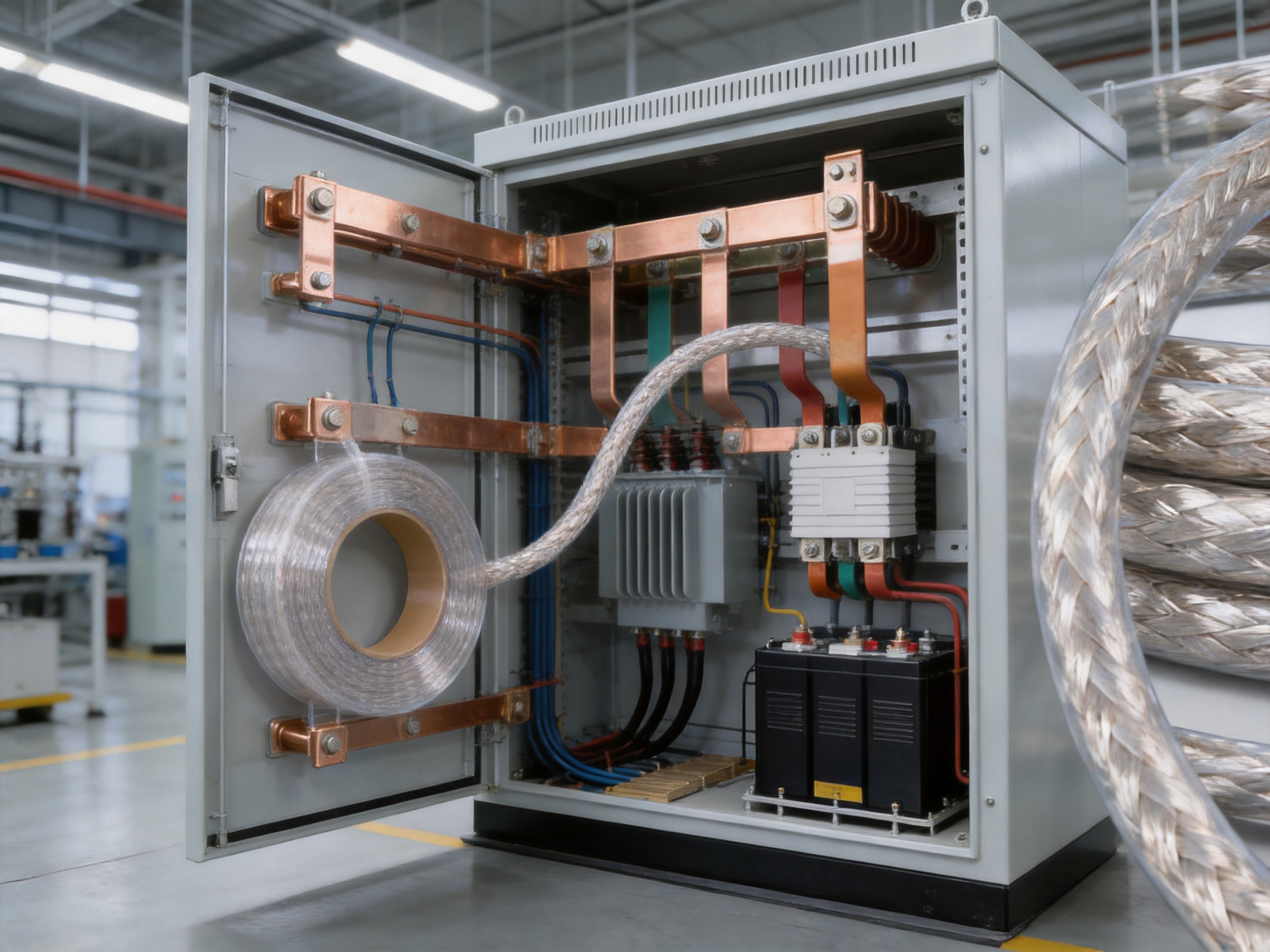
Switchgear often contains tightly arranged conductors, breakers, busbars, grounding points, and moving mechanisms. Flexible insulated braid can connect fixed and moving sections while reducing the risk of rigid conductor interference. It can also be used for bonding cabinet doors, removable panels, and metallic structures when the relevant current and safety requirements are satisfied.
In distribution cabinets, the product can provide flexible links between busbar systems and equipment terminals. Its compact form may help designers use available space more efficiently than a multi-piece rigid connection.
Transformers and Power Equipment
Transformers and power equipment can experience vibration and thermal cycling during operation. A flexible copper braid can accommodate small movements between terminals and connected components. The tinned surface can also be beneficial in environments where moisture or contaminants may be present.
Application design must consider operating temperature, proximity to hot surfaces, fault current duration, and mechanical support. The stated operating temperature of up to 70°C should be compared with the actual temperature at the connection, not merely the surrounding room temperature.
Battery Packs and Energy Storage Systems
Energy storage equipment requires reliable conductive connections and careful insulation management. Flexible braid can be used in selected battery interconnections, grounding paths, module links, or internal equipment connections when the voltage, current, thermal, and mechanical requirements match the product specification.
Battery systems may experience vibration, thermal expansion, assembly tolerances, and frequent service access. A flexible connector can reduce mechanical stress on cells, busbars, and terminal interfaces. However, battery designers must separately evaluate short-circuit energy, isolation requirements, creepage and clearance, flame behavior, chemical compatibility, and protection against abrasion.
Power Conversion Equipment
Inverters, converters, charging equipment, and power supply systems often require compact high-current links between capacitors, switches, busbars, and terminals. Braided tape can provide a flexible connection where component layouts cannot accommodate a straight rigid busbar.
The conductor may also assist with vibration management and assembly tolerance. When used near high-frequency switching devices, engineers should evaluate loop area, electromagnetic interference, current distribution, and the complete connection geometry. Flexibility is valuable, but electrical layout remains a critical part of system performance.
Rail Transit and Communication Equipment
Rail vehicles and related infrastructure can subject electrical connections to vibration, movement, and environmental variation. Insulated tinned copper braid may be suitable for selected bonding and flexible connection tasks when it meets the project’s fire, smoke, environmental, and mechanical standards.
Communication equipment and industrial control systems may also use flexible braid for grounding and equipment bonding. The appropriate size depends on fault current, grounding design, installation method, and applicable regulations.
How to Select the Correct Product
Step One: Establish the Electrical Requirement
Begin with the continuous operating current, expected overload, short-circuit conditions, duty cycle, and permissible temperature rise. The listed nominal current values are useful for initial selection, but final sizing should consider the actual installation environment.
For example, a 10 mm² braid listed at 75 A may require a different evaluation when installed in a tightly enclosed cabinet than when installed in an open, ventilated arrangement. Bundling several conductors, placing the braid near heat sources, or routing it through a restricted channel can reduce heat dissipation.
Step Two: Confirm the Voltage and Insulation Requirement
The product information specifies 450 V insulation voltage. The system designer should compare this value with the nominal voltage, transient conditions, pollution level, clearance, creepage distance, and applicable safety standard. The PVC covering should not be considered a substitute for a complete insulation coordination analysis.
Step Three: Evaluate Mechanical Movement
Identify whether the braid will be bent once during assembly, moved occasionally, exposed to vibration, or flexed repeatedly throughout service. Determine the required bend radius and available movement length. Avoid twisting the conductor excessively or placing sharp bends directly at the terminal.
Where repeated movement is expected, the braid should be supported so that the movement is distributed over an appropriate length. Concentrating movement at one stripped section or termination can shorten service life.
Step Four: Select Cross Section and Packaging
Choose the cross section from the available 10 mm², 16 mm², 25 mm², 30 mm², and 50 mm² options based on current and thermal requirements. Select standard 25-meter coils when normal material quantities are appropriate. Select the HL versions when longer coil lengths improve production efficiency or reduce material changes.
Step Five: Confirm Termination Compatibility
The braid must be compatible with the selected lugs, clamps, crimp barrels, bolts, or other terminal components. The termination should provide reliable electrical contact without crushing the braid excessively or damaging the insulation.
Terminal design should also account for the plated conductor surface. Contact materials, plating compatibility, tightening torque, and corrosion protection should be reviewed for the operating environment.
Installation Recommendations
Store coils in a clean and dry location. Avoid direct exposure to sunlight, oil, chemicals, sharp edges, and excessive heat. Keep the braid protected from crushing during transport and do not drag coils across rough surfaces.
When cutting the product, use a method that produces a clean end without excessive strand displacement. If the braid is to be inserted into a terminal, follow the terminal manufacturer’s preparation instructions. Remove only the necessary insulation length and avoid nicking or cutting the fine copper wires.
Route the conductor without forcing it into a sharp bend. Maintain a smooth curve and provide suitable support near connection points. Do not use the insulated braid as a lifting strap, tie, or mechanical restraint unless the product has been specifically designed and tested for that function.
After installation, inspect the routing, insulation condition, terminal seating, fastener tightness, and separation from adjacent conductive parts. Where the connection forms part of a safety grounding or bonding system, verify continuity after assembly and during scheduled maintenance.
Manufacturing and Engineering Strengths
Zhejiang Zhongyan New Energy Co., Ltd. specializes in new energy conductive components, including high-voltage copper foil soft connections, special-shaped flexible connections, battery soft connections, and other precision electrical components. This specialization is relevant to braided tape because flexible conductors must be designed with a balance of electrical capacity, mechanical compliance, dimensional accuracy, and insulation reliability.
The company’s experience covers product design, research and development, manufacturing, testing, and solution support. Its technical focus on battery connection systems and other new energy components provides an understanding of compact electrical assemblies in which space, heat, vibration, and insulation must be considered together.
The company was established in 2022 and has developed production capabilities around precision conductive components. Its stated customer base includes leading enterprises such as BYD, CATL, and Jaguar. Such experience indicates exposure to demanding supply-chain expectations, although each customer project remains subject to its own qualification, documentation, and approval requirements.
Advanced manufacturing technologies described by the company include polymer diffusion welding and laser technology patents. These technologies are primarily associated with soft connection and precision conductive component production, but they also reflect a broader capability in controlled joining, low-resistance interfaces, and high-reliability electrical assemblies.
The company is also developing an integrated innovation system covering materials science, precision machining, testing, and verification. This broad approach is valuable because the performance of an insulated braid depends on the interaction between conductor material, braid construction, polymer insulation, terminal design, and final equipment integration.
Customized Engineering Support
Different applications may require customized lengths, terminal structures, insulation details, braid geometries, or connection methods. A manufacturer with experience in flexible electrical components can assist with design verification, material selection, sample development, and production transition.
Customized support is especially useful when a standard coil product must be integrated into a battery pack, switchgear assembly, transformer, or power-conversion unit with limited installation space. Engineering review can help identify bending constraints, terminal loading, thermal limitations, and insulation risks before mass production.
Quality and Consistency
Stable production depends on repeatable wire preparation, braiding, insulation extrusion, coiling, and inspection. Consistency is important for automated or semi-automated assembly because dimensional variation can cause feeding, cutting, or termination problems.
The company’s modern production and quality management systems are intended to support stable and consistent products and services. Customers should define the required inspection plan, acceptance criteria, documentation, and traceability level during project qualification.
Comparison with Other Flexible Connection Solutions
Compared with a bare copper braid, insulated tinned copper braided tape offers better protection against accidental contact and environmental exposure. It may also reduce the need for additional sleeving. The trade-off is that the insulation adds thickness and may limit the maximum temperature compared with an uninsulated conductor.
Compared with a solid copper busbar, the braid provides substantially greater flexibility and tolerance to movement. The trade-off is that a rigid busbar may provide more predictable geometry for fixed installations and may be easier to support mechanically in long straight runs.
Compared with an aluminum flexible conductor, tinned copper generally offers higher conductivity for a given cross-sectional area and a familiar termination behavior. Aluminum may offer a lower weight or material cost in some designs, but it requires careful attention to oxide formation, terminal compatibility, and connection preparation.
Compared with a conventional flexible cable, braided tape can offer a lower-profile connection and may be easier to fit between closely spaced terminals. A round braid also distributes the conductor around its circumference, which can be useful for certain routing configurations. The best option depends on voltage, current, flexing pattern, insulation system, bend radius, and termination method.
Q&A
What is the main purpose of insulating round tinned copper braided tape?
Its main purpose is to provide a flexible, insulated, and electrically conductive connection between components that may experience movement, vibration, thermal expansion, or installation constraints. Typical applications include grounding, switchgear, transformers, power distribution equipment, battery systems, and other high-current assemblies.
Why is the copper tinned?
Tin plating helps protect the copper surface from oxidation and corrosion. It can improve environmental durability and support more stable termination performance when the product is correctly installed with compatible connection hardware.
What does the 0.15 mm wire diameter mean?
It refers to the standard diameter of the individual fine wires used in the braid. Fine wires allow the conductor to bend more easily than a similar-area conductor made from fewer, thicker wires.
What insulation material is used?
The product uses transparent PVC insulation. The supplied information identifies the material as self-extinguishing and compliant with UL 94 V-0 flammability performance. The stated insulation voltage is 450 V.
What is the stated operating temperature?
The supplied specification states an operating temperature of up to 70°C. Engineers should compare this value with the actual conductor temperature, ambient conditions, nearby heat sources, current load, and enclosure environment.
What is the difference between RTCBI and RTCBI HL?
The listed distinction is primarily packaging length and long flexible cable application. Standard RTCBI models are generally supplied in 25-meter coils. RTCBI HL models are supplied in longer coils for selected cross sections, including 75-meter and 100-meter packaging options.
Can the braid be used as a grounding conductor?
It may be suitable for grounding or bonding when its cross section, current capacity, insulation, mechanical protection, termination, and applicable standards meet the system requirements. The grounding design must be verified by a qualified engineer, particularly where fault current or safety-critical bonding is involved.
Can it replace a rigid copper busbar?
It can replace a rigid busbar in selected flexible connection locations, especially where movement or vibration exists. It is not a universal replacement for a fixed busbar system. Current, temperature rise, short-circuit withstand, mechanical support, and available space must all be evaluated.
How should the correct size be selected?
Start with continuous current, overload, fault conditions, temperature, installation method, and movement requirements. The available catalog sizes range from 10 mm² to 50 mm², with listed nominal current values from 75 A to 250 A. Final selection should be confirmed using the complete equipment design and applicable standards.
Is the transparent insulation useful?
Yes. It provides electrical protection while allowing some visual inspection of the braid beneath the covering. It can help users observe general conductor condition and routing without removing the insulation.
Can the product be customized?
Flexible conductive components can often be adapted for specific lengths, terminal arrangements, dimensions, and equipment layouts. Customization should be confirmed during engineering review, including electrical ratings, insulation requirements, tooling, testing, and production quantities.
Conclusion
Insulating round tinned copper braided tape provides a practical balance of conductivity, flexibility, corrosion resistance, and electrical protection. Its fine 0.15 mm wires form a flexible braided conductor, while tin plating helps protect the copper surface and transparent PVC insulation helps prevent accidental contact. The stated 450 V insulation voltage, 70°C operating temperature, self-extinguishing PVC, and UL 94 V-0 performance make the product suitable for a broad range of designed electrical applications.
The RTCBI family offers multiple cross-sectional sizes and nominal current ratings, while the RTCBI HL versions provide longer coil packaging for applications requiring extended flexible cable supply. These features can help equipment manufacturers simplify procurement, optimize material usage, and accommodate compact or moving connection layouts.
Product performance ultimately depends on correct selection, controlled manufacturing, reliable termination, and appropriate installation. With expertise in new energy conductive components, precision soft connections, battery connection systems, and advanced joining technologies, Zhejiang Zhongyan New Energy Co., Ltd. is positioned to support both standard product supply and customized flexible electrical connection requirements.
References
1. Product technical information for RTCBI and RTCBI HL insulating round tinned copper braided tape.
2. UL 94, Standard for Tests for Flammability of Plastic Materials for Parts in Devices and Appliances.
3. General engineering principles for copper conductors, flexible braids, electrical insulation, and thermal current-carrying capacity.
4. Manufacturer information regarding flexible conductive components, battery soft connections, precision joining, and new energy electrical systems.
5. General application guidance for switchgear, transformers, power distribution equipment, battery systems, and energy storage connections.
Product: RTCBI/RTCBI HL Insulating Round Tinned Copper Braided Tape

Driven by the development of new energy and aiming for "zero carbon".
Copyright © Zhejiang Zhongyan New Energy Co., Ltd. All Rights Reserved.
