 English
 Español

12.8V 100Ah LiFePO4 Battery for Safe, Long-Life Energy Storage

Introduction
Reliable energy storage has become essential for recreational vehicles, marine systems, solar installations, industrial equipment, mobile power platforms, and backup applications. As energy users demand longer operating time, faster charging, improved safety, and lower lifetime ownership costs, lithium iron phosphate batteries have emerged as a preferred alternative to conventional lead-acid and many traditional lithium-ion batteries.
The EleStore 100Ah 12.8V LiFePO4 battery is designed for applications that require dependable power in a compact and weather-resistant package. It combines Grade A REPT prismatic lithium iron phosphate cells with a programmable JBD 100A Bluetooth Battery Management System. The resulting battery provides a nominal energy capacity of 1,280Wh, a continuous discharge capability of 100A, intelligent protection functions, and flexible expansion through series and parallel connections.
Unlike a basic replacement battery that simply places lithium cells inside a case, this product is designed as an integrated energy-storage system. Its cell configuration, electronic protection, enclosure, connection terminals, temperature controls, and communication functions work together to support stable operation. This integrated approach is particularly valuable in systems where unexpected downtime, thermal incidents, or premature battery degradation can create substantial costs.
The battery is also supported by the technical capabilities of Zhejiang Zhongyan New Energy Co., Ltd., a manufacturer focused on new-energy conductive components, battery soft connections, precision electrical interfaces, and energy-storage technologies. Its experience in high-reliability conductive products provides an important foundation for the development of battery connection systems and future integrated battery solutions.
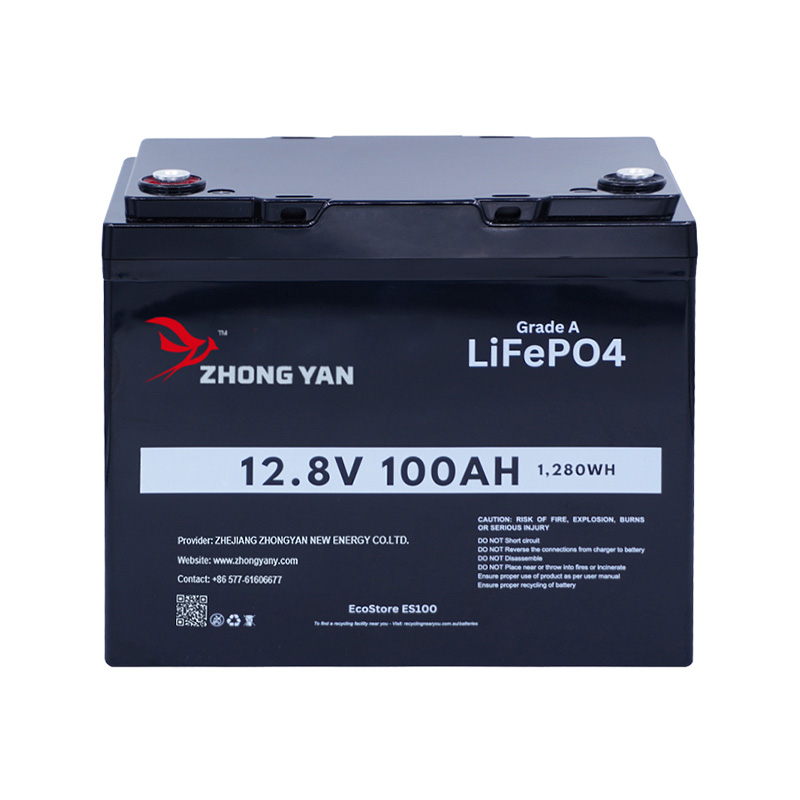
EleStore 100Ah 12.8V LiFeP04 Battery -(REPT Cells) & (Bluetooth BMS -JBD)
Product Overview
The battery uses lithium iron phosphate, commonly abbreviated as LiFePO4 or LFP, as its active chemistry. LFP chemistry is recognized for its thermal stability, long service life, and strong resistance to the safety concerns associated with less stable lithium chemistries. The nominal voltage of 12.8V is achieved through a 4S1P configuration, meaning that four 3.2V prismatic cells are connected in series.
With a rated capacity of 100Ah and usable energy of approximately 1,280Wh, the battery can deliver meaningful energy for both mobile and stationary applications. For example, a 100W load could theoretically operate for many hours before accounting for inverter losses, temperature effects, wiring losses, and the battery’s recommended depth of discharge. Actual runtime depends on the load profile and system design, but the capacity is suitable for common 12V energy-storage requirements.
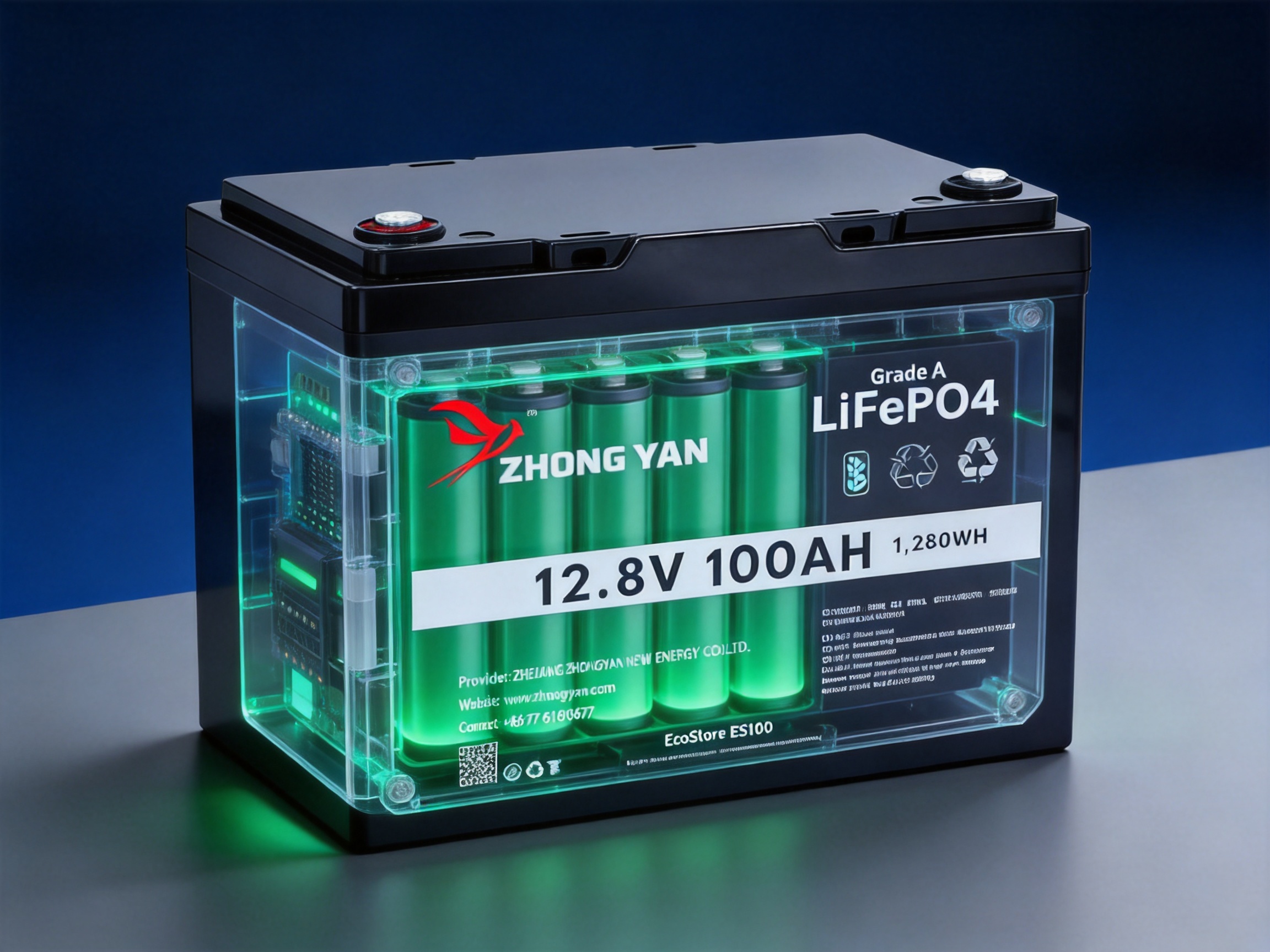
The use of 104Ah Grade A cells supports the stated 100Ah usable capacity while providing a controlled electrical architecture. Grade A classification indicates that the cells are selected for consistent performance and quality. Cell consistency is important because cells connected in series must charge and discharge together. Differences in internal resistance, capacity, or voltage behavior can otherwise increase balancing requirements and reduce the effective life of the complete battery pack.
The product includes a JBD Smart 100A-S programmable BMS with Bluetooth communication. The BMS monitors cell and pack conditions and helps protect the battery against overcharging, over-discharging, excessive temperature, and short circuits. Bluetooth connectivity allows users or technicians to review operating information through a compatible mobile interface, depending on the software configuration and communication environment.
The enclosure is manufactured from ABS material and carries an IP67 rating. This combination is intended to provide a robust outer structure and protection against dust and temporary water immersion under defined testing conditions. The IP rating does not eliminate the need for correct installation, suitable cable glands, protected terminals, and adherence to the manufacturer’s environmental instructions.
Key specifications
| Specification | Value |
|---|---|
| Battery chemistry | Lithium iron phosphate, LiFePO4 |
| Nominal voltage | 12.8V |
| Usable capacity | 100Ah |
| Nominal energy | 1,280Wh |
| Cell configuration | 4S1P |
| Cell type | REPT Grade A 3.2V 104Ah LFP prismatic cell |
| Maximum continuous charging current | 100A |
| Maximum continuous discharging current | 100A |
| Peak discharge current | 330 ± 80A for approximately 1.5 seconds |
| Charging cut-off voltage | 14.8 ± 0.2V |
| Discharging cut-off voltage | 10V |
| Cycle life rating | 3,500 cycles at 70% depth of discharge |
| Charging temperature | -10°C to 65°C |
| Discharging temperature | -20°C to 75°C |
| Connection | Unlimited parallel connection and up to four in series |
| Terminal type | M8 |
| Dimensions | 258 × 167 × 210mm |
| Weight | Approximately 10kg |
| Case material | ABS |
| Ingress protection | IP67 |
| Certifications listed | IEC62619, UN38.3, RoHS |
| Warranty | Five-year full replacement warranty |
Why LiFePO4 Chemistry Is a Strong Choice
Battery chemistry determines much more than nominal capacity. It affects safety, service life, charging behavior, weight, maintenance requirements, and the suitability of a battery for different operating environments. LiFePO4 chemistry offers a combination of properties that is particularly useful for daily cycling and high-reliability energy storage.
Improved thermal stability
LFP cathode chemistry has a stable molecular structure compared with many other lithium-ion chemistries. This contributes to improved resistance to thermal instability when the battery is correctly designed, operated, and protected. The chemistry does not make a battery immune to misuse, mechanical damage, manufacturing defects, or incorrect charging, but it provides a strong safety foundation.
The product adds electronic protection through the BMS and temperature monitoring. The specified charging overtemperature protection is approximately 65 ± 5°C, while discharging overtemperature protection is approximately 75 ± 5°C. These controls help prevent operation outside the intended thermal range.
Longer cycle life
The stated cycle-life rating is 3,500 cycles at 70% depth of discharge. Cycle life is influenced by operating temperature, charge voltage, discharge current, storage conditions, and the quality of the charging profile. Even so, this rating is substantially more suitable for repeated cycling than many conventional lead-acid batteries, especially when the battery is used regularly in solar, marine, or mobile applications.
A longer cycle life can reduce the frequency of battery replacement. It may also lower the environmental and logistical burden associated with purchasing, transporting, and disposing of batteries. The economic advantage becomes more pronounced in systems that cycle every day or experience frequent partial discharges.
Usable energy and voltage stability
A 12.8V LFP battery generally maintains a relatively stable voltage through much of its discharge range. This can help equipment operate consistently and can reduce the voltage sag commonly experienced with older battery technologies under load. The battery provides approximately 1,280Wh of nominal energy, although the energy available to a particular load depends on the discharge current, cut-off settings, temperature, and system efficiency.
Lower maintenance requirements
Unlike flooded lead-acid batteries, the product does not require electrolyte checks, watering, or ventilation for hydrogen release during normal operation. It is a sealed battery system with an integrated BMS. This makes it easier to install in mobile or remote locations, provided that the installation follows appropriate electrical and safety practices.
Advantages Compared with Conventional Alternatives
The product’s competitive value is best understood by comparing it with common alternatives rather than by focusing only on its nominal capacity. A 100Ah label does not fully describe the useful performance of a battery. Weight, cycle life, available discharge current, protection, communication, environmental resistance, and service support all influence the total value of an energy-storage system.
Compared with lead-acid batteries
A conventional 12V 100Ah lead-acid battery may have a similar nominal amp-hour rating, but the usable capacity is often lower when the battery is protected from deep discharge. Lead-acid batteries also become less effective under high discharge rates and may suffer accelerated wear when repeatedly discharged deeply.
The LiFePO4 battery weighs approximately 10kg, making it considerably easier to handle than many lead-acid alternatives. Reduced weight can benefit RV owners, boat builders, mobile equipment manufacturers, and installers who must work within strict payload limits.
The lithium battery also supports a higher continuous discharge current of up to 100A, subject to the BMS, wiring, connectors, and application requirements. This is useful for powering inverters, pumps, electric motors, communications equipment, and other loads with demanding current profiles.
Lead-acid batteries can remain useful for low-cost standby systems and applications with limited cycling. However, for repeated daily use, mobile installations, and situations where weight and maintenance are important, the LFP design provides significant advantages.
Compared with generic lithium batteries
Not every lithium battery offers the same level of protection or construction quality. Generic products may use unspecified cells, limited BMS functionality, inconsistent assembly practices, or enclosures that provide inadequate environmental protection. The use of named Grade A prismatic cells and a specified JBD programmable BMS gives this product a clearer technical identity.
The prismatic cell format also simplifies the internal architecture. Four large-format cells can provide a clean 4S arrangement with fewer interconnections than a pack made from many small cylindrical cells. Fewer series connections can reduce potential points of failure, although the quality of busbars, welds, terminals, insulation, and assembly remains critical.
Compared with smaller portable power packs
Portable power stations often include an inverter, display, charger, and multiple output sockets in one housing. They are convenient, but they may not be ideal for permanently installed 12V systems. The EleStore battery is designed as a dedicated DC battery, allowing users to select their own inverter, solar controller, charger, fuse, distribution equipment, and monitoring system.
This modular design is valuable for professional installations. A system integrator can match the battery to an appropriate charging source and load while retaining the flexibility to replace or upgrade other components independently.
Battery Management and Bluetooth Monitoring
The BMS is one of the most important components in a lithium battery. Its role is not limited to switching the battery on and off. A properly configured BMS monitors voltage, current, and temperature and applies protective limits when operating conditions exceed defined thresholds.
Protection functions
The product information identifies protection against overcharging, over-discharging, overheating, and short circuits. Overcharge protection helps prevent cells from exceeding their safe upper-voltage range. Over-discharge protection prevents excessive depletion, which can permanently damage lithium cells. Overtemperature protection reduces the risk of charging or discharging under unsuitable thermal conditions. Short-circuit protection helps interrupt dangerous fault currents.
The specified recovery values provide additional information about how the battery returns to service after a protection event. Overcharge recovery is listed at approximately 14 ± 0.2V or after a discharge current greater than 1A. Over-discharge recovery is listed at approximately 9.6 ± 0.2V or after a charging current of at least 1A. Exact recovery behavior may depend on the BMS programming and the attached equipment.
Bluetooth access to operating information
Bluetooth connectivity can improve maintenance and troubleshooting. A technician may be able to review pack voltage, current, state of charge, temperature, protection status, and other information through compatible software. This is more convenient than relying solely on a multimeter or waiting for a fault to become visible through equipment shutdown.
For fleet operators, Bluetooth monitoring can simplify periodic inspections. For RV and marine users, it can provide a practical way to check the battery before starting a trip. For solar-storage applications, the information can help identify abnormal charging conditions, unusual loads, or temperature-related restrictions.
Bluetooth monitoring should be treated as a support function rather than a substitute for system-level protection. A correctly sized fuse or circuit breaker must still be installed close to the battery, and all cables must be rated for the expected current. The BMS is not a replacement for professional electrical design.
Electrical Performance and System Design
Charging requirements
The battery uses a constant-current/constant-voltage charging profile. The listed charging cut-off voltage is 14.8 ± 0.2V. A charger intended for LiFePO4 batteries should be selected, and the charging voltage should be verified against the product’s approved operating parameters.
The maximum continuous charging current is specified as 100A, equivalent to approximately 1C. Most applications will use a lower current because a slower charge can reduce thermal stress and make it easier to coordinate the battery with solar controllers, alternators, or shore-power chargers. The correct current depends on the battery configuration, ambient temperature, cable size, charger capability, and required recharge time.
Charging below freezing requires special attention. Although the listed charging temperature begins at -10°C, users should confirm the exact permitted charging strategy for their installation. Some LFP batteries require charging restrictions at low temperatures because lithium plating can occur when cells are charged while very cold. Temperature monitoring and charger control are therefore important in winter conditions.
Discharging requirements
The maximum continuous discharge current is 100A, while the listed peak discharge current is approximately 330 ± 80A for 1.5 seconds. The peak figure may support short starting surges from compatible loads, but it should not be treated as a continuous operating value. Inverter surge requirements, motor startup current, cable resistance, fuse characteristics, and BMS response time must all be considered.
For a 12V inverter, a 1,000W AC load can require roughly 80A to 95A from the battery after accounting for conversion losses. This illustrates why cable sizing and ventilation around electrical components are important. High-current systems should use short, appropriately sized cables and secure M8 terminal connections.
Series and parallel expansion
The product supports unlimited parallel connection according to the supplied specification and allows up to four batteries in series. Parallel connection increases total capacity and current capability while maintaining a nominal 12.8V system voltage. Four batteries in series can create a nominal 51.2V battery bank, subject to compatible equipment and correct system configuration.
Parallel systems should use batteries with matching specifications, similar state of charge, comparable age, and equivalent cable lengths wherever practical. The connection layout should encourage balanced current sharing. Each parallel battery should be protected according to the system design, and the total current should not exceed the capabilities of the batteries, conductors, protection devices, and connected equipment.
Series systems require additional care because the individual batteries must remain within compatible voltage limits. The charger must be designed for the complete series voltage, and the installation must follow the manufacturer’s requirements. Batteries should not be connected in series or parallel without checking compatibility, especially when expanding an existing bank after a long period of service.
Mechanical Construction and Environmental Protection
The battery measures 258 × 167 × 210mm and weighs approximately 10kg. Its compact dimensions make it suitable for equipment compartments, under-seat storage, mobile cabinets, and other restricted spaces. Before installation, users should confirm that there is enough room for cable bends, terminal covers, ventilation or heat dissipation, and access for inspection.
The ABS enclosure offers a practical combination of low weight, electrical insulation, impact resistance, and corrosion resistance. It is appropriate for many indoor, vehicle, marine, and outdoor energy-storage applications. Nevertheless, the enclosure should be protected from direct mechanical impact, prolonged exposure to chemicals, excessive heat, and environments outside the stated specifications.
An IP67 rating indicates protection against dust ingress and temporary immersion under standardized test conditions. It does not mean that the battery can be permanently submerged, installed in a location with uncontrolled water pressure, or operated with open or damaged terminals. Cable connections, covers, mounting surfaces, and the surrounding enclosure must also be designed to preserve system-level protection.
Secure mounting is essential in vehicles and vessels. The battery should not be allowed to move, vibrate excessively, or experience repeated impact. Movement can place stress on terminals and internal connections. A suitable bracket or restraint should be selected according to the installation environment.
Manufacturing Strengths and Precision Connection Technology
The manufacturer’s core expertise is in new-energy conductive components and precision electrical connection systems. This includes high-voltage copper foil soft connections, special-shaped soft connections, battery soft connections, and other components used in power transmission, electric vehicles, rail transit, communications, and energy storage.
These products require more than basic metal cutting. They depend on controlled materials, accurate dimensions, reliable bonding, low electrical resistance, consistent insulation, and repeatable quality inspection. The same engineering principles are relevant to battery packs because current must move safely between cells, busbars, terminals, protection devices, and external loads.
Material engineering
Copper and aluminum conductive components must be selected and processed according to conductivity, flexibility, mechanical strength, corrosion resistance, and the intended joining method. In battery applications, the conductor must carry high current while controlling heat generation. Even a small increase in contact resistance can create localized heating under heavy load.
The company’s product range includes copper busbars, aluminum busbars, insulated flexible busbars, rigid busbars, copper braided tape, stranded copper wires, composite laminated busbars, and battery connection products. This broad range suggests an ability to select different conductor structures for different current, space, vibration, and insulation requirements.
Polymer diffusion welding
The company reports independent development involving polymer diffusion welding technology. In precision battery connections, advanced joining methods can be used to create stable, low-resistance interfaces between conductive materials and connection elements. The purpose of such processes is to improve electrical continuity and mechanical reliability while reducing unwanted heat generation.
Process control is essential. Joining pressure, temperature, surface preparation, alignment, and inspection must be managed consistently. A well-controlled joining process can improve repeatability across production batches and reduce variation between individual connection assemblies.
Laser processing
Laser technology can support precise cutting, welding, marking, and processing of conductive components. Its advantages may include narrow heat-affected zones, repeatable energy delivery, fine feature control, and suitability for complex geometries. In battery connection systems, these characteristics are useful where space is limited or where the connection must follow a specific three-dimensional route.
Laser processing also supports customized designs. Battery modules and energy-storage cabinets often have different terminal positions, mounting constraints, and current requirements. A flexible manufacturing capability allows the supplier to develop connection components that fit the actual architecture rather than forcing every application into a standard design.
Engineering and quality management
The company describes an engineering team with experience in materials science, precision machining, testing, and verification. These capabilities support a development process that can include design review, prototype production, electrical testing, dimensional verification, thermal evaluation, and reliability assessment.
For a battery supplier, quality management should cover incoming cell inspection, cell matching, insulation verification, connection resistance, BMS configuration, torque control, enclosure sealing, functional testing, and final documentation. Although individual production procedures may vary, these control points are central to building consistent lithium battery products.
The company’s reported supply relationships with major enterprises, including BYD, CATL, and Jaguar, demonstrate experience serving demanding industrial customers. Such customers generally require stable delivery, traceability, engineering communication, and repeatable quality. This background can support the development of reliable battery connection systems and customized energy-storage products.
Integrated Design for Energy-Storage Applications
Energy storage is becoming more integrated. A battery is no longer evaluated only as a group of electrochemical cells. The complete solution includes the cells, connection architecture, BMS, housing, thermal management, charging interface, communication system, and external protection devices.
The manufacturer is developing capabilities that cover battery cells and connection systems. This direction is significant because the electrical connection between cells is closely related to the performance of the complete pack. Poorly designed interconnects can increase resistance, create uneven heating, complicate assembly, and limit the usable current of otherwise capable cells.
By combining cell knowledge with precision conductive-component manufacturing, a supplier can optimize the relationship between cell layout and electrical connections. This may produce more compact designs, reduce unnecessary material, improve assembly consistency, and simplify future customization for different voltage and capacity requirements.
Integrated design is also valuable for original equipment manufacturers. Instead of coordinating separate suppliers for cells, busbars, flexible links, terminal assemblies, and battery packaging, an OEM can work with a partner that understands the complete electrical pathway. This can shorten development cycles and make it easier to address design changes.
Application Areas
Recreational vehicles
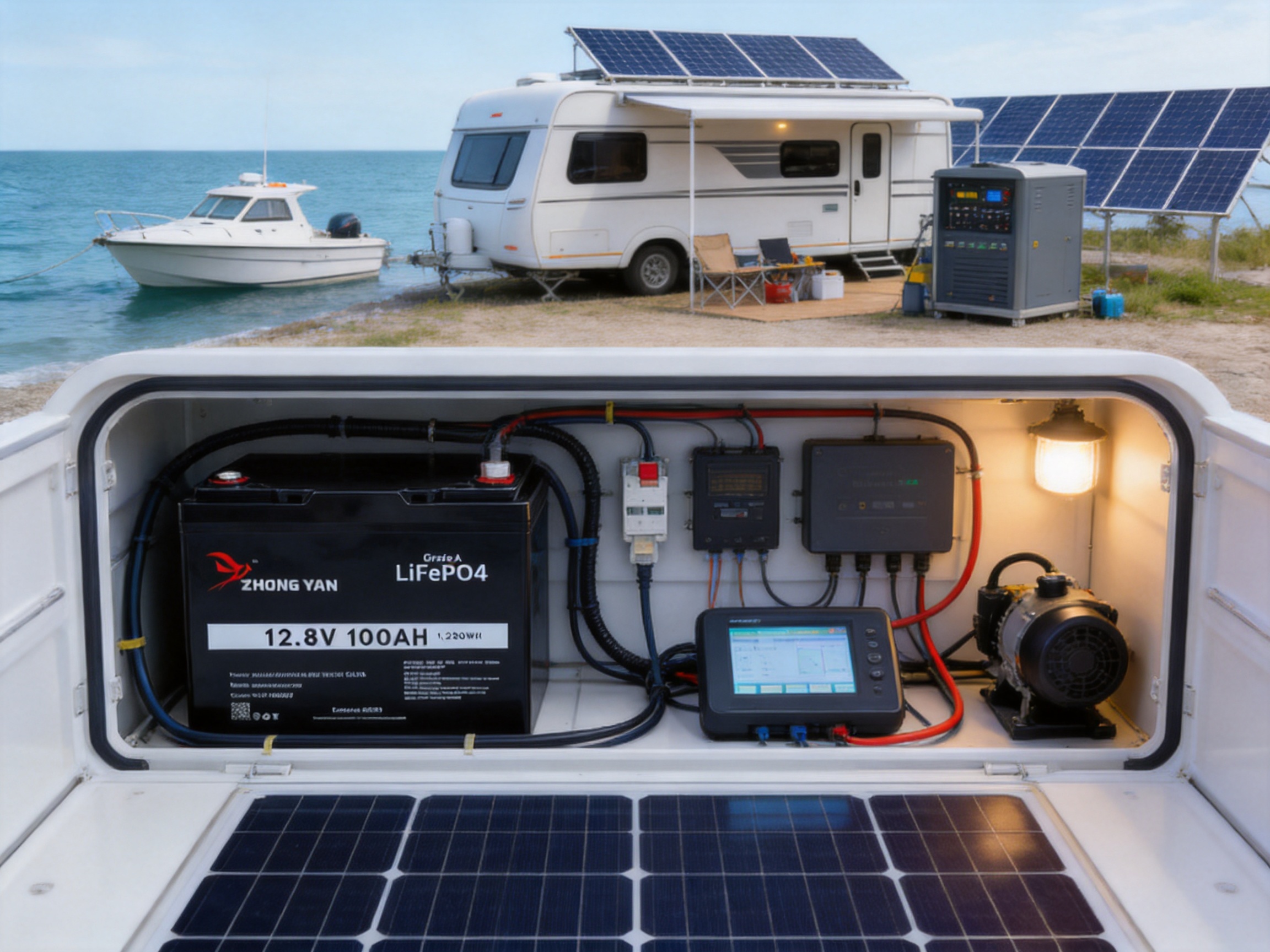
RVs often require energy for lighting, refrigeration, water pumps, communications equipment, ventilation, and entertainment systems. The low weight and long cycle life of the battery can increase available energy without adding the mass associated with multiple lead-acid batteries. Bluetooth monitoring is useful when the battery is installed in a compartment that is difficult to access.
Marine systems
Boats and marine equipment benefit from compact energy storage, especially when space and weight are limited. The IP67 enclosure provides an additional level of environmental protection, although marine installations must still prevent saltwater exposure, condensation, galvanic corrosion, and unsecured movement. Proper terminal protection and fuse placement are particularly important in marine environments.
Solar energy storage
The battery can be used with compatible solar charge controllers for small off-grid systems, cabins, mobile solar equipment, and backup power. Users can connect batteries in parallel to increase storage capacity while maintaining a 12.8V system, or use series configurations for higher-voltage systems when supported by the equipment.
Solar designers should calculate daily energy consumption, expected solar generation, reserve requirements, seasonal conditions, and the desired depth of discharge. A 1,280Wh nominal battery may be sufficient for a small load profile but inadequate for high-consumption equipment unless multiple batteries are installed.
Vehicle auxiliary systems
Modern vehicles may require auxiliary power for refrigeration, communications, lighting, monitoring, tools, and electronic accessories. A dedicated LFP battery can separate these loads from the vehicle’s starting battery. The charging source may include a DC-to-DC charger, solar system, or other approved power converter.
Vehicle installations must account for alternator compatibility, charging voltage, vibration, temperature, fuse ratings, and cable routing. The battery should not be connected directly to an unsuitable charging system without verifying that the charging profile is appropriate for LiFePO4 chemistry.
Industrial and outdoor equipment
Industrial instruments, mobile workstations, security systems, telecommunications equipment, and outdoor power sources often require dependable DC energy. The battery’s high current capability, compact form, and temperature protection can support equipment that must operate away from fixed electrical infrastructure.
For industrial use, system designers may also value the ability to monitor battery status and develop standardized battery banks. Parallel expansion allows capacity to be scaled, while the five-year full replacement warranty can contribute to procurement planning and lifecycle support.
Installation and Operating Recommendations
Before installation, inspect the enclosure, terminals, cables, and mounting points. Do not install a battery that shows signs of impact, swelling, leakage, damaged insulation, or loose components. Confirm polarity before making any connection.
Install an appropriately rated fuse or circuit breaker as close to the positive battery terminal as practical. This device protects the cable and connected equipment from dangerous fault currents. Its rating should be selected according to the expected continuous current, surge characteristics, conductor capacity, and applicable electrical standards.
Use cables sized for the maximum continuous current and expected voltage drop. High-current connections should be short, clean, mechanically secure, and protected against abrasion. M8 terminals should be tightened according to the manufacturer’s recommended torque. Over-tightening can damage terminals, while under-tightening can create resistance and heat.
Keep the battery away from direct heat sources. Although the operating temperature range is broad, prolonged exposure to high temperatures can shorten service life. Ensure that chargers and inverters also have sufficient ventilation and that the battery is not enclosed in a space where heat accumulates.
When storing the battery, use a clean, dry location and avoid leaving it completely discharged for an extended period. Periodically check the state of charge during long-term storage. If the battery is installed in a seasonal vehicle or boat, follow a suitable storage procedure and disconnect unnecessary parasitic loads.
Safety, Certifications, and Warranty
The listed certifications include IEC62619, UN38.3, and RoHS. IEC62619 relates to safety requirements for secondary lithium cells and batteries used in industrial applications. UN38.3 is associated with testing requirements for the transport of lithium batteries. RoHS addresses restrictions on certain hazardous substances in electrical and electronic products.
Certifications are important indicators, but system safety also depends on installation, charging equipment, protection devices, maintenance, and user behavior. A certified battery can still be damaged by incorrect wiring, reverse polarity, mechanical abuse, excessive current, or unsuitable charging conditions.
The product includes a five-year full replacement warranty. A warranty of this duration can provide confidence for users who need predictable support over a long operating period. Buyers should review the complete warranty terms, including installation requirements, permitted operating conditions, documentation, shipping responsibilities, and procedures for reporting a fault.
For commercial projects, warranty support should be considered together with technical documentation, batch traceability, replacement availability, and communication with the supplier. These factors can be as important as the initial purchase price when batteries are deployed across multiple sites.
How to Evaluate Total Cost of Ownership
The purchase price is only one part of battery economics. Total cost of ownership includes installation labor, charging equipment, maintenance, replacement frequency, downtime, transport, and disposal. A battery with a higher initial price may deliver a lower cost per usable cycle if it provides longer service life and more usable energy.
Weight can also affect cost. In vehicles, reducing battery mass may increase payload capacity or improve fuel economy. In installation work, a lighter battery can reduce handling time and simplify mounting. In remote applications, lower weight may reduce transportation expenses.
Bluetooth monitoring may reduce troubleshooting time by providing information before a complete failure occurs. A robust enclosure can lower exposure-related risks, while a well-designed BMS can help prevent damage caused by common operating errors. These benefits are difficult to capture in a simple price comparison but can have a meaningful effect over several years.
Frequently Asked Questions
What is the nominal voltage of the battery?
The nominal voltage is 12.8V. The battery uses four 3.2V LiFePO4 prismatic cells connected in series.
How much energy does the battery store?
The stated usable capacity is 100Ah, equivalent to approximately 1,280Wh at the nominal voltage of 12.8V. Actual energy delivered to a load depends on discharge current, temperature, cut-off settings, wiring, and inverter efficiency.
Can the battery replace a 12V lead-acid battery?
It can replace many 12V lead-acid batteries when the application is compatible with LiFePO4 charging and discharge characteristics. The charger, cable sizes, fuse, battery compartment, and load requirements should be reviewed before replacement.
Can multiple batteries be connected together?
Yes. The supplied specifications allow unlimited parallel connection and up to four batteries in series. Batteries used together should have compatible specifications and similar state of charge. The complete system must be protected and designed for the combined voltage and current.
What is the maximum continuous current?
The maximum continuous charging current is 100A, and the maximum continuous discharging current is also 100A. The actual safe current in an installation may be lower depending on cables, terminals, fuses, temperature, and connected equipment.
What does the peak discharge rating mean?
The peak rating is approximately 330 ± 80A for 1.5 seconds. It is intended for short-duration surges and should not be used as a continuous operating specification. Loads with large startup currents should be evaluated carefully.
Does the battery include Bluetooth?
Yes. It includes a JBD Smart 100A-S programmable BMS with Bluetooth functionality. Compatible software may allow users to review operating data and protection status.
Is the battery waterproof?
The enclosure is rated IP67, which indicates dust protection and resistance to temporary immersion under defined test conditions. The battery should not be treated as suitable for permanent submersion, and all external connections must be properly protected.
Can it be charged in cold weather?
The listed charging temperature range is -10°C to 65°C. Users should follow the approved charging conditions and verify low-temperature charging behavior for their specific installation. Cold-weather systems should use appropriate temperature monitoring and charger control.
How long can the battery last?
The stated cycle-life rating is 3,500 cycles at 70% depth of discharge. Actual service life depends on temperature, current, charging voltage, storage conditions, depth of discharge, and maintenance.
What applications are suitable for this battery?
Suitable applications include RVs, boats, solar energy storage, vehicle auxiliary systems, industrial equipment, outdoor power sources, communications equipment, and other 12V systems requiring high safety, long cycle life, and intelligent monitoring.
What makes the manufacturer different?
The manufacturer combines battery-related development with expertise in precision conductive components, including copper and aluminum busbars, flexible connections, battery soft connections, and laminated connection systems. Its reported capabilities include polymer diffusion welding, laser technology, precision machining, testing, and verification.
Conclusion
The EleStore 100Ah 12.8V LiFePO4 battery is a practical high-capacity solution for users who need safe, lightweight, and durable 12V energy storage. Its Grade A REPT prismatic cells, 100A programmable BMS, Bluetooth monitoring, IP67 ABS enclosure, flexible connection options, and five-year full replacement warranty create a strong specification for mobile and stationary applications.
Its advantages over conventional lead-acid batteries include lower weight, improved cycle-life potential, stronger high-current capability, lower maintenance, and more effective use of stored energy. Compared with unbranded lithium products, the specified cell supplier, BMS model, certifications, protection functions, and manufacturing background provide greater transparency.
The product is also supported by a company whose core experience lies in precision new-energy conductive components. Expertise in busbars, soft connections, copper foil assemblies, laser processing, polymer diffusion welding, and quality verification is directly relevant to the development of reliable battery connection systems. This creates a foundation for customized battery packs and increasingly integrated cell-to-connection solutions.
For the best results, the battery should be installed with a correctly matched charger, properly sized cables, suitable overcurrent protection, secure mechanical mounting, and an application-appropriate monitoring strategy. When these elements are designed together, the battery can provide dependable power for recreational, marine, solar, vehicle, industrial, and outdoor energy-storage systems.
References
1. Product specification sheet for the 12.8V 100Ah LiFePO4 battery, including electrical, mechanical, environmental, and BMS data.
2. IEC 62619, Secondary cells and batteries containing alkaline or other non-acid electrolytes—Safety requirements for secondary lithium cells and batteries for use in industrial applications.
3. United Nations Manual of Tests and Criteria, Part III, Sub-Section 38.3, lithium battery transport testing requirements.
4. Restriction of Hazardous Substances principles for electrical and electronic equipment.
5. General engineering principles for lithium iron phosphate battery charging, discharging, thermal management, and battery-management-system protection.
6. Technical information concerning precision copper busbars, flexible battery connections, laminated busbars, laser processing, and polymer diffusion welding supplied by the manufacturer.
Product: EleStore 100Ah 12.8V LiFeP04 Battery -(REPT Cells) & (Bluetooth BMS -JBD)

Driven by the development of new energy and aiming for "zero carbon".
Copyright © Zhejiang Zhongyan New Energy Co., Ltd. All Rights Reserved.
