 English
 Español

CPI Series 316L Stainless Steel Grounding Braided Tape for Corrosive and High-Vibration Applications
Reliable grounding and bonding connections are essential in electrical systems that operate outdoors, in industrial facilities, and in environments exposed to moisture, salt, chemicals, vibration, and mechanical movement. A grounding connection must provide low-resistance electrical continuity while remaining flexible enough to accommodate expansion, vibration, alignment changes, and repeated movement. At the same time, it must resist corrosion and fatigue over a long service life.
The CPI Series 316L stainless steel grounding braided tape is designed to address these requirements in a single ready-to-install component. Manufactured from corrosion-resistant 316L stainless steel wire, the braided tape combines electrical connection capability, mechanical flexibility, vibration resistance, and long-term environmental durability. It is particularly suitable for steel pipes, cable trays, troughs, electrical enclosures, industrial equipment, transportation systems, coastal infrastructure, petrochemical installations, and other applications where conventional rigid bonding straps may deteriorate quickly.
Unlike ordinary rigid conductors, the braided construction allows the product to absorb movement and mechanical stress. Unlike many untreated metal straps, the 316L stainless steel material does not readily rust, discolor, or lose its appearance in demanding outdoor conditions. The product is supplied with pre-punched connection ends, reducing preparation work and enabling quick installation without additional cutting, peeling, hemming, or piercing.
Zhejiang Zhongyan New Energy Co., Ltd. develops and manufactures electrical connection components for power distribution, renewable energy, electric vehicles, rail transit, communication systems, and energy storage applications. Its experience in precision conductive components, soft connections, material processing, and quality control supports the production of stable and consistent braided grounding products for professional applications.
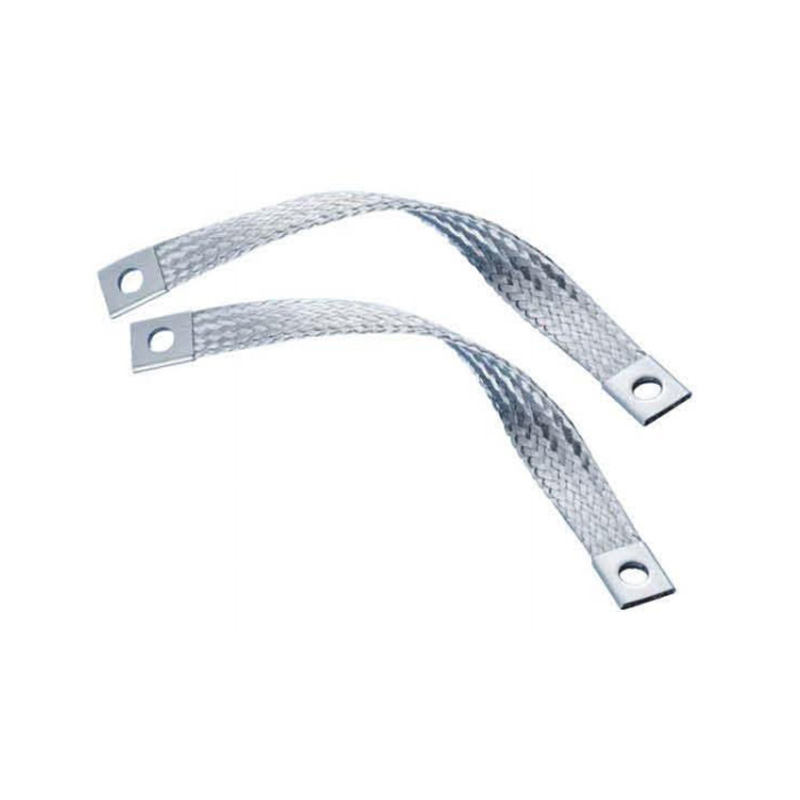
CPI Series Grounded 316L Stainless Steel Braided Tape
1. The Role of Flexible Grounding and Bonding Connections
Grounding and bonding systems are designed to create a dependable electrical path between conductive parts and the grounding network. This path helps control touch voltage, dissipate fault current, reduce electromagnetic interference, and maintain electrical continuity between equipment components. In many installations, the connection must remain effective even when the connected parts move relative to one another.
Movement may be caused by thermal expansion, equipment vibration, structural flexing, rotating machinery, transportation shock, or the opening and closing of access panels. A rigid conductor can experience concentrated stress when it is forced to accommodate this movement. Over time, the conductor or its terminals may loosen, crack, deform, or suffer fatigue damage.
A braided tape solves this problem by distributing movement across numerous interwoven wires. Each individual wire is small and flexible, while the completed braid provides a larger conductive cross-section. When the connected equipment shifts, the braid can bend and flex without requiring the entire connection to act as a rigid bar.
The material used for the braid is equally important. A flexible connection installed in a corrosive environment may fail prematurely if its surface oxidizes, pits, or becomes contaminated. Corrosion can increase contact resistance and reduce the mechanical strength of the connection. For this reason, the CPI Series uses 316L stainless steel, a material selected for its high resistance to abrasion, chemical action, salt exposure, and outdoor weathering.
The combination of a flexible braided structure and corrosion-resistant stainless steel provides a practical solution for installations where both mechanical movement and environmental exposure are present.
2. Product Overview
The CPI Series is a range of grounded 316L stainless steel braided tapes with pre-punched connection ends. The product is supplied in multiple cross-sectional areas and lengths to support different installation requirements. The listed range includes cross-sections from 16 mm² to 70 mm² and lengths from 150 mm to 1,100 mm.
Each model is identified by a product code that generally indicates the nominal cross-section, length, and connection-end configuration. Examples include CPI 16-150-8, CPI 25-400-10, CPI 50-600-12, and CPI 70-1100-12. This system makes it easier for engineers, purchasing teams, and installers to identify the required specification.
The braided tape is manufactured from 316L stainless steel wire with a maximum wire diameter of 0.25 mm. The relatively fine wire supports flexibility and helps the braid respond to repeated bending, vibration, and movement. The design is intended to provide a stable electrical connection while reducing the maintenance burden associated with rigid or poorly protected bonding components.
The product is suitable for use in non-magnetic environments where stainless steel construction is preferred. It can be installed in equipment requiring a clean appearance, in outdoor electrical systems, or in industrial locations where resistance to salt and chemical exposure is important.
The standard operating temperature is up to 105°C. Actual application conditions should be reviewed by the system designer, including current requirements, ambient temperature, installation method, contact surface condition, and expected mechanical movement.
Key Product Characteristics
• 316L stainless steel construction.
• Flexible braided structure for movement and vibration.
• Pre-punched ends for fast installation.
• Cross-sectional options from 16 mm² to 70 mm².
• Standard lengths from 150 mm to 1,100 mm.
• Strong resistance to abrasion and corrosion.
• Good resistance to chemical action and ultraviolet exposure.
• Good resistance to vibration and fatigue.
• Operating temperature up to 105°C.
• Suitable for outdoor, coastal, offshore, petrochemical, transportation, and industrial applications.
• No additional cutting, peeling, hemming, or piercing required for standard installation.
3. Why 316L Stainless Steel Is Important
316L stainless steel is widely selected for applications where ordinary carbon steel, untreated steel, or less corrosion-resistant metal may not provide sufficient durability. Its composition and passive surface layer offer strong resistance to many forms of atmospheric and chemical corrosion. The low-carbon designation represented by the “L” in 316L also supports improved resistance to certain forms of corrosion associated with welding and heat exposure.
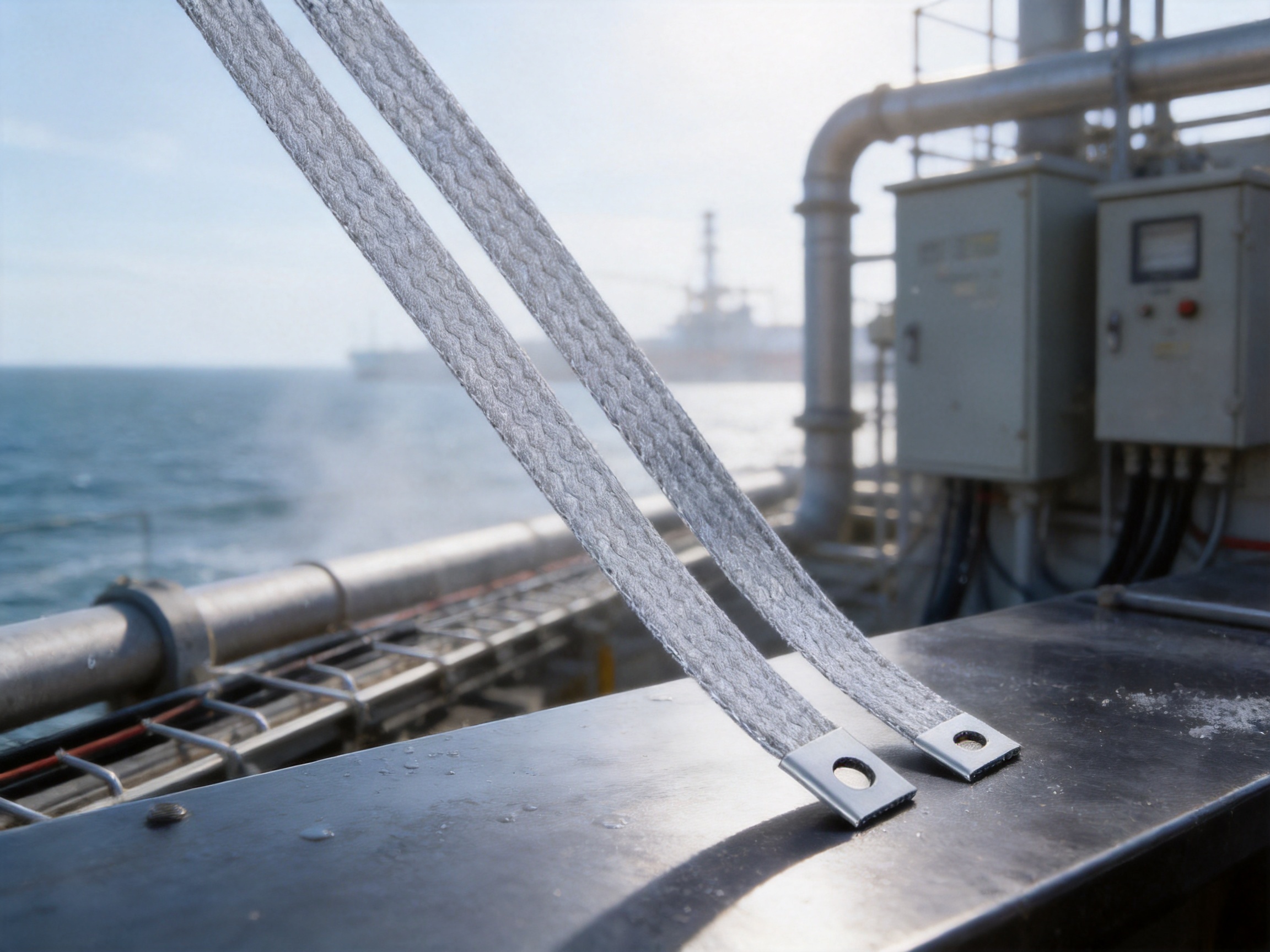
In coastal and offshore environments, airborne salt and moisture can accelerate corrosion on exposed metallic components. A grounding strap that performs well in a dry indoor cabinet may not provide the same service life on a coastal structure or near marine equipment. The use of 316L stainless steel increases the suitability of the CPI Series for high-salinity environments.
Petrochemical facilities, industrial plants, food-processing areas, transportation infrastructure, and urban construction sites may also expose electrical components to chemicals, cleaning agents, humidity, dust, or pollutants. The stainless steel braid is designed to maintain its physical appearance and functional integrity under demanding conditions, subject to correct application and installation.
Another advantage is resistance to discoloration. Some metal grounding components develop visible staining, surface oxidation, or uneven coloring when exposed to weather. The CPI Series is intended to retain a stable and professional appearance, which is useful in visible equipment installations, architectural infrastructure, transportation systems, and clean industrial environments.
Stainless steel also provides a useful balance of mechanical strength and flexibility. The fine wires can be woven into a braid that bends easily while retaining sufficient tensile strength for a grounding or bonding connection. This combination is more difficult to achieve with a solid strip or an oversized rigid conductor.
4. Braided Construction for Movement and Vibration
One of the main advantages of the CPI Series is its braided structure. A solid metal bar has limited ability to absorb repeated movement. A flat rigid strap may bend at a single location, creating a stress concentration. By contrast, a braided tape distributes bending across the length and across many fine wires.
This construction is particularly useful for expansion joints. Electrical equipment, metal enclosures, pipework, and structural components may expand and contract as temperatures change. If the bonding connection is too short or too rigid, thermal movement can place excessive force on the connection points. A flexible braid can accommodate a greater range of movement without imposing the same level of stress on the connected parts.
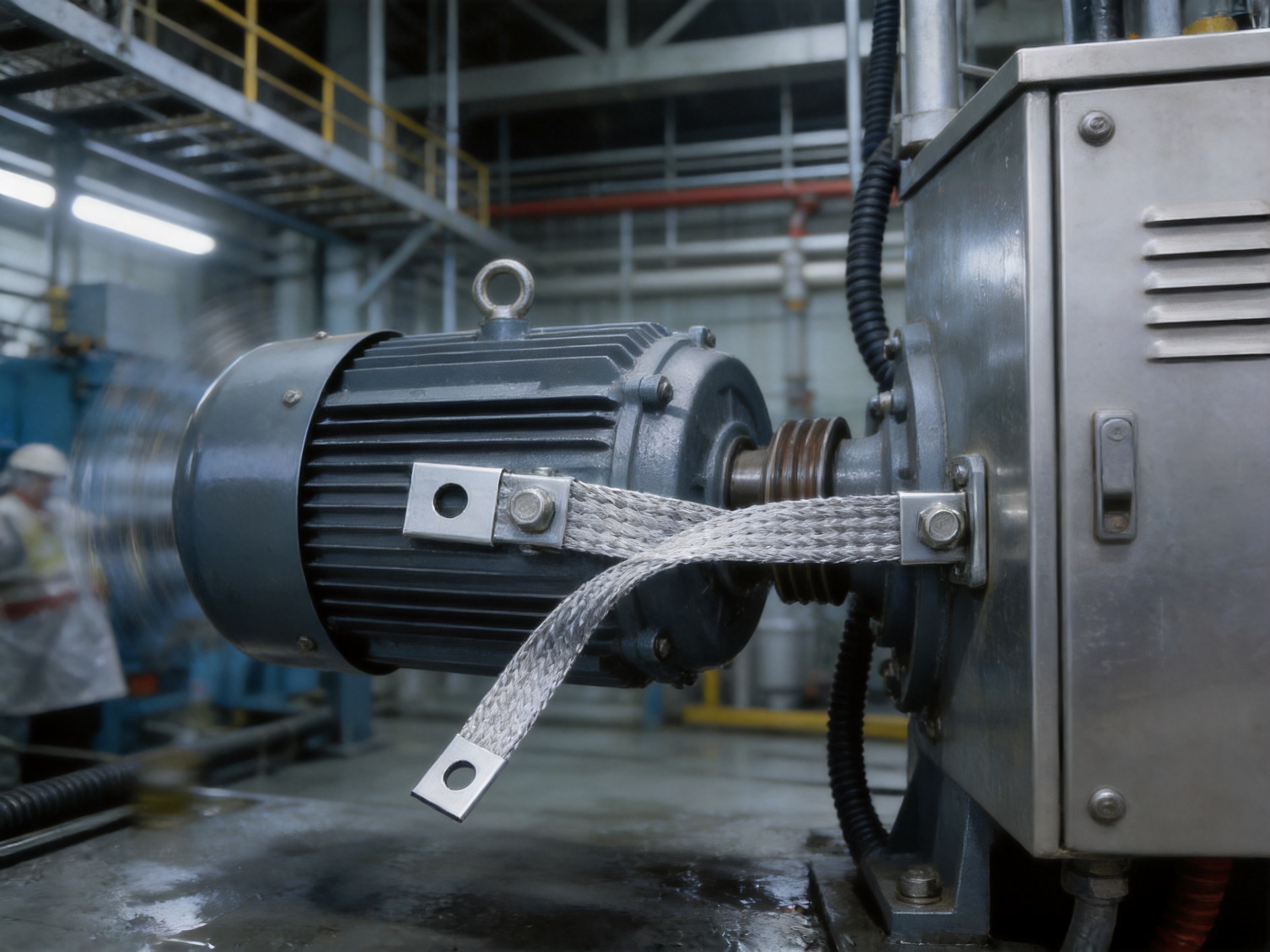
Vibration is another common source of failure. Motors, transformers, pumps, compressors, railway equipment, vehicles, and industrial machinery can generate continuous or intermittent vibration. A connection that repeatedly flexes at one rigid point may develop fatigue cracks. The CPI braid is designed to provide good vibration and fatigue resistance by allowing movement to be shared throughout the woven structure.
Flexibility also simplifies installation. The tape can be positioned around equipment contours and aligned with connection points more easily than a rigid bar. This can be useful when the available space is limited, when the connecting surfaces are not perfectly aligned, or when an access door or removable panel must move during normal operation.
The braid should not be sharply folded, twisted beyond its design capability, or used as a substitute for a structural support. Correct routing and appropriate fasteners remain important. The product is intended to provide flexible electrical continuity, not to carry mechanical loads unrelated to grounding or bonding.
5. Pre-Punched, Ready-to-Use Design
Many electrical connection products require on-site cutting, drilling, stripping, crimping, or terminal installation. These additional steps increase installation time and create opportunities for inconsistent workmanship. They may also expose the conductor to damage or produce dimensional differences between individual assemblies.
The CPI Series is supplied with pre-punched ends. This ready-to-use design allows installers to position the braid and secure it with suitable hardware without performing additional piercing or end preparation. The result is a more consistent installation process and less dependence on special tools.
Pre-punched ends also help reduce material waste. When a strap must be cut from a longer roll, the installer may need to account for cutting allowances, end finishing, and hole placement. A finished braid with prepared ends provides a defined length and connection format, making it easier to plan the bill of materials and reduce unused material.
The absence of additional cutting, peeling, hemming, and piercing is especially valuable in field installations. Outdoor work, maintenance shutdowns, construction projects, and transportation applications may have limited access to fabrication equipment. A ready-to-install component can shorten the installation window and reduce disruption to operating equipment.
Although the product is designed for fast installation, the contact surfaces should still be clean, stable, and suitable for electrical bonding. Installers should select fasteners compatible with the surrounding materials and environmental conditions. The connection should be tightened according to the applicable equipment instructions and project standards.
6. Performance Advantages Over Conventional Alternatives
6.1 Compared with Rigid Metal Straps
Rigid metal straps can provide a direct conductive path, but they may be unsuitable where movement, vibration, or repeated access is expected. They can require careful forming and may place stress on mounting points. The CPI Series offers greater flexibility and can accommodate dynamic movement more effectively.
The braid also enables easier routing around corners and irregular equipment geometry. This may reduce the need for custom bending or on-site modification. In applications where the equipment layout changes during installation, a flexible strap can be easier to position and align.
6.2 Compared with Untreated Steel Components
Untreated steel may be economical in some indoor applications, but it can require protective coatings or frequent inspection in wet, salty, or chemically aggressive environments. Damage to the coating may expose the base metal to corrosion. The 316L stainless steel construction of the CPI Series provides inherent corrosion resistance without relying solely on an external coating.
This can simplify maintenance planning and help preserve the visual condition of the installation. It is particularly valuable where repainting or replacement is difficult, such as offshore structures, elevated transportation equipment, external pipework, or large industrial facilities.
6.3 Compared with Basic Copper Braids
Copper braid is widely used for flexible electrical connections and can offer excellent conductivity. However, the preferred material depends on the application. In certain corrosive, high-salt, or mechanically exposed environments, stainless steel may offer advantages in durability, surface stability, and resistance to mechanical damage.
The CPI Series is specifically designed as a grounded stainless steel braided tape. It should therefore be selected based on the complete application requirements rather than conductivity alone. Engineers should consider current capacity, fault-current duration, contact resistance, corrosion conditions, magnetic requirements, mechanical movement, and compatibility with adjacent materials.
6.4 Compared with Fabricated On-Site Connections
On-site fabrication can produce a connection tailored to a particular installation, but quality may vary according to tools, operator experience, available materials, and environmental conditions. A factory-manufactured, pre-punched braided tape provides a more repeatable geometry and helps standardize the installation process.
Factory production also makes it possible to control wire selection, braiding, cutting, end preparation, dimensional inspection, and packaging in a defined manufacturing workflow. This supports consistency from one batch to another.
7. Manufacturing Capabilities and Technical Strengths
Zhejiang Zhongyan New Energy Co., Ltd. specializes in conductive components and flexible electrical connection solutions. Its product portfolio includes high-voltage electrical copper foil soft connections, special-shaped soft connections, battery soft connections, busbar-related components, and other precision conductive products.
The company combines engineering experience, specialized production equipment, material knowledge, and quality management practices. These capabilities are relevant to the manufacture of braided grounding tape because product performance depends not only on the selected stainless steel grade but also on the accuracy and consistency of the braiding and end preparation processes.
Material Control
Material selection is the first stage of product reliability. The CPI Series uses 316L stainless steel wire, with wire diameter specified at a maximum of 0.25 mm for flexibility. Proper control of wire quality helps maintain consistent braid behavior, surface condition, tensile performance, and resistance to environmental exposure.
Material verification and production traceability are important for professional electrical products. A controlled manufacturing system helps ensure that the material supplied for production corresponds to the required specification and that finished products can be identified by model and batch information.
Precision Braiding
Braiding requires the coordinated movement of multiple wires. The arrangement, tension, density, and uniformity of the braid affect flexibility, cross-sectional area, mechanical strength, and electrical continuity. Advanced production equipment helps maintain stable braiding conditions and reduces variation along the length of the product.
A consistent braid is also important for installation. Irregular braid geometry may create uneven contact at the ends or reduce flexibility in specific locations. Controlled production helps ensure that each model performs in a predictable manner.
End Preparation and Perforation
The connection ends must be prepared accurately so that the finished tape can be installed without extra piercing or modification. Hole position, hole size, end width, and overall length need to correspond to the product design. The company's experience in cutting and perforating stainless steel braiding supports the production of ready-to-use connection straps.
Accurate end preparation reduces installation adjustments and allows the product to be integrated more easily into standard grounding and bonding procedures. It also helps maintain the intended contact area between the braid and the mounting hardware.
Inspection and Quality Management
Quality control for braided grounding products may include dimensional checks, visual inspection, material verification, connection-end inspection, weight verification, and electrical or mechanical testing as required by the product specification and customer application.
The company has developed production and quality management capabilities for precision conductive components. Its broader experience in battery soft connections and low-resistance electrical products supports attention to repeatability, process control, and application-specific performance.
Research and Development
The company has established a research and development direction covering materials science, precision machining, testing, and verification. It has also developed technologies associated with polymer diffusion welding and laser processing for other conductive products. These capabilities demonstrate an engineering approach that combines material selection, controlled processing, and performance validation.
Although the CPI Series is a stainless steel braided product rather than a welded battery connection, the same manufacturing philosophy is relevant: understand the application, select appropriate materials, control the process, verify the result, and provide a consistent product for integration into a larger system.

8. Applications in Corrosive and Outdoor Environments
Offshore and Marine-Influenced Locations
Offshore installations and coastal facilities are exposed to high levels of salt, moisture, wind, and changing weather. These conditions can accelerate corrosion on grounding straps, pipe bonds, cable-tray bonds, and enclosure connections. The 316L stainless steel braid is designed for such demanding environments and can help extend the maintenance interval when correctly specified.
Coastal Industrial Infrastructure
Coastal industrial areas may experience elevated salinity even when they are not directly located offshore. Electrical systems installed near ports, marine terminals, shipyards, coastal factories, and seaside buildings may benefit from corrosion-resistant flexible bonding connections.
Petrochemical Facilities
Petrochemical and chemical facilities often include extensive pipework, tanks, process equipment, cable trays, and metal structures. These systems may be exposed to chemicals, vapors, vibration, and outdoor weather. Flexible stainless steel bonding straps can be used where continuity is required across movable, removable, or mechanically separated conductive parts.
Food-Service and Catering Equipment
Industrial catering environments may involve frequent cleaning, moisture, temperature changes, and exposure to cleaning chemicals. Stainless steel is commonly preferred for hygiene, appearance, and corrosion resistance. The CPI Series can be used for bonding conductive equipment and structures where a flexible, durable connection is needed.
Transportation and Rail Applications
Transportation equipment is exposed to vibration, shock, repeated movement, and changing weather. Railway equipment, service vehicles, charging infrastructure, and transport-related electrical cabinets may require bonding straps that remain flexible during operation. The braid's fatigue resistance and ready-to-install form can support efficient assembly and maintenance.
Urban Construction and Infrastructure
Urban projects may include exposed electrical equipment, metal structures, elevators, escalators, traffic systems, public transportation systems, and utility infrastructure. A clean, corrosion-resistant grounding connection can be valuable where equipment is visible or difficult to access for frequent maintenance.
Industrial Machinery
Motors, pumps, generators, compressors, and automated production systems may generate vibration and movement. A flexible braid can be installed between a machine body and a fixed grounding point or across a movable access panel, provided the connection is designed according to the relevant electrical and safety requirements.
9. Product Range and Technical Data
The CPI Series includes multiple cross-sections and lengths. The following table summarizes the available models and the principal dimensional information provided for the product range. Decimal commas shown in the original technical data are presented here as decimal points for English-language clarity.
| Part Number | Description | Cross-Section (mm²) | Length L (mm) | Diameter Ø (mm) | J (mm) | A (mm) | T (mm) | e (mm) | Packaging | Weight (kg) |
|---|---|---|---|---|---|---|---|---|---|---|
| 23000370 | CPI 16-150-8 | 16 | 150 | 8.5 | 17.5 | 10 | 20 | 3 | 10 | 0.031 |
| 23000371 | CPI 16-200-8 | 16 | 200 | 8.5 | 17.5 | 10 | 20 | 3 | 10 | 0.037 |
| 23000372 | CPI 16-250-8 | 16 | 250 | 8.5 | 17.5 | 10 | 20 | 3 | 10 | 0.043 |
| 23000373 | CPI 16-300-8 | 16 | 300 | 8.5 | 17.5 | 10 | 20 | 3 | 10 | 0.050 |
| 23000374 | CPI 16-400-8 | 16 | 400 | 8.5 | 17.5 | 10 | 20 | 3 | 10 | 0.062 |
| 23000375 | CPI 16-600-8 | 16 | 600 | 8.5 | 17.5 | 10 | 20 | 3 | 10 | 0.087 |
| 23000376 | CPI 25-150-10 | 25 | 150 | 10.5 | 26.5 | 15 | 30 | 3.5 | 10 | 0.058 |
| 23000377 | CPI 25-200-10 | 25 | 200 | 10.5 | 26.5 | 15 | 30 | 3.5 | 10 | 0.068 |
| 23000378 | CPI 25-250-10 | 25 | 250 | 10.5 | 26.5 | 15 | 30 | 3.5 | 10 | 0.078 |
| 23000379 | CPI 25-300-10 | 25 | 300 | 10.5 | 26.5 | 15 | 30 | 3.5 | 10 | 0.088 |
| 23000380 | CPI 25-400-10 | 25 | 400 | 10.5 | 26.5 | 15 | 30 | 3.5 | 10 | 0.108 |
| 23000381 | CPI 25-600-10 | 25 | 600 | 10.5 | 26.5 | 15 | 30 | 3.5 | 10 | 0.147 |
| 23000382 | CPI 35-150-12 | 35 | 150 | 13 | 26.5 | 15 | 30 | 4 | 10 | 0.071 |
| 23000383 | CPI 35-200-12 | 35 | 200 | 13 | 26.5 | 15 | 30 | 4 | 10 | 0.085 |
| 23000384 | CPI 35-250-12 | 35 | 250 | 13 | 26.5 | 15 | 30 | 4 | 10 | 0.090 |
| 23000385 | CPI 35-300-12 | 35 | 300 | 13 | 26.5 | 15 | 30 | 4 | 10 | 0.112 |
| 23000386 | CPI 35-400-12 | 35 | 400 | 13 | 26.5 | 15 | 30 | 4 | 10 | 0.140 |
| 23000387 | CPI 35-600-12 | 35 | 600 | 13 | 26.5 | 15 | 30 | 4 | 10 | 0.195 |
| 23000388 | CPI 50-150-12 | 50 | 150 | 13 | 30 | 15 | 30 | 5 | 10 | 0.111 |
| 23000389 | CPI 50-200-12 | 50 | 200 | 13 | 30 | 15 | 30 | 5 | 10 | 0.130 |
| 23000390 | CPI 50-250-12 | 50 | 250 | 13 | 30 | 15 | 30 | 5 | 10 | 0.150 |
| 23000391 | CPI 50-300-12 | 50 | 300 | 13 | 30 | 15 | 30 | 5 | 10 | 0.170 |
| 23000392 | CPI 50-400-12 | 50 | 400 | 13 | 30 | 15 | 30 | 5 | 10 | 0.209 |
| 23000393 | CPI 50-600-12 | 50 | 600 | 13 | 30 | 15 | 30 | 5 | 10 | 0.288 |
| 23000394 | CPI 70-150-12 | 70 | 150 | 13 | 30 | 15 | 30 | 5.8 | 10 | 0.139 |
| 23000395 | CPI 70-200-12 | 70 | 200 | 13 | 30 | 15 | 30 | 5.8 | 10 | 0.167 |
| 23000396 | CPI 70-250-12 | 70 | 250 | 13 | 30 | 13 | 30 | 5.8 | 10 | 0.194 |
| 23000397 | CPI 70-300-12 | 70 | 300 | 13 | 30 | 15 | 30 | 5.8 | 10 | 0.222 |
| 23000398 | CPI 70-400-12 | 70 | 400 | 13 | 30 | 15 | 30 | 5.8 | 10 | 0.277 |
| 23000399 | CPI 70-600-12 | 70 | 600 | 13 | 30 | 15 | 30 | 5.8 | 10 | 0.388 |
| 23000400 | CPI 70-800-12 | 70 | 800 | 13 | 30 | 15 | 30 | 5.8 | 10 | 0.498 |
| 23000401 | CPI 70-1100-12 | 70 | 1100 | 13 | 1100 | 13 | 30 | 5.8 | 10 | 0.664 |
The dimensional values should be confirmed against the latest approved drawing or product data sheet before final design approval. Application-specific requirements may call for verification of current-carrying capability, fault-current performance, mounting hardware, and environmental compatibility.
10. Installation Considerations
Before installation, the selected braided tape should be checked for the correct part number, cross-section, length, connection-hole configuration, and quantity. The braid should be free from visible damage, deformation, contamination, or broken wires.
Connection surfaces should be clean and free from loose paint, heavy oxidation, grease, or other contamination that could interfere with electrical contact. If the connection is made between dissimilar metals, the designer should consider galvanic compatibility and select suitable hardware or interface treatment where necessary.
The tape should be routed with a natural bend radius. It should not be sharply kinked, crushed, twisted, or installed under unnecessary tension. The connection should allow the required movement without pulling the fasteners or placing excessive force on the braid.
Fasteners should be appropriately sized and tightened according to the equipment manufacturer's instructions or the applicable project standard. The connection should be mechanically secure, and the braid should have adequate contact with the bonding surfaces.
After installation, a visual inspection should confirm that the braid is not rubbing against sharp edges, exposed to avoidable mechanical damage, or positioned where it can interfere with moving equipment. Electrical continuity testing may be performed as part of the commissioning or maintenance procedure.
11. Customization and OEM Support
Different equipment manufacturers and system integrators may require particular lengths, hole dimensions, cross-sections, packaging formats, or labeling systems. A manufacturer with experience in precision conductive components can support OEM programs by reviewing drawings, confirming design requirements, and organizing production around defined specifications.
The CPI Series provides a standard range covering common lengths and cross-sections. For projects with unusual geometry or integration requirements, customers can discuss the intended application, movement range, installation space, environmental exposure, and electrical performance requirements with the engineering team.
OEM support may include product selection, drawing review, prototype development, dimensional confirmation, batch production, and packaging coordination. The objective is to provide a repeatable connection component that can be integrated into a customer's assembly process without unnecessary modification.
The company's broader product experience includes custom soft connections and conductive components for new energy, power distribution, transportation, and energy storage systems. This background supports cooperation with customers that require more than a standard catalog item.
12. Maintenance and Service-Life Benefits
A grounding or bonding connection should be included in the inspection plan for the equipment in which it is installed. Although 316L stainless steel offers strong resistance to corrosion, environmental exposure, mechanical damage, improper installation, and chemical contamination can still affect any electrical connection.
The CPI Series is designed to reduce maintenance requirements by resisting rust, discoloration, vibration, fatigue, and outdoor deterioration. Its ready-to-use construction also reduces the number of separate terminals, connectors, and fabrication steps required during installation.
During inspection, maintenance personnel can check for broken wires, loose fasteners, severe deformation, contamination, sharp-edge contact, and signs of overheating or corrosion at the connection interface. Any damaged braid should be replaced with a suitable product rather than repaired in a way that changes its intended geometry or current path.
The expected service life depends on the installation environment and operating conditions. Salt concentration, chemical exposure, temperature, movement frequency, current level, mechanical loading, and mounting quality should all be considered when establishing an inspection interval.
13. Why Choose This Product for Professional Projects?
The CPI Series offers a balanced combination of corrosion resistance, flexibility, mechanical durability, and installation efficiency. Its most important advantage is that these characteristics are provided in one factory-prepared component rather than through multiple additional operations at the job site.
For outdoor and corrosive locations, the 316L stainless steel material provides a stronger basis for long-term durability than ordinary unprotected metals. For moving or vibrating equipment, the braided design provides a more suitable mechanical response than a rigid strip. For field installation, pre-punched ends reduce preparation time and support consistent assembly.
The range of cross-sections and lengths helps engineers select a product according to the size and geometry of the connection. The variety of models also makes the series suitable for different equipment sizes, from compact electrical enclosures to larger industrial and transportation systems.
The manufacturing organization behind the product contributes additional value through engineering support, precision processing, material control, and experience in conductive connection technology. This combination is important for customers seeking a dependable supplier rather than a generic metal braid.
14. Frequently Asked Questions
Q1: What is the CPI Series 316L stainless steel braided tape used for?
It is used for flexible grounding and bonding between conductive components. Typical applications include steel pipes, cable trays, troughs, electrical enclosures, industrial machinery, transportation equipment, coastal infrastructure, petrochemical facilities, and outdoor electrical systems.
Q2: Is this product made from copper?
No. The CPI Series described here is made from 316L stainless steel. It may be grouped within a broader braided tape or flexible conductive connection product category, but the specific product material is 316L stainless steel.
Q3: Why use stainless steel instead of a conventional copper braid?
Stainless steel may be preferred when corrosion resistance, mechanical durability, appearance, and environmental stability are more important than maximum conductivity. The correct choice depends on the electrical current, fault conditions, installation environment, and system design.
Q4: What cross-sections are available?
The listed range includes 16 mm², 25 mm², 35 mm², 50 mm², and 70 mm² versions. The appropriate size should be selected based on the electrical and mechanical requirements of the application.
Q5: What lengths are available?
Standard lengths range from 150 mm to 1,100 mm. The available models include several intermediate lengths, such as 200 mm, 250 mm, 300 mm, 400 mm, 600 mm, and 800 mm, depending on the cross-section.
Q6: Does the braid require cutting or piercing during installation?
The standard product is supplied with pre-punched ends and is ready to use. No additional cutting, peeling, hemming, or piercing is normally required. The installer must still prepare the contact surfaces and use suitable mounting hardware.
Q7: Can the braid be used outdoors?
Yes. The product is designed for outdoor situations and offers resistance to abrasion, corrosion, chemical action, and ultraviolet exposure. The specific environmental conditions should be reviewed before selection.
Q8: Is it suitable for coastal or offshore applications?
It is specifically intended for highly saline and corrosive environments, including coastal and offshore situations. Correct installation and periodic inspection remain necessary in severe marine environments.
Q9: What is the maximum operating temperature?
The stated operating temperature is up to 105°C. The complete assembly, including fasteners, contact surfaces, surrounding insulation, and equipment enclosure, should be evaluated for the actual operating temperature.
Q10: How does the braided design resist vibration?
The braid consists of many fine interwoven wires. This construction distributes bending and movement across the connection instead of concentrating stress at one rigid point. It therefore provides good resistance to vibration and fatigue when properly installed.
Q11: Can the product be customized?
Standard models cover a broad range of cross-sections and lengths. Customers with special dimensional, packaging, or integration requirements can discuss OEM and custom requirements with the manufacturer.
Q12: What should be checked before ordering?
Customers should confirm the required cross-section, length, end-hole configuration, operating temperature, expected movement, environmental exposure, electrical duty, mounting hardware, and applicable grounding standards.
15. Conclusion
The CPI Series 316L stainless steel grounding braided tape is designed for electrical systems that require more than a simple rigid conductor. Its flexible braided structure supports movement, expansion, vibration, and fatigue resistance, while its 316L stainless steel construction provides strong resistance to corrosion, abrasion, chemical exposure, ultraviolet radiation, and outdoor weathering.
The pre-punched, ready-to-use design reduces installation effort and eliminates many on-site preparation steps. A range of cross-sections and lengths supports applications from compact equipment bonding to larger industrial and transportation installations. These characteristics make the product particularly suitable for coastal, offshore, petrochemical, catering, civil construction, urban infrastructure, and transportation environments.
Behind the product is a manufacturer focused on precision conductive components and new energy connection technology. Its engineering teams, specialized equipment, material-processing capabilities, research and development activities, and quality management systems provide a foundation for consistent production and OEM cooperation.
When the product is correctly selected, installed, and inspected, it can provide a durable and flexible grounding or bonding path for demanding electrical applications. For projects where corrosion, vibration, mechanical movement, and maintenance access are major concerns, a 316L stainless steel braided tape offers a practical alternative to rigid, untreated, or field-fabricated connections.
References
1. Product technical data for CPI Series Grounded 316L Stainless Steel Braided Tape, including model numbers, dimensions, materials, packaging, and weights.
2. General engineering principles for electrical grounding, bonding, flexible conductors, and equipment continuity.
3. Stainless steel material guidance concerning corrosion resistance, environmental exposure, and the characteristics of 316L stainless steel.
4. Industrial installation practices for flexible bonding connections in electrical equipment, machinery, transportation systems, and outdoor infrastructure.
5. Manufacturing information concerning precision conductive components, stainless steel braiding, end preparation, material control, testing, and quality management.
Product: CPI Series Grounded 316L Stainless Steel Braided Tape

Driven by the development of new energy and aiming for "zero carbon".
Copyright © Zhejiang Zhongyan New Energy Co., Ltd. All Rights Reserved.
