 English
 Español

Custom Nickel-Plated Aluminum Busbars for High-Conductivity and Lightweight Power Connection Solutions
Modern electrical systems require conductive components that can carry high currents safely, occupy as little space as possible, and remain reliable under heat, vibration, moisture, and mechanical stress. Busbars are central to this requirement. They provide low-impedance paths between batteries, inverters, switchgear, motors, charging modules, power distribution units, and other electrical assemblies. As electrification expands across energy storage, electric vehicles, renewable power, industrial automation, and data-center infrastructure, the demand for precisely manufactured and application-specific busbars continues to increase.
Custom nickel-plated aluminum busbars combine the low weight and favorable cost of aluminum with the enhanced surface performance of nickel plating. This combination is particularly useful where designers need efficient power transfer, improved corrosion resistance, reliable contact performance, and a flexible approach to mechanical integration. Depending on the application, the busbar can be supplied as a rigid formed conductor, a drilled and tapped connection component, or a precisely shaped part designed for direct installation inside a battery pack, inverter, power distribution unit, or industrial control cabinet.
A high-quality busbar is more than a piece of conductive metal. Its performance depends on material purity, cross-sectional design, dimensional accuracy, edge quality, hole position, bending consistency, surface treatment, insulation requirements, and verification procedures. A capable manufacturer must therefore combine electrical engineering knowledge with laser processing, CNC forming, precision punching, surface treatment, inspection, and responsive customer support.
This article examines the construction, advantages, manufacturing process, applications, customization options, and technical considerations associated with custom nickel-plated aluminum busbars. It also explains why an experienced new-energy component manufacturer can provide advantages over general metal fabricators and standard off-the-shelf busbar suppliers.
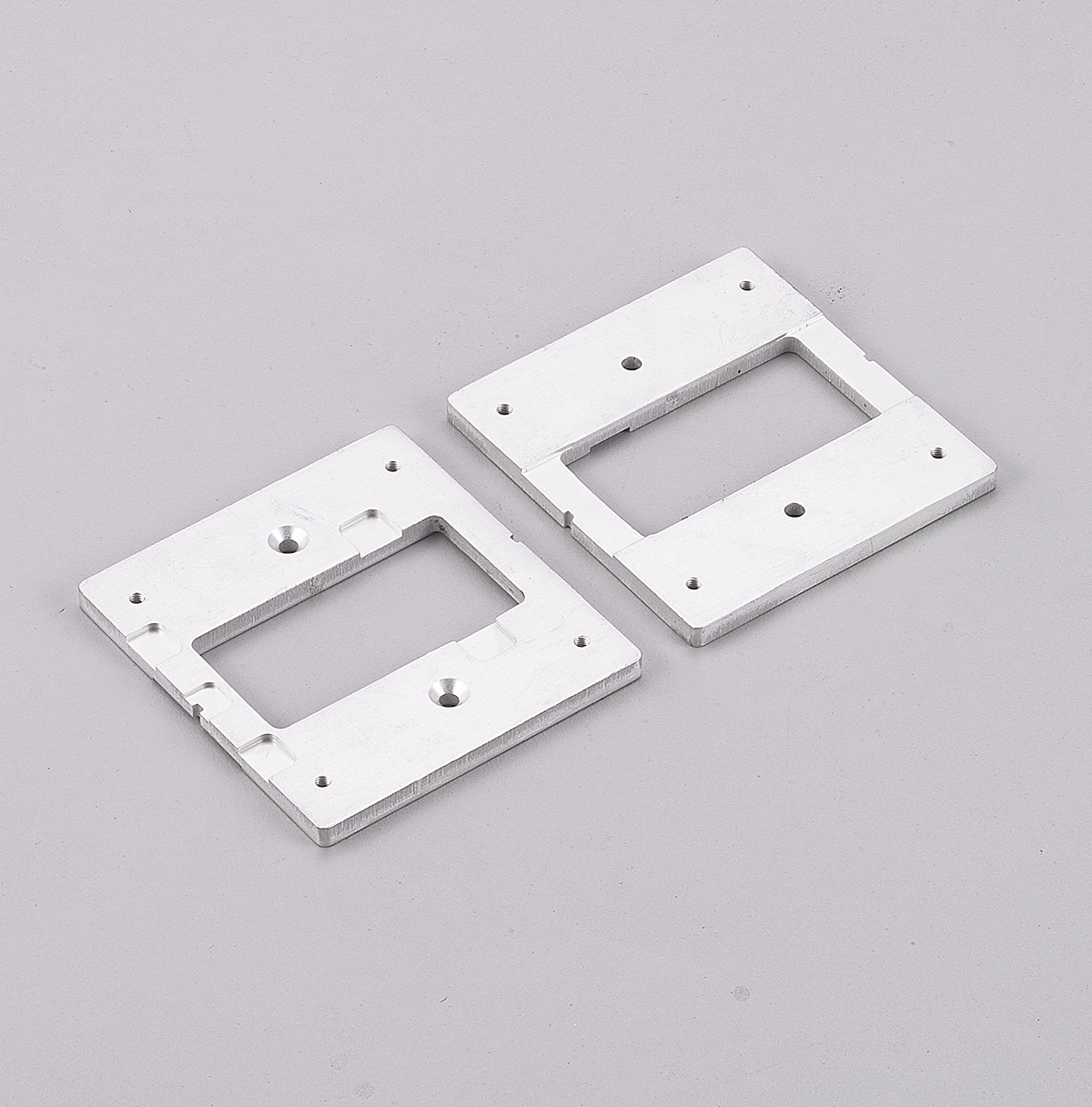
Custom Nickel Plated Aluminium Busbar For High Conductivity & Lightweight Power Connection Solutions
Understanding the Custom Nickel-Plated Aluminum Busbar
A busbar is a conductive bar, strip, plate, or formed profile used to distribute electrical power. Compared with assemblies made from multiple cables, a busbar can provide a compact current path with predictable geometry and efficient heat dissipation. Aluminum is widely selected for applications where weight, material cost, and thermal management are important. Alloys such as 1060, 1070, and 6063 can be selected according to the required balance of conductivity, mechanical strength, formability, and structural performance.
The base aluminum conductor is cut and formed according to the design drawing. It may include mounting holes, slots, terminals, stepped sections, bends, raised areas, tapped holes, or other features needed to match the surrounding equipment. Nickel plating is then applied to the specified surfaces or to the complete component, depending on the contact and environmental requirements.
Nickel plating provides a durable metallic surface that can improve resistance to oxidation, corrosion, abrasion, and repeated handling. It can also support more stable contact behavior in applications where the busbar is connected to terminals, fasteners, laminated conductors, battery modules, or other conductive parts. The exact plating thickness and process should be selected according to the current, environment, contact method, temperature, and expected service life.
Although aluminum is highly conductive, its surface naturally forms an oxide layer. This oxide layer can affect contact resistance, joining behavior, and long-term connection stability if it is not properly controlled. Nickel plating creates a more durable and functional interface for many electrical connection environments. Proper surface preparation, compatible plating technology, and controlled process parameters are essential for achieving consistent results.
Typical Construction
A typical custom nickel-plated aluminum busbar consists of a high-purity aluminum body, precision-machined or formed geometry, and a nickel-plated contact surface. The design may also include insulation, protective sleeves, insulating coatings, or additional terminal hardware. In some applications, only the connection ends are plated, while the remaining sections are left bare or treated with another finish.
The conductor thickness may range from approximately 1 millimeter to 15 millimeters, while the width may range from approximately 5 millimeters to 200 millimeters. Lengths can be customized, with production capability for components up to approximately 3,000 millimeters depending on the geometry, equipment, transportation requirements, and inspection needs.
Why Customization Matters
Electrical equipment rarely has unlimited internal space. A standard flat bar may not fit around battery modules, cooling channels, housings, fasteners, insulation barriers, or service access points. Custom busbars can be designed around these constraints from the beginning. The result may be a simpler assembly, fewer joints, reduced cable routing, improved thermal behavior, and more reliable production installation.
Customization also allows the electrical and mechanical characteristics of the busbar to be considered together. The cross-sectional area can be selected for the required current. Bends can be positioned to avoid interference. Mounting holes can be aligned with existing structures. Contact surfaces can be plated selectively. Insulation can be added where clearance distances or touch protection are required. These details help convert a basic conductor into a fully integrated power connection solution.
Key Advantages of Nickel-Plated Aluminum Busbars
Low Weight with Effective Electrical Performance
One of the most important advantages of aluminum is its lower density compared with copper. A properly designed aluminum busbar can reduce the weight of a power distribution system while maintaining the required current-carrying capability through appropriate sizing. This is particularly valuable in electric vehicles, mobile equipment, rail systems, aircraft-related equipment, portable energy storage, and other applications where every kilogram affects efficiency, payload, or installation cost.
Nickel-plated aluminum busbars can therefore provide a useful alternative to conventional copper busbars when the application allows a larger cross-sectional area or when weight reduction is a major design objective. Engineers can evaluate the conductor dimensions, operating current, allowable temperature rise, installation space, and connection method to determine whether aluminum is the best material for the application.
Improved Surface Durability
Nickel plating creates a surface that is more resistant to environmental attack than untreated aluminum. The plated surface can help protect the conductor from oxidation, humidity, salt exposure, industrial contaminants, and mechanical wear. This is important for energy storage systems, outdoor power equipment, charging infrastructure, renewable energy installations, and industrial equipment operating in demanding environments.
The plating also provides a stable contact interface for bolted, clamped, or assembled connections. It can reduce the risk of rapid surface deterioration during storage, transportation, installation, and operation. The final performance depends on plating thickness, surface preparation, contact pressure, compatible mating materials, and environmental exposure, so these variables should be defined during product development.
Reduced Contact Resistance
Connection resistance can create localized heating, energy loss, voltage drop, and accelerated aging. A well-designed nickel-plated contact surface can support consistent electrical contact when combined with suitable fasteners, controlled torque, appropriate contact pressure, and clean mating surfaces. The busbar geometry must also maintain adequate cross-sectional area through bends, holes, and transition zones.
For high-current applications, the conductor and connection design must be evaluated as a system. A plated busbar alone cannot compensate for poor joint design. For this reason, a professional supplier should review current requirements, duty cycles, connection methods, temperature limits, and installation conditions before confirming the final design.
Excellent Heat Dissipation
Aluminum has favorable thermal properties and can dissipate heat efficiently when the busbar is designed with sufficient surface area and installed with suitable airflow or thermal contact. Effective heat dissipation can help maintain stable operating temperatures and extend the service life of nearby insulation, terminals, batteries, and electronic modules.
Thermal design should consider continuous current, peak current, ambient temperature, enclosure conditions, duty cycle, proximity to heat-generating components, and the way the busbar is supported. A broad, thin busbar may dissipate heat differently from a compact thick conductor. Custom manufacturing allows the shape to be optimized for both electrical and thermal requirements.
Strong Mechanical and Vibration Resistance
Busbars used in vehicles, battery systems, industrial equipment, and power cabinets may experience vibration, repeated thermal cycling, shock, and mechanical movement. A precisely formed aluminum busbar can be designed with suitable bend radii, mounting points, reinforcement areas, and stress-relief features. Consistent forming helps prevent uneven loading and reduces the risk of assembly interference.
In applications where vibration is significant, the busbar should not be treated as an unsupported rigid element. Mounting arrangements, insulation supports, fastener selection, joint design, and clearance from neighboring components all affect long-term performance. A manufacturer with experience in new-energy conductive components can help identify these factors early in the development process.
Flexible Design and Fast Installation
Custom busbars can replace complicated cable harnesses or multiple connection pieces. They can be manufactured with pre-positioned holes, bends, slots, and terminals, allowing installation with fewer manual operations. This can reduce assembly time and improve production consistency.
A busbar that fits correctly on the first installation also reduces the need for field bending, drilling, cutting, or modification. This improves safety and protects the surface treatment. It can also reduce the possibility of incorrect routing, excessive cable length, loose connections, or accidental contact with surrounding parts.
Long-Term Cost Efficiency
The material cost of aluminum can be favorable compared with copper, although the final selection must be based on conductivity, cross-sectional requirements, connection technology, and total system design. Weight reduction can lower shipping and handling costs. A custom shape can reduce the number of separate parts. Improved installation efficiency can reduce labor. Durable surface treatment can reduce maintenance and replacement requirements.
These advantages mean that the economic value of an aluminum busbar should be assessed across the complete product life cycle rather than by comparing the price of raw metal alone. A reliable manufacturer can support this evaluation by proposing practical geometries, suitable materials, and a finish appropriate to the working environment.
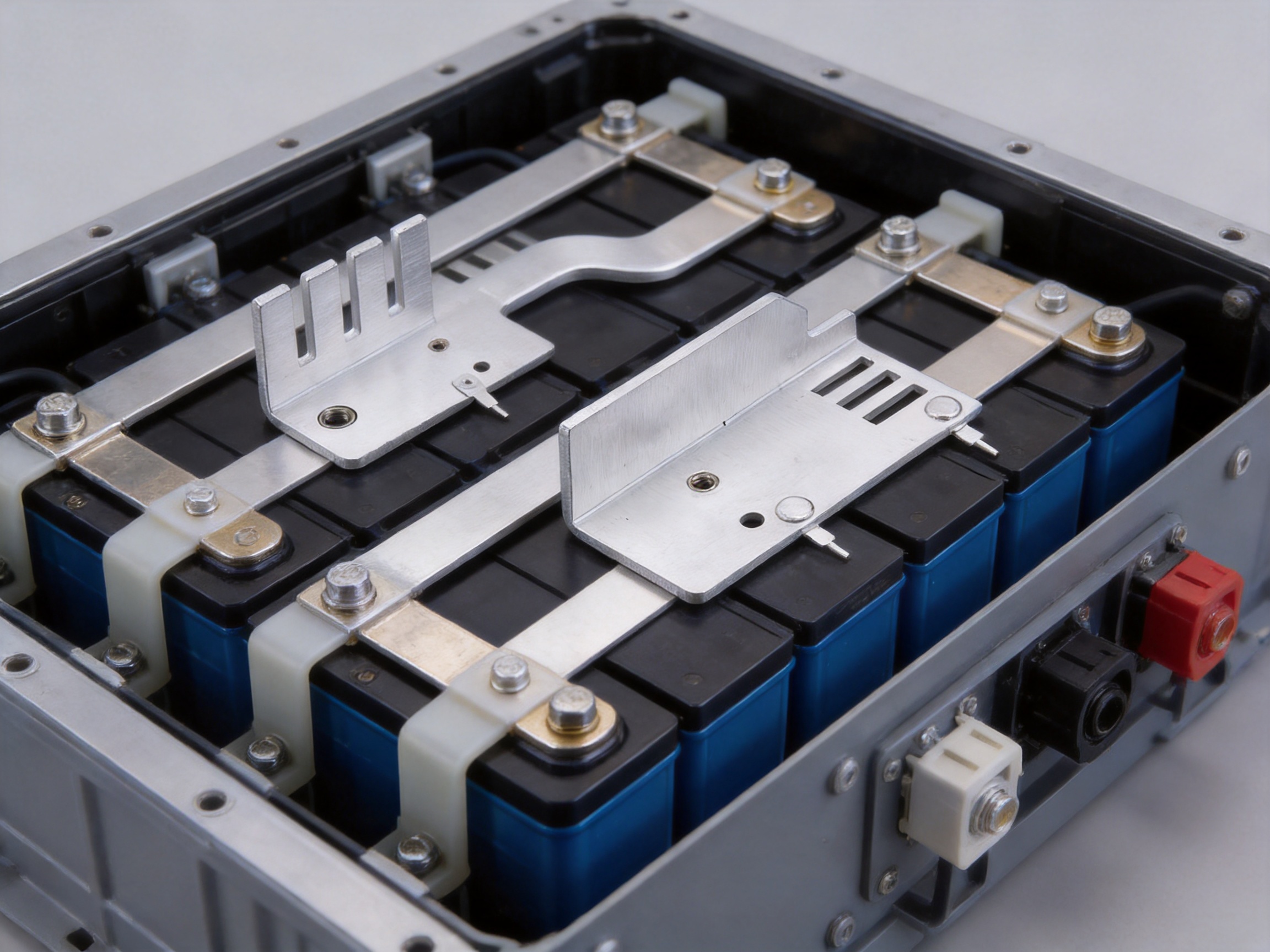
Material Selection for High-Performance Aluminum Busbars
1060 Aluminum
1060 aluminum is commonly selected when high electrical and thermal conductivity is a primary requirement. It offers good formability and is suitable for many flat busbars, distribution plates, and connection components. Its relatively high purity supports stable conductive performance, while its workability makes it suitable for cutting, punching, bending, and other fabrication operations.
1070 Aluminum
1070 aluminum provides very high purity and favorable conductivity. It may be used for applications in which electrical performance is prioritized and the mechanical design does not require the higher structural strength associated with certain alloy grades. The final suitability depends on thickness, forming requirements, operating temperature, and mechanical loading.
6063 Aluminum
6063 aluminum is an alloy recognized for its useful balance of strength, surface quality, and formability. It can be selected for busbars or conductive structures requiring additional mechanical performance. It is also useful where the component has a more complex profile or where the design requires a combination of electrical function and structural support.
Choosing the Correct Material
Material selection should be based on more than nominal conductivity. The manufacturer and customer should consider continuous current, peak current, allowable voltage drop, operating temperature, weight restrictions, bending requirements, hole configuration, mechanical loads, corrosion exposure, plating compatibility, and manufacturing volume.
For a battery pack, the ideal material and geometry may differ from those used in a solar inverter, industrial switchgear cabinet, or electric vehicle charging module. A technically capable supplier can compare the available aluminum grades and recommend a practical option without unnecessarily increasing material cost or production complexity.
Precision Manufacturing Process
The quality of a nickel-plated aluminum busbar is determined by the control of every stage, from drawing review and raw material preparation to final inspection and packaging. Advanced manufacturing is not limited to having modern equipment. It also requires process discipline, traceability, engineering review, and a clear understanding of how each operation influences electrical and mechanical performance.
1. Engineering Review and Design Confirmation
Production begins with a review of the customer’s drawings, three-dimensional models, technical specifications, or application requirements. Engineers examine the overall dimensions, tolerances, bend locations, hole sizes, edge conditions, plating areas, insulation clearances, and installation structure.
At this stage, potential issues can be identified before tooling or production begins. These may include an excessively small bend radius, insufficient distance between holes and edges, sharp corners, difficult plating access, inadequate current-carrying area, or interference with nearby components. Early review helps reduce design changes, production waste, and delayed delivery.
2. Raw Material Inspection
Aluminum sheets, strips, or profiles are inspected before processing. Important checks may include material grade, thickness, width, surface condition, flatness, traceability, and conformity with the purchase specification. Maintaining material identification throughout production helps ensure that the finished busbar is made from the approved alloy.
Material consistency is particularly important for high-current components. Variations in thickness, surface contamination, or mechanical condition can affect forming, plating, resistance, and dimensional accuracy. A controlled inspection process provides a foundation for stable production.
3. Laser Cutting and CNC Processing
Laser cutting can produce accurate outer profiles, internal openings, slots, and complex shapes with limited mechanical distortion. It is especially useful for custom and small-to-medium production batches because it reduces the need for dedicated tooling. CNC punching, drilling, milling, and tapping can then be used for holes, threaded features, countersinks, and other connection details.
Processing parameters are selected according to material thickness and geometry. Burr control is essential because sharp edges can damage insulation, create assembly hazards, or interfere with contact surfaces. The manufacturer may use deburring, edge finishing, cleaning, and dimensional inspection to ensure that the part is ready for forming and plating.
4. CNC Bending and Forming
CNC bending transforms the flat aluminum blank into the final three-dimensional geometry. The bending sequence must be carefully planned to maintain dimensional accuracy and avoid distortion around holes, slots, plated areas, or narrow sections.
Consistent bend angles and repeatable positioning are important for automated assembly. If the busbar does not align correctly, installers may apply excessive force or adjust the component manually. This can damage the finish, increase mechanical stress, or result in poor electrical contact. CNC forming helps provide repeatable parts across production batches.
5. Cleaning and Surface Preparation
Nickel plating requires appropriate surface preparation. Oil, oxide, dust, fingerprints, and processing residues must be removed before plating. The surface may undergo cleaning, degreasing, activation, and other preparation steps selected for the aluminum substrate and the intended plating process.
Surface preparation has a direct effect on adhesion and appearance. Inadequate preparation may cause peeling, blistering, uneven coverage, or premature corrosion. A professional production line therefore treats cleaning and activation as controlled engineering processes rather than informal finishing steps.
6. Nickel Plating
Nickel plating can be applied to the complete component or to selected contact areas. The required method depends on the busbar design, plating thickness, production volume, surface geometry, and environmental requirements. Critical factors include adhesion, uniformity, coverage of edges and holes, surface roughness, and compatibility with the intended mating components.
Plating thickness should be established according to the application rather than selected arbitrarily. A thin coating may be suitable for basic contact protection, while a more demanding environment may require enhanced corrosion resistance or wear performance. Excessive plating can affect dimensions, fastener fit, or the size of holes and slots. Engineering control is therefore essential.
7. Insulation and Additional Protection
Some busbars are used as bare conductors inside protected enclosures, while others require insulation or touch protection. Depending on the design, the busbar may be supplied with an insulating coating, heat-shrink material, molded protection, insulating supports, or a separate cover.
Insulation design should account for operating voltage, creepage and clearance distances, temperature, mechanical movement, and the possibility of abrasion. The protective system must remain stable throughout the product’s operating life and should not interfere with the plated contact areas or mounting hardware.
8. Final Inspection and Testing
Final inspection may include dimensional measurement, visual examination, plating appearance, hole position, bend angle, edge condition, surface cleanliness, and packaging condition. Depending on the project, electrical resistance, coating thickness, adhesion, insulation resistance, or other tests may also be specified.
Inspection records support batch traceability and provide evidence that the busbars conform to the agreed requirements. For new-energy systems and safety-related applications, reliable documentation is especially important because the busbar is part of a larger power and thermal management system.
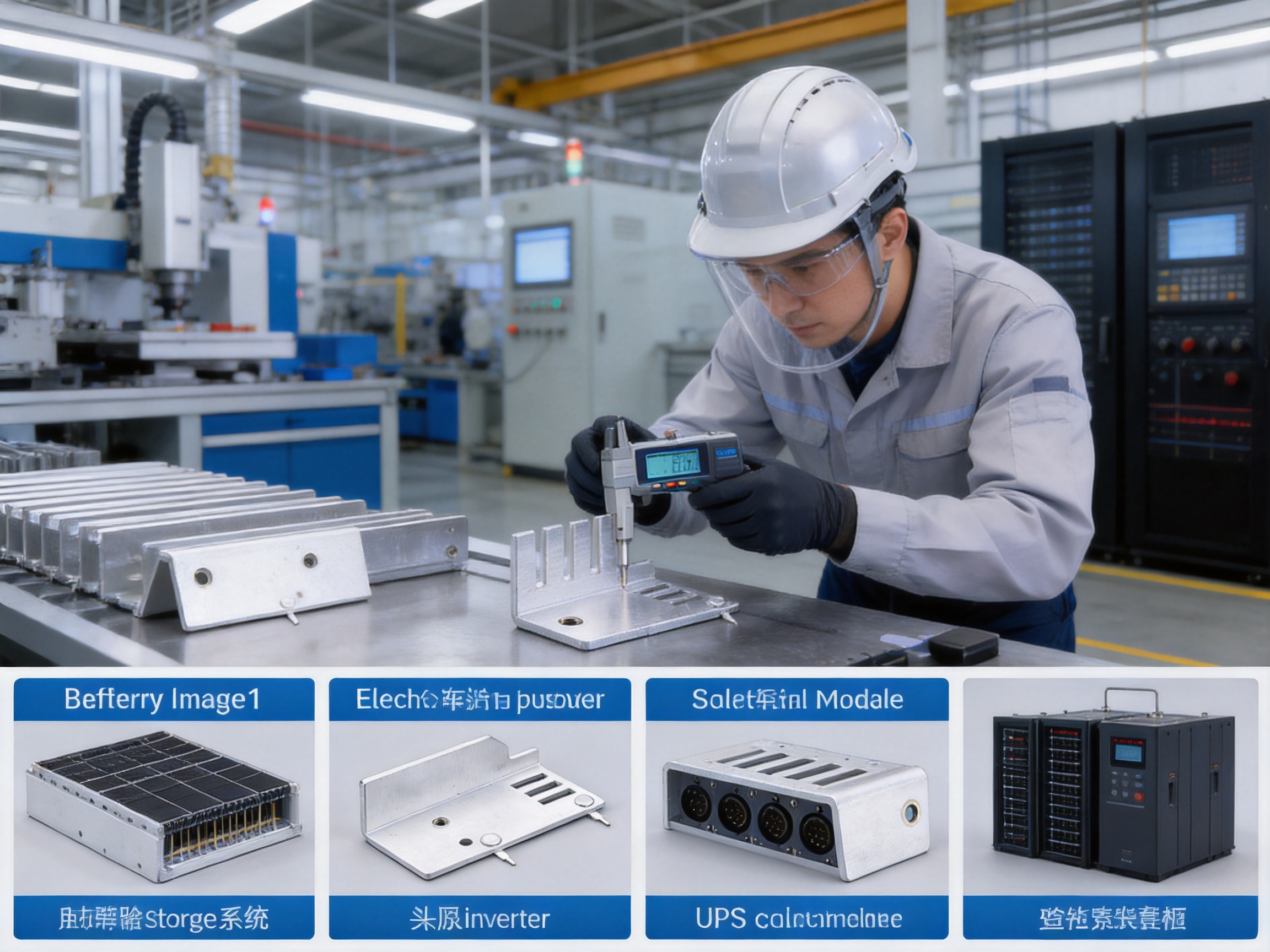
Manufacturing Strengths of an Experienced New-Energy Component Supplier
A specialized manufacturer of conductive components offers advantages that may not be available from a general metalworking company. The difference is not simply production capacity. It is the ability to understand how a busbar functions inside a high-current, high-reliability electrical system.
Experience with Battery and Power Connection Systems
New-energy equipment places demanding requirements on conductive components. Battery packs, energy storage systems, and electric vehicle power modules may experience rapid load changes, vibration, thermal cycling, tight internal packaging, and strict safety expectations. A supplier experienced in battery soft connections, copper foil flexible connections, cell contact systems, and other conductive components can apply this knowledge to rigid aluminum busbar development.
This experience helps engineers consider current paths, connection stress, insulation interfaces, module tolerance, assembly sequence, and service requirements together. The result is more than a geometrically correct part; it is a busbar designed for integration into a real product.
Research and Development Capability
Advanced suppliers invest in material development, precision machining, welding, laser technology, inspection, and verification. These capabilities support the production of components with low internal resistance, stable dimensions, and dependable mechanical performance.
Independent development of polymer diffusion welding and laser-based processes can also improve the supplier’s understanding of interfaces, heat input, joint reliability, and precision manufacturing. Even when the customer requires a rigid nickel-plated aluminum busbar rather than a welded flexible connection, this broader process knowledge can contribute to better design recommendations and quality control.
Integrated Design and Production
When design, prototyping, process engineering, manufacturing, and inspection are managed within one organization, communication is faster and technical responsibility is clearer. Drawing changes can be evaluated directly by production engineers. Prototype issues can be addressed before mass production. Process improvements can be transferred efficiently into the manufacturing line.
Integrated capability is especially valuable for customized products. Standard catalog parts may be suitable for simple installations, but complex battery systems and power modules often require a unique shape, finish, tolerance range, or assembly feature. An integrated supplier can support the entire development cycle from concept review through repeat production.
Modern Quality Management
A reliable busbar supplier should operate with documented quality procedures covering material control, process inspection, equipment maintenance, nonconforming product management, final testing, and traceability. Certifications such as ISO 9001 demonstrate that a quality management framework is in place, although certification should be supported by actual technical control and application knowledge.
Compliance with relevant RoHS, IEC, CE, and customer-specific requirements can help simplify product qualification. The exact standards applicable to a busbar depend on its installation, voltage class, end product, and market. The supplier should work with the customer to identify the required documentation and verification plan.
Support for OEM and High-Volume Projects
OEM customers often require stable dimensions, repeatable surface treatment, predictable delivery, and engineering support throughout product development. A supplier with experience serving major enterprises in the new-energy sector is more likely to understand the importance of process consistency and controlled change management.
For high-volume projects, the supplier can evaluate tooling, production routing, inspection frequency, packaging, and delivery schedules. For prototype or low-volume projects, flexible laser processing and CNC manufacturing can reduce initial tooling requirements and shorten the path from drawing to functional sample.
Applications Across Modern Electrical Systems
Energy Storage Systems and Battery Packs
Energy storage systems use busbars to connect battery modules, contactors, fuses, service disconnects, power conversion systems, and monitoring assemblies. Nickel-plated aluminum busbars can provide a lightweight connection solution for internal module links and high-current distribution points.
The design must consider cell and module arrangement, thermal expansion, insulation barriers, service access, fault current, and available space. Busbars may be formed to pass around cooling plates, brackets, sensors, and enclosure features. Nickel-plated contact sections can support reliable attachment to terminals and other conductive elements when the connection is properly engineered.
Electric Vehicles and Charging Equipment
Electric vehicles contain high-voltage battery packs, inverters, onboard chargers, DC-DC converters, power distribution units, and charging interfaces. These systems require compact conductive paths capable of handling substantial current within tightly restricted spaces.
Reducing conductor weight can contribute to overall vehicle efficiency. Custom three-dimensional busbars can also simplify assembly by combining several connection features into one part. Depending on the design, the component may include bends, mounting points, shield interfaces, and selective plating at terminal areas.
Solar Inverters and Wind Power Systems
Renewable energy equipment must operate reliably across changing loads and environmental conditions. Busbars may be used in DC combiner sections, inverter assemblies, power conversion cabinets, and grid-connection equipment. Aluminum provides a useful balance of weight and conductivity for large assemblies, while nickel plating can improve surface durability and connection stability.
Outdoor equipment may be exposed to humidity, dust, temperature changes, and corrosive atmospheres. The busbar finish, enclosure design, insulation, and fastener selection should therefore be considered together. Custom manufacturing can provide the exact shape and mounting features needed for efficient cabinet integration.
Uninterruptible Power Supplies and Data Centers
UPS equipment and data-center power distribution systems require dependable current paths because an interruption or overheating connection can affect critical infrastructure. Busbars may connect batteries, rectifiers, inverters, bypass circuits, and output distribution assemblies.
In these applications, designers often value low resistance, clear installation, accessible inspection points, and predictable thermal behavior. Custom busbars can reduce cable congestion and provide a neat, serviceable internal layout. Surface treatment can help preserve contact performance during long operating periods.
Industrial Control Cabinets
Industrial control cabinets, motor control centers, automation equipment, and power distribution panels use busbars to organize internal power paths. A formed aluminum busbar can be designed around breakers, contactors, terminal blocks, and insulation supports.
Precision holes and slots support repeatable assembly. Smooth edges reduce the risk of insulation damage. Plating can help protect connection areas in factories where humidity, dust, oil mist, or chemical contamination may be present. The busbar can also be paired with insulating covers to improve touch protection and maintenance safety.
Switchgear and Inverter Devices
Switchgear and inverter systems require conductors that can withstand electrical loading, thermal cycling, and mechanical forces associated with switching and fault events. The final busbar design should be evaluated according to the equipment’s voltage, current, short-circuit requirements, clearances, and enclosure conditions.
Custom machining allows the busbar to include carefully positioned terminals, connection holes, support points, and shaped transitions. This can improve the internal arrangement and reduce the need for multiple adapters or cable connections.
Design Considerations for Selecting a Custom Busbar
Current and Temperature Requirements
The continuous and peak current should be defined before the busbar dimensions are finalized. Designers should also identify the maximum acceptable temperature rise, ambient temperature, enclosure ventilation, duty cycle, and the proximity of heat-sensitive components.
A larger cross-sectional area generally reduces resistance and heat generation, but it may increase weight, cost, and installation space. The best design balances electrical performance with the physical requirements of the equipment. Thermal simulation, prototype testing, or application-specific calculation may be appropriate for demanding projects.
Geometry and Tolerance
The drawing should specify overall dimensions, bend angles, bend radii, hole diameters, slot dimensions, flatness, perpendicularity, and critical reference points. Tolerances should be realistic for the selected process and should focus tighter control on features that affect assembly or electrical contact.
Overly tight tolerances can increase production cost without improving system performance. Conversely, inadequate tolerance control may cause misalignment or mechanical stress. A manufacturing review can help define a practical tolerance scheme.
Plating Requirements
The customer should specify whether nickel plating is required on all surfaces or only on selected contact areas. Plating thickness, appearance, adhesion, corrosion resistance, and dimensional impact should be agreed before production. Masking may be necessary when certain surfaces must remain untreated or when a precise contact zone is required.
The mating material should also be considered. Aluminum, copper, stainless steel, plated terminals, fasteners, and conductive coatings can interact differently in humid or corrosive environments. A compatible connection design helps reduce galvanic corrosion and maintain stable joint performance.
Insulation and Safety
High-voltage battery and power systems may require insulation covers, barriers, coatings, or molded protection. The insulation must be compatible with the operating temperature, voltage, chemical environment, and mechanical conditions.
Clearance and creepage requirements should be reviewed according to the applicable product standard. The busbar should also be protected from accidental contact, sharp edges, loose hardware, and movement during vibration or service operations.
Connection Method
Busbars may be connected using bolts, studs, clamps, welded joints, threaded holes, or specialized terminals. Each method affects plating, contact pressure, maintenance, and assembly tooling.
For bolted connections, hole size, flatness, torque, washer selection, and joint stack-up are important. For welded or bonded connections, the surface finish and heat-affected zone must be evaluated. A supplier should understand the intended connection method before confirming the plating and processing sequence.
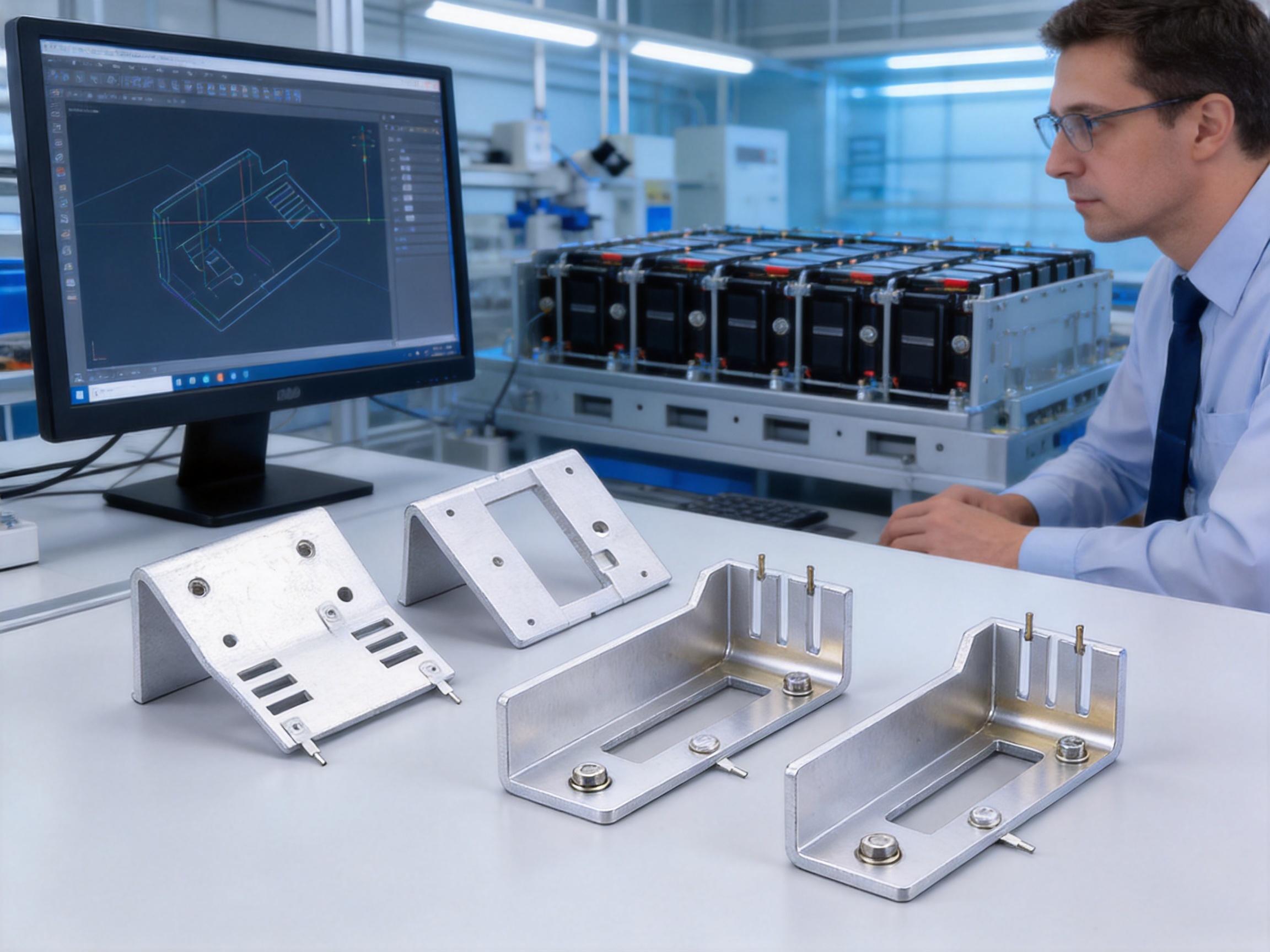
Comparison with Conventional Copper Busbars and Standard Products
Copper remains an excellent busbar material because of its high conductivity, strong current-carrying capability, and established joining methods. However, copper is denser and may increase the weight of large power assemblies. It can also be more expensive depending on market conditions and required dimensions.
Aluminum busbars offer a practical alternative when the design can accommodate the necessary cross-sectional area. The weight advantage can be significant in vehicle and mobile applications. Nickel plating can further improve the surface behavior of aluminum, especially at connection points exposed to humidity, oxidation, or repeated assembly.
Compared with standard flat bars, custom nickel-plated aluminum busbars offer improved integration. The part can be cut, bent, punched, tapped, plated, and inspected according to the customer’s actual assembly. This can reduce the need for manual adjustment and additional connection hardware.
| Evaluation Factor | Custom Nickel-Plated Aluminum Busbar | Conventional Bare Copper Busbar | Standard Off-the-Shelf Bar |
|---|---|---|---|
| Weight | Low, supporting lightweight system design | Higher because of copper density | Depends on material and standard dimensions |
| Electrical Performance | Effective when cross-section and joint design are properly engineered | Very high conductivity with compact dimensions | May not match the application’s current and voltage requirements |
| Surface Protection | Nickel-plated surface supports corrosion and wear resistance | May require additional plating or treatment | Usually limited to standard available finishes |
| Shape | Fully customizable with bends, slots, holes, and formed sections | Can be custom-made but may increase material and weight | Usually limited to simple straight profiles |
| Installation | Designed to align with the customer’s equipment | May require additional adapters or cable connections | Often requires field cutting, drilling, or bending |
| Application Flexibility | Suitable for batteries, inverters, ESS, EVs, switchgear, and industrial equipment | Suitable for high-current systems where compact conductivity is prioritized | Best for simple, standardized assemblies |
| Development Support | Can include engineering review, prototyping, and process optimization | Depends on the supplier’s technical capability | Usually limited to product selection and basic ordering |
The comparison does not mean aluminum is suitable for every application. Copper may remain preferable where space is extremely limited, current density is exceptionally high, or existing joining technology is optimized for copper. The advantage of a qualified supplier is the ability to evaluate the real application and recommend the most appropriate material and surface treatment.
Quality, Compliance, and Reliability
Reliable busbars must meet both electrical and mechanical expectations throughout their service life. Quality assurance should begin with approved raw materials and continue through cutting, forming, surface treatment, inspection, and packaging.
RoHS compliance helps control restricted substances in products supplied to many international markets. ISO 9001 certification reflects a structured quality management system. IEC and CE-related requirements may apply depending on the finished equipment and intended market. The precise compliance path should be confirmed by the equipment manufacturer and the supplier together.
Important quality checks can include alloy verification, thickness measurement, dimensional inspection, hole-position inspection, bend-angle verification, visual plating inspection, coating-thickness measurement, adhesion testing, electrical resistance testing, and insulation testing. Not every project requires every test, but the inspection plan should match the product’s risk and application.
Packaging is also important. Plated surfaces should be protected from scratches, contamination, moisture, and impact during transportation. Components should be separated or wrapped appropriately, especially when they include precision bends, exposed contact areas, or insulating parts. Correct labeling and batch identification support efficient receiving inspection and traceability.
Prototype Development and Mass Production
For a new busbar design, prototype production is an important stage. It allows the customer to verify fit, clearance, assembly sequence, contact access, insulation arrangement, and thermal behavior before committing to full production. Laser cutting and CNC processing are useful for prototypes because they can support custom geometries without long tooling lead times.
After prototype approval, the production process can be optimized for volume. The manufacturer may review nesting, bending sequence, tooling, plating racks, inspection frequency, packaging, and production takt time. Process capability should be monitored for critical dimensions and surface characteristics.
Engineering changes should be controlled carefully. Changes to aluminum grade, thickness, bend radius, plating thickness, hole dimensions, or insulation material can affect electrical and mechanical performance. A formal change process helps ensure that both the supplier and customer understand the effect of every modification.
For global OEM customers, communication is especially important. Technical drawings, sample approvals, inspection reports, packaging specifications, delivery schedules, and corrective-action procedures should be clearly documented. A professional supplier can provide a stable communication channel from initial inquiry to regular production.
Why Partner with a Specialized Manufacturer
A specialized new-energy component manufacturer brings together product knowledge, process capability, and application experience. This combination can provide advantages over purchasing generic metal parts from a supplier that has limited experience with electrical connection systems.
Such a manufacturer understands that a busbar must meet multiple requirements simultaneously. It must carry current, control heat, fit within a constrained assembly, resist vibration, maintain contact performance, and comply with safety expectations. The company’s experience with high-voltage electrical copper foil soft connections, special-shaped flexible connections, battery soft connections, and other precision components provides a strong technical foundation for developing rigid and plated busbars.
Advanced equipment supports accurate laser cutting, CNC bending, punching, tapping, surface preparation, and inspection. Experienced engineers can evaluate the customer’s design, recommend manufacturing improvements, and identify potential problems before they become production issues. A modern quality system helps maintain consistency across batches.
The company’s focus on research and development in materials science, precision machining, testing, and verification also supports continuous improvement. Its work in polymer diffusion welding and laser technology demonstrates an emphasis on advanced connection processes and low-resistance, high-reliability components. This broader technical environment is valuable for customers developing battery systems, energy storage products, electric vehicles, and power distribution equipment.
Established in 2022, Zhejiang Zhongyan New Energy Co., Ltd. focuses on new-energy precision components and battery connection technologies. The company has developed relationships with leading enterprises in the energy and automotive sectors, including BYD, CATL, and Jaguar. Its capabilities cover product design, research and development, manufacturing, testing, and customized solution support.
For customers seeking a long-term production partner, the value of this type of supplier lies in more than the finished busbar. It includes technical communication, design support, repeatable manufacturing, quality documentation, and the ability to expand from one conductive component to a broader battery or power connection system.
Recommended Inquiry Information
To receive an accurate quotation and technical recommendation, customers should provide as much application information as possible. A two-dimensional drawing, three-dimensional model, or clear dimensional sketch is helpful. The material grade, thickness, width, length, hole pattern, bend geometry, and surface treatment should be identified where available.
Electrical information should include continuous current, peak current, voltage, frequency if applicable, allowable temperature rise, and expected operating temperature. Mechanical information should include vibration, shock, mounting method, fastening torque, clearance limitations, and service conditions.
Environmental information should cover humidity, salt exposure, chemicals, dust, outdoor installation, altitude, and expected service life. The customer should also identify whether the busbar requires insulation, protective covers, selective plating, special packaging, or compliance documentation.
Annual demand, prototype quantity, production schedule, delivery destination, and inspection requirements should also be included. This allows the supplier to evaluate whether laser processing, dedicated tooling, or a combination of methods is most appropriate.
Q&A: Custom Nickel-Plated Aluminum Busbars
What is a nickel-plated aluminum busbar?
It is a conductive aluminum bar or formed component with a nickel coating applied to all or selected surfaces. The aluminum provides a lightweight conductive body, while the nickel surface improves protection, durability, and contact performance for suitable applications.
Why choose aluminum instead of copper?
Aluminum is lighter and can offer favorable material economics. It is often considered when weight reduction, heat dissipation, and large-area conductive structures are important. Copper may still be preferred when the design requires maximum conductivity in a very compact cross-section. The correct choice depends on current, space, temperature, weight, connection method, and system cost.
Does nickel plating make aluminum more conductive?
Nickel plating primarily improves the surface and contact interface rather than changing the bulk conductivity of the aluminum body. The final electrical performance depends on the aluminum cross-section, plating condition, joint design, contact pressure, fasteners, and mating surfaces. Proper engineering is required to achieve low and stable connection resistance.
Can the busbar be customized according to a drawing?
Yes. Customization can include thickness, width, length, holes, slots, bends, tapped holes, stepped sections, mounting structures, selective plating, insulation, and protective covers. A supplier can review a drawing or three-dimensional model and recommend modifications that improve manufacturability or assembly.
What aluminum grades are available?
Common options include 1060, 1070, and 6063 aluminum. High-purity grades are often selected for conductivity and formability, while 6063 may be chosen when additional mechanical or profile-related performance is needed. The supplier should confirm the most suitable grade based on the complete application.
What dimensions can be produced?
Typical capabilities include thicknesses from approximately 1 millimeter to 15 millimeters, widths from approximately 5 millimeters to 200 millimeters, and customized lengths up to approximately 3,000 millimeters. Actual limits depend on the shape, tolerance, bending sequence, plating method, and inspection requirements.
Can only part of the busbar be nickel plated?
Selective plating is possible for many designs. Plating may be concentrated on terminal ends, bolted connection zones, or other areas requiring enhanced surface protection. The masking and plating plan should be confirmed during engineering review to ensure adequate coverage and dimensional control.
Can the busbar include insulation?
Yes. Depending on voltage and installation requirements, the busbar may be supplied with an insulating coating, protective sleeve, molded cover, insulating support, or separate insulating component. The insulation design should account for temperature, creepage, clearance, vibration, and mechanical protection.
Are nickel-plated aluminum busbars suitable for battery packs?
They can be suitable for battery packs, energy storage systems, and related power modules when the material, geometry, connection method, and insulation are properly engineered. Battery applications require careful consideration of current, thermal expansion, vibration, service access, fault conditions, and high-voltage safety.
What manufacturing processes are used?
Typical processes include laser cutting, CNC bending, punching, drilling, tapping, deburring, cleaning, surface preparation, nickel plating, insulation, and final inspection. The exact process route is selected according to the design, material, volume, surface requirements, and quality standards.
What standards can the products comply with?
Products can be manufactured to support requirements associated with RoHS, ISO 9001 quality systems, IEC standards, and CE-related market requirements where applicable. The specific standard and documentation package should be confirmed according to the final equipment and destination market.
How should busbar quality be verified?
Verification may include material certification, dimensional inspection, bend-angle inspection, hole-position measurement, plating-thickness testing, visual examination, coating adhesion testing, electrical resistance testing, and insulation testing. The inspection plan should be matched to the application’s technical and safety risks.
Can the supplier support prototype and mass production?
Yes. Flexible laser and CNC processing can support prototypes and customized samples, while production engineering, tooling review, process control, and inspection planning can support larger-volume manufacturing. Early communication about demand and product development timing helps establish the most efficient production method.
Conclusion
Custom nickel-plated aluminum busbars provide a practical solution for modern power connection systems that require low weight, reliable conductivity, durable surfaces, efficient heat dissipation, and precise mechanical integration. By combining 1060, 1070, or 6063 aluminum with controlled nickel plating and accurate fabrication, these components can support applications ranging from battery packs and energy storage systems to electric vehicle power modules, renewable energy equipment, UPS systems, data centers, switchgear, and industrial control cabinets.
The main advantage over a standard bar is customization. A precisely cut, bent, punched, tapped, plated, and inspected busbar can fit the customer’s equipment more effectively than a generic part. It can reduce assembly work, minimize cable routing, improve system organization, and support reliable electrical contact. The main advantage over a general metalworking supplier is specialized knowledge of high-current and new-energy connection systems.
A capable manufacturing partner should provide more than material and machining. It should offer design review, material selection, process engineering, surface-treatment control, inspection, documentation, prototype development, and stable mass production. With advanced equipment, experienced engineers, modern quality management, and knowledge of battery and power connection technologies, Zhejiang Zhongyan New Energy Co., Ltd. provides customized conductive component solutions for demanding electrical applications.
For customers developing lightweight, high-reliability power distribution assemblies, a nickel-plated aluminum busbar can be an effective foundation for better electrical integration and long-term system performance. The best results are achieved when the supplier is involved early, before the design is frozen, so that electrical, thermal, mechanical, plating, insulation, and manufacturing requirements can be optimized together.
References
1. International Electrotechnical Commission, standards and technical guidance for low-voltage electrical assemblies, power distribution equipment, and conductor systems.
2. International Organization for Standardization, ISO 9001 quality management system principles and requirements.
3. Aluminum Association, technical information on aluminum alloys, conductivity, formability, and engineering applications.
4. ASM International, materials engineering references covering aluminum alloys, surface treatment, corrosion, and plating technologies.
5. RoHS Directive, guidance concerning the restriction of hazardous substances in electrical and electronic equipment.
6. Institute of Electrical and Electronics Engineers, technical publications concerning electrical power distribution, contact resistance, thermal performance, and reliability.
7. Battery industry engineering practices for high-voltage battery packs, energy storage systems, busbar design, insulation coordination, and vibration resistance.
8. Industrial design and manufacturing references covering laser cutting, CNC bending, punching, tapping, dimensional tolerancing, and production inspection.
Product: Custom Nickel Plated Aluminium Busbar For High Conductivity & Lightweight Power Connection Solutions

Driven by the development of new energy and aiming for "zero carbon".
Copyright © Zhejiang Zhongyan New Energy Co., Ltd. All Rights Reserved.
