 English
 Español
Custom Copper Busbar Fabrication 2026: How to Get an Accurate Quote and a Part That Fits
A custom busbar is a simple part. It is a piece of copper, cut to a shape, drilled, perhaps bent, perhaps plated. So it is tempting to assume that any fabricator can make it, and that the quote you get back is the price. In practice, custom busbar projects go wrong in the gap between what the buyer meant and what the drawing said.
This guide covers what a fabricator actually needs from you in order to quote accurately, the details that most often cause a part to fail incoming inspection, and how to compare two quotes that look identical but are not.
Content
What "custom" actually means
The word covers at least five different levels of work, and they are priced in completely different ways. Knowing which one you are asking for is the first step toward a quote that means something.
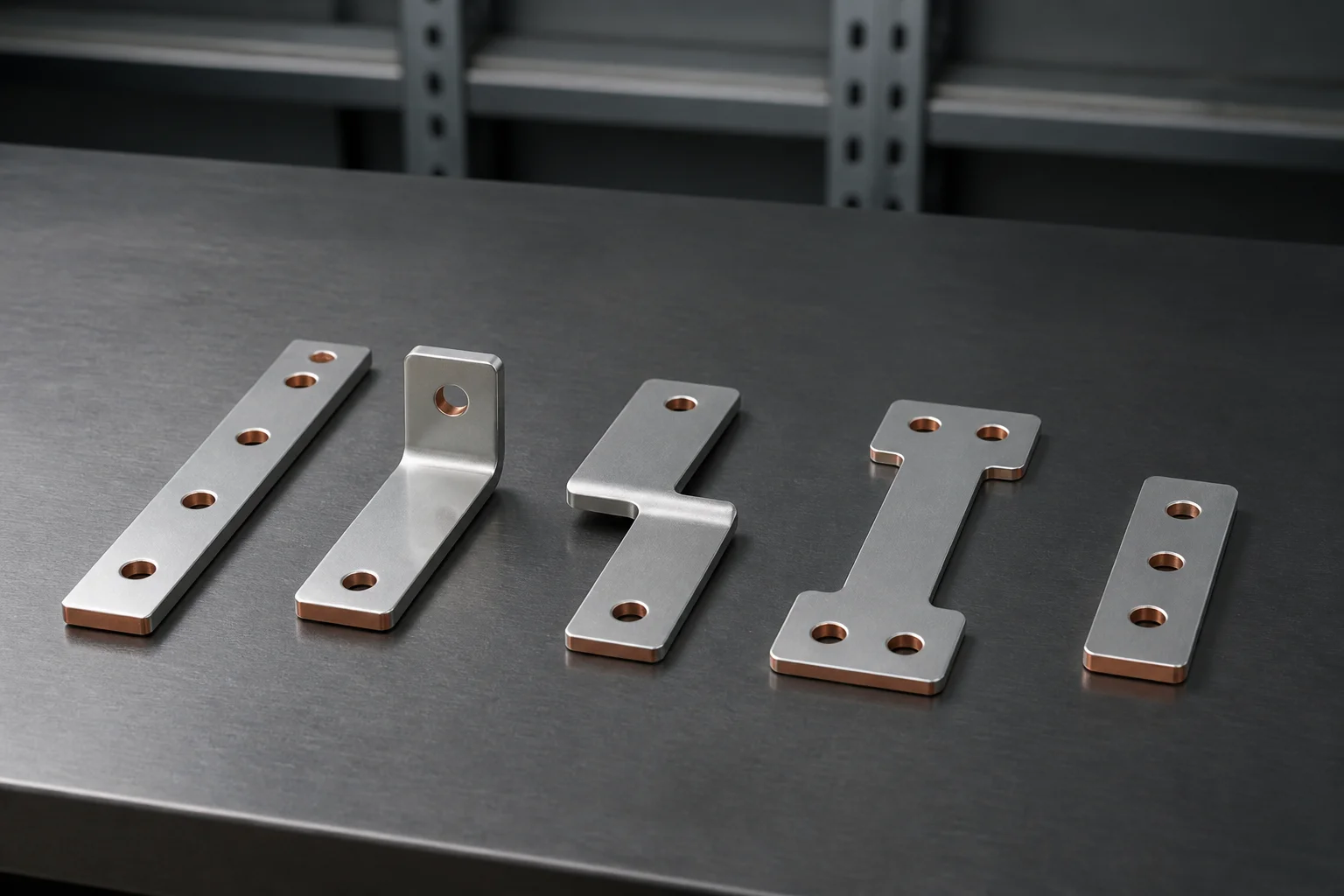
- Cut and drilled only. A standard flat bar cut to length with a hole pattern added. The lowest-cost level, and the one most often quoted by strip-mill resellers.
- Formed. Bends, offsets, jogs or twists added to route the bar around an obstruction. This introduces tooling and setup cost.
- Plated or coated. Tin plating, nickel plating, or a dip-coated and powder-coated insulation layer added after forming.
- Insulated or multi-layer. Foil-stack flexible construction, heat-shrink sleeving, or a laminated assembly with insulating interlayers.
- Fully engineered. The fabricator participates in the design: suggesting a bend radius that will not crack, a hole spacing that clears a fastener, or a joint stack-up that will actually assemble.
If you send a drawing and ask for "the best price", you will usually get the cut-and-drilled price, because that is the cheapest answer. If you need levels three to five, say so up front.
The drawing package a fabricator needs
Quotes come back wrong for one dominant reason: the drawing was incomplete, so the fabricator guessed. Guessing is expensive for both sides, because the guess is either optimistic and produces a part that cannot be made at that price, or pessimistic and prices you out.
What to include, as a minimum
- A 2D drawing with real dimensions and tolerances on every dimension that matters — overall length, width, thickness, hole positions, hole diameters, and the bend locations. A dimension without a tolerance will be interpreted against a general note, or against whatever the shop considers normal.
- A 3D model (STEP or similar) for anything formed. A model removes all ambiguity about the bend direction, the offset, and how the part sits in space.
- The material grade. "Copper" is not a specification. State the grade and the temper, and whether the bar must be oxygen-free, because the answer changes both conductivity and how the part behaves when it is bent.
- The surface finish. Bare, tin-plated, nickel-plated, or insulated, with the plating thickness if the joint resistance matters. Plating is a cost line, so leaving it vague means it gets priced as the cheapest option.
- Hole callouts. Diameter, whether the hole is drilled or tapped, and the thread if tapped. A tapped hole and a clearance hole are different operations.
- Quantity, and the annual quantity. Unit price at five pieces and at five thousand pieces are unrelated numbers. Stating the annual volume lets the fabricator price tooling across the right batch.
- The application, briefly. Cell interconnection, switchboard distribution, or an earthing bar. It tells the fabricator which details are critical and which are cosmetic.
What buyers forget most often
The single most common omission is the hole tolerance. A hole that is nominally six millimetres but drilled two tenths over will not clamp reliably in a bolted joint, and the drawing never said whether that mattered. The second most common is the burr requirement. A burr left inside a hole bore prevents the flat washer from seating, so the joint has a fraction of its intended contact area and the fastener appears tight while carrying almost no current.
The details that decide whether the part passes inspection
These are the items that most often turn an on-time delivery into a rejected lot. Each one is cheap to specify and expensive to discover later.
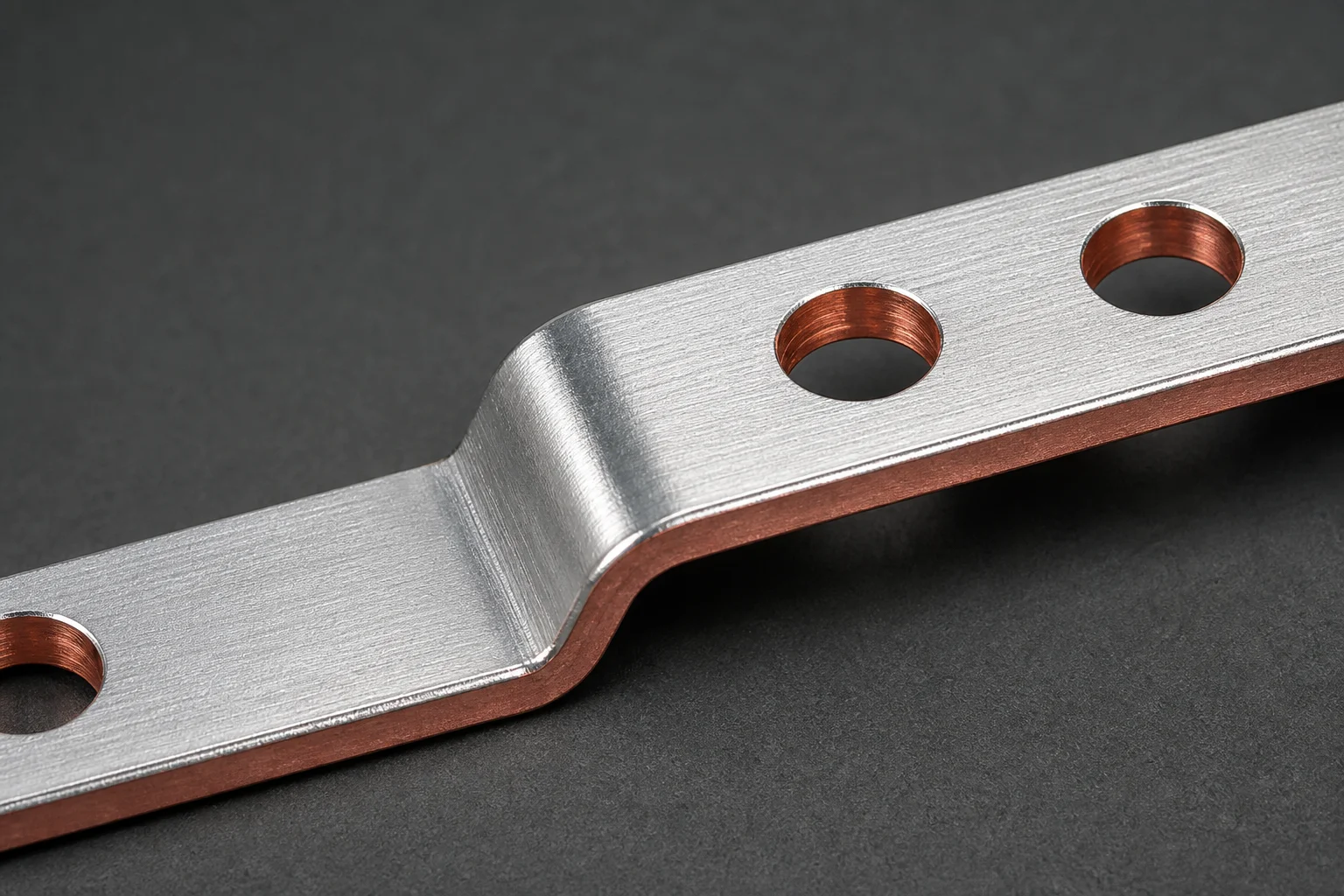
- Bend radius versus thickness. Bend a bar too tightly and the outer fibres crack or the section thins at the bend, which raises local resistance exactly where the highest current density is. Specify the minimum inside radius, or let the fabricator propose one.
- Bend direction and grain. On formed parts, specify which face must stay flat and which way the bend goes. A mirrored part will not assemble.
- Plating thickness and coverage. A thin decorative flash and a functional anti-corrosion coating are different products. State the target thickness and whether the hole bores must be coated too.
- Hole size and pattern tolerance. The cumulative tolerance across a long hole pattern matters more than any single hole. If two bars must bolt to a common terminal, the pattern tolerance is what decides whether they fit.
- Flatness. A bar that is twisted will not seat on a busbar support or a terminal pad. State a flatness requirement for anything longer than a few hundred millimetres.
- Edge condition. Sharp sheared edges cut insulation and gloves. Specify deburred or chamfered edges.
- Marking. If the part carries a part number, state how it must be applied, and confirm the marking survives plating.
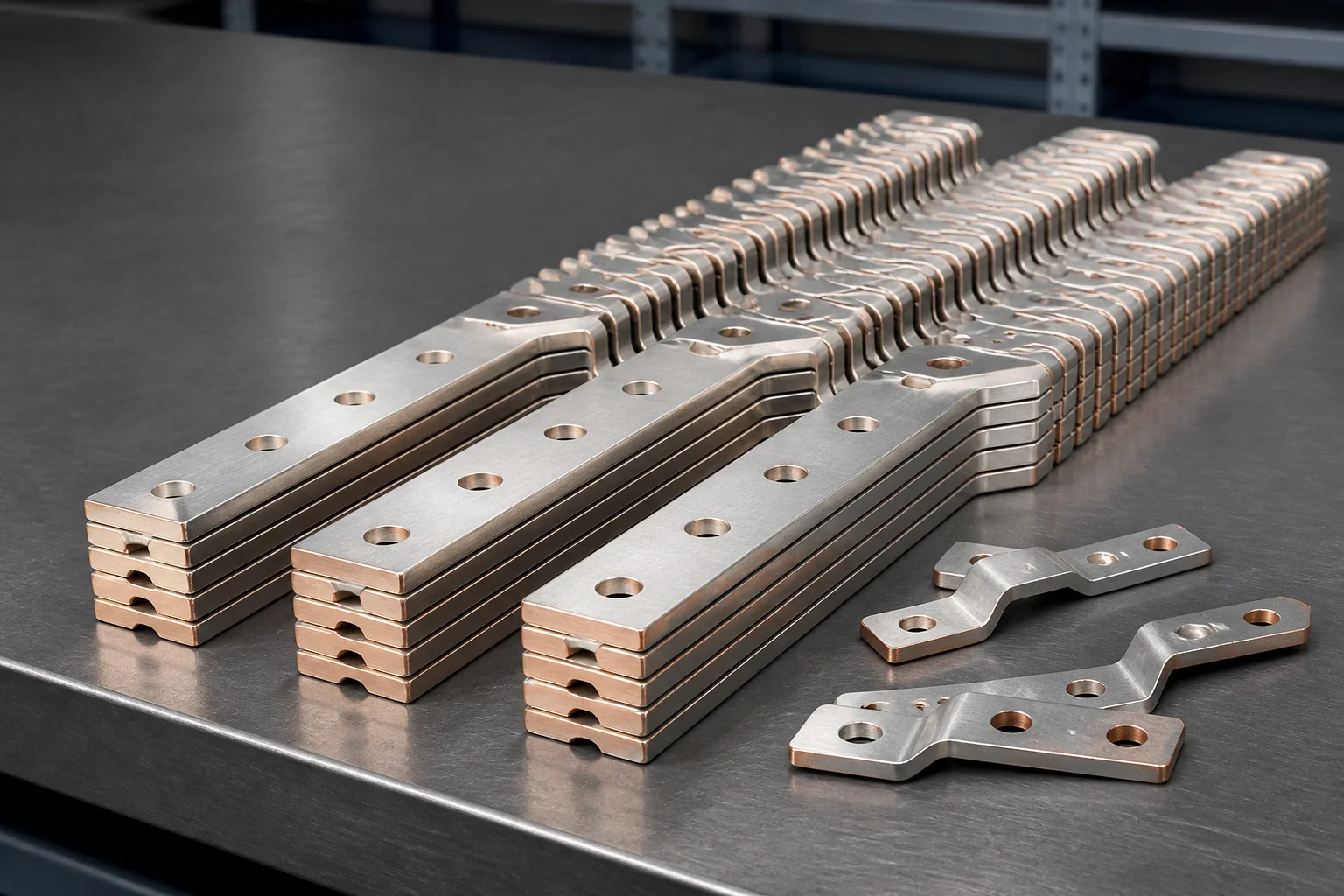
- Packaging. Plated parts that rub together in transit arrive scratched. Specify interleaving or individual wrapping for visible or high-current joints.
What precision actually costs
Tolerance is not free, and it is not linear. Moving from a general tolerance to a tight one usually requires a different process: laser cutting or CNC machining rather than punching, and often an inspection step rather than a spot check. A manufacturer working to plus or minus 0.1 mm on laser-cut profiles is not doing anything exotic, but that capability has to be built into the price from the start.
The practical rule is to hold a tight tolerance only where the function demands it. Overall length rarely needs to be as tight as the hole pattern, and the hole pattern rarely needs to be as tight as the joint face flatness. Over-tolerancing the whole drawing is one of the most common ways buyers pay more than they needed to.
How to compare two quotes properly
Comparing unit price alone is how a cheaper quote becomes the more expensive project. The line items below are what actually differ between suppliers.
| Line item | Why it changes the real cost |
|---|---|
| Unit price at your actual quantity | A price quoted at a different break quantity is not comparable |
| Tooling and setup | Sometimes amortised into unit price, sometimes invoiced separately |
| Sample and first-article cost | Some suppliers charge for the sample, some credit it against the order |
| Inspection documentation | Dimensional report, material certificate, plating certificate |
| Lead time and its reliability | A short lead time that slips is worse than a longer one that holds |
| Packing and freight terms | Ex-works versus delivered changes the landed cost materially |
| Payment terms and currency | Cash-flow and exchange exposure are part of the price |
Prototype, sample and first article
For any formed or plated part, ask for a sample before releasing the batch. A sample is the cheapest possible way to find out that a bend radius was too tight, a hole landed in the wrong place, or a plating colour does not match the rest of the assembly.
A useful sequence is: quote from the drawing, sample from the drawing, then a first-article inspection on the first production pieces against the same drawing. If the fabricator can produce the part, document the dimensions, and repeat both at volume, the risk in the project drops sharply. If any of those three steps is missing, the risk is carried by you.
Frequently asked questions
How long does a custom busbar order usually take?
It depends almost entirely on whether tooling is required and whether the material is in stock. A cut-and-drilled bar from stock material is fast; a formed, plated and inspected part with a new tool adds setup time. Ask for the lead time in writing with the quote, and ask which step is the critical path.
Can I send a sample part instead of a drawing?
Yes, and it is often faster than producing a drawing — but only if the sample is dimensionally representative. A worn or hand-modified sample will be copied faithfully, including its defects. If you send a sample, say explicitly which features are functional and which are not.
What is the minimum order quantity for a custom busbar?
It is set by the setup cost, not by the material. Cutting and drilling a small quantity is easy; adding a forming tool or a plating batch to a handful of pieces means the setup is spread across very few parts. Where a low volume is unavoidable, simplifying the part — removing a cosmetic bend or accepting a standard finish — usually lowers the entry cost more than negotiating the unit price.
Should I specify the manufacturing method?
Generally no. Specify the function: the current, the joint, the space available, and the environment. Let the fabricator choose between laser cutting, machining, diffusion welding or laser welding, because that choice is where their process knowledge lives. Specifying a method you do not fully understand removes their ability to reduce your cost.
Getting a quote that holds
A custom busbar quote is only as good as the information behind it. A complete drawing package, an honest quantity, and a clear statement of which features are functional will get you a number that survives contact with production — and a part that fits the first time.
Zhejiang Zhongyan New Energy Co., Ltd. manufactures custom copper and aluminium busbars, insulated flexible busbars, laminated and CCS busbars and braided copper connections, working from customer drawings and samples. Share your drawing, your quantity and your application, and our engineering team will come back with a manufacturable proposal rather than a guess.
Driven by the development of new energy and aiming for "zero carbon".
Copyright © Zhejiang Zhongyan New Energy Co., Ltd. All Rights Reserved.
